

Views: 0 Author: Site Editor Publish Time: 2026-08-04 Origin: Site
Volatile fuel prices and increasingly stringent emissions regulations force facility managers to re-evaluate their combustion systems. Plants cannot rely on legacy equipment to meet modern operational demands. An outdated industrial boiler burner does not merely waste precious fuel. It exposes operations to severe compliance penalties and highly costly unplanned downtime.
We must approach combustion system selection using precise technical scrutiny. This guide strips away marketing claims to provide a purely technical evaluation of industrial burner types. We focus heavily on structural configurations, fuel adaptability, and long-term performance metrics for both retrofits and new installations. You will learn how to align equipment capabilities directly with your facility targets. Choosing the correct hardware ensures strict regulatory compliance while maintaining stable, efficient thermal output across fluctuating loads.
Efficiency Baselines: A reduction of 15% in excess air or a 40°F drop in stack temperature reliably yields a 1% increase in boiler efficiency.
Compliance Realities: Modern emission targets (like EN 676 Class 4) require hardware capable of sub-60 mg/kWh NOx limits, making standard burners obsolete in heavily regulated zones.
Configuration Choice: Selecting between a monoblock boiler burner and a duoblock system depends strictly on capacity requirements and space constraints.
Fuel availability and risk mitigation drive the initial selection process. You must match the combustion system to both your current infrastructure and future energy strategies.
Gas burners run primarily on natural gas or propane. They stand as the industry standard for clean combustion. Engineers must assess the draft type before installation. Atmospheric draft relies on natural pressure. Conversely, forced draft or pre-mix systems use blowers for precise control. Pre-mix setups combine air and gas before reaching the burner head. This process ensures highly efficient and clean burns.
Oil burners handle light to heavy fuel oils. Heavy fuel oil brings lower unit costs for continuous, heavy-duty industrial operations. However, it requires complex support systems. You need heavy-duty pumps and pre-heating equipment to achieve proper fluid atomization. These extra mechanical components naturally demand more frequent maintenance. The choice between single-fuel gas or oil often hinges entirely on local utility access and grid reliability.
Facilities cannot always guarantee uninterrupted utility service during extreme weather events. A Dual Fuel Boiler Burner provides critical supply chain resilience. This system allows you to switch seamlessly between gas and liquid fuels. If the utility grid curtails natural gas during peak winter months, the system immediately shifts to oil reserves. This operational flexibility protects plants from sudden price spikes and devastating fuel shortages.
Hydrogen blends represent the frontier of zero-carbon emissions. Burning pure hydrogen yields only water as a byproduct. However, introducing hydrogen into legacy systems presents significant engineering challenges. The gas burns at extremely high temperatures and rapid velocities. Engineers must conduct specific metallurgical assessments. You must prevent hydrogen embrittlement from degrading existing pipes and valves. Upgrading to hydrogen capability future-proofs the facility against tightening carbon mandates.
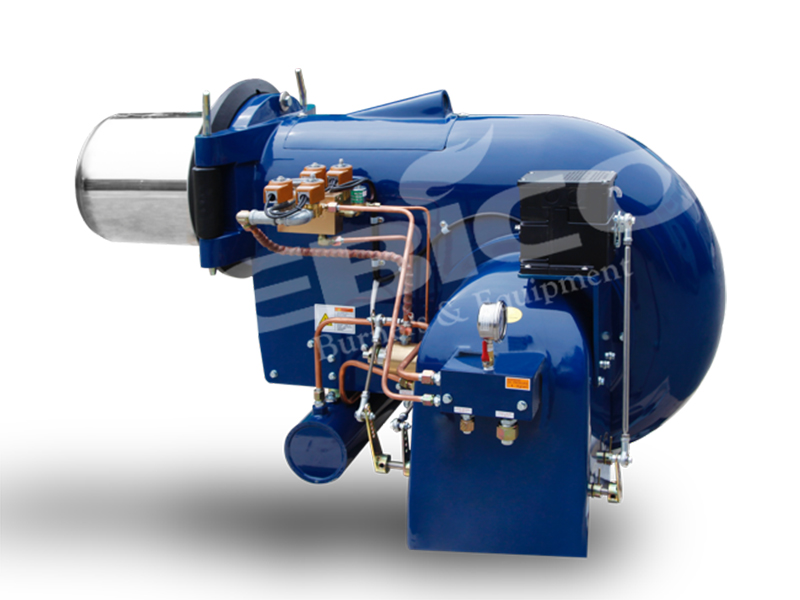
The physical footprint and integration method directly impact installation complexity. You must evaluate the boiler room layout and capacity demands before choosing a structural configuration.
A packaged system combines the combustion head, blower fan, and control valves into a single unit. Factories test these assemblies fully before shipping them. The Monoblock Boiler Burner requires minimal on-site assembly. They work best for rapid installations and tight boiler rooms. Most commercial and light-industrial facilities prefer this plug-and-play approach. The unified design simplifies routine maintenance. Technicians can access all major moving components from one convenient location.
Duoblock systems separate the fan and controls from the main burner head. You mount the combustion head directly on the boiler. Meanwhile, you place the massive blower fan on the floor or inside a separate acoustic room. These robust systems handle high-capacity industrial applications seamlessly. They also excel in extreme environments utilizing pre-heated combustion air. If a plant must meet strict noise regulations, the separated fan allows engineers to install complex silencers.
Configuration Comparison Chart:
Evaluation Metric | Monoblock System | Duoblock System |
|---|---|---|
Component Integration | All parts integrated into one compact chassis | Fan and controls mounted separately from head |
Installation Speed | Fast, factory-tested plug-and-play | Requires complex custom ductwork assembly |
Spatial Footprint | Requires minimal floor space | Demands significant dedicated floor area |
Primary Application | Commercial, light-to-medium industrial | High-capacity heavy industrial and extreme heat |
Strict environmental mandates require technology capable of directly manipulating the air-to-fuel ratio. We must adjust combustion geometry to reduce harmful atmospheric pollutants.
Nitrogen oxides form when combustion temperatures peak. This extreme heat causes atmospheric nitrogen to react directly with oxygen. To prevent this chemical reaction, we use staged combustion and Flue Gas Recirculation (FGR). FGR routes a specific portion of the exhaust back into the primary combustion zone. This process significantly lowers the peak flame temperature.
However, you must consider a mechanical trade-off. A Low NOx Boiler Burner typically requires a substantially larger blower motor. The fan must push both fresh ambient air and dense recirculated exhaust gas through the system. This requirement slightly increases the baseline electrical load of the entire facility.
Industrial heating applications rely on two distinct heat transfer methods. Each method serves an entirely different operational purpose.
Direct Fired Heating: The flame and exhaust gases mix directly with the process material. This approach achieves nearly 100% thermal efficiency since no heat escapes through a physical barrier. It works perfectly for basic material drying.
Indirect Fired Heating: This method uses a sealed heat exchanger. The flame heats a metal tube, and the tube transfers heat to the process air. The combustion exhaust never touches the product. You must use indirect heating for food or pharmaceutical applications where air purity is non-negotiable. It incurs a minor thermal efficiency penalty, but it ensures zero product contamination.
Reading a manufacturer specification sheet requires a critical eye. You need to look past maximum output numbers and evaluate true dynamic performance.
The turndown ratio measures the burner's maximum output against its lowest possible operational output. High turndown ratios, such as 8:1 or 10:1, allow the unit to idle efficiently at very low capacities. It does not need to shut down completely during periods of low facility demand.
Preventing frequent shut-downs drastically reduces purge-cycle heat losses. Before re-igniting, safety codes mandate flushing the chamber with cold air. This purge blows valuable heat out the stack. Furthermore, a high turndown ratio protects the pressure vessel from severe thermal shock. A system maintaining steady, low heat protects boiler tubes much better than one constantly cycling on and off.
Older systems use physical mechanical linkages to control air dampers and fuel valves. These metal linkages degrade, slip, and introduce severe inefficiencies over time. Modern parallel positioning systems use individual servomotors for each valve. They operate entirely without mechanical linkages.
When you pair parallel positioning with O2 trim, the system dynamically monitors flue gas. It adjusts the air dampers every few seconds based on real-time sensor feedback. Maintaining an optimal 3% O2 (approximately 15% excess air) provides significant operational benefits:
Prevents the system from heating useless nitrogen, eliminating major heat loss.
Stops the generation of dangerous carbon monoxide gas.
Eliminates soot formation caused by incomplete combustion sequences.
Adapts instantly to unpredictable changes in ambient air temperature and barometric pressure.
Legal frameworks dictate the parameters of any equipment shortlist. You must meticulously verify vendor claims against objective certification tiers.
European and international standards clearly define acceptable emission limits for industrial combustion. Facilities operating globally must adhere strictly to these benchmarks.
Regulatory Standard | Applicable Fuel | Classification Level | Maximum NOx Limit |
|---|---|---|---|
EN 676 | Natural Gas | Level 3 | ≤ 80 mg/kWh |
EN 676 | Natural Gas | Level 4 | ≤ 60 mg/kWh |
EN 267 | Liquid Oil | Level 3 | ≤ 120 mg/kWh |
Beyond emissions, combustion systems must operate safely. In North America, NFPA 85 (Boiler and Combustion Systems Hazards Code) mandates specific safety interlocks. It strictly governs pre-ignition purge sequences, optical flame monitoring, and safety shut-off valve testing. If your equipment operates in potentially explosive environments, such as chemical refineries or grain silos, you must require ATEX certification. ATEX standards ensure the electrical components will never ignite ambient atmospheric hazards.
Moving the purchasing conversation past initial specifications requires an understanding of long-term lifecycle performance. You must evaluate how the equipment behaves over a decade of continuous operation.
Initial equipment installations rarely represent the bulk of the burden over a 15-year lifecycle. Fuel consumption and routine maintenance dominate the system's operational history. Choosing higher-efficiency components upfront dramatically lowers fuel usage year over year. A slightly larger upfront investment in advanced controls yields massive energy savings throughout the operational life of the unit.
When retrofitting existing systems, the U.S. Department of Energy (DOE) notes a clear rule of thumb. If a boiler consumes significant fuel annually, adding an automated O2 trim system is highly justified. O2 trim typically yields a 2-4% fuel saving on natural gas, and up to 4-5% on heavy oil. Over thousands of operating hours, these percentage points represent massive energy reductions.
Advanced PLC and AI-driven controls offer another distinct operational advantage. They enable predictive maintenance by tracking servomotor response times and valve degradation. This foresight significantly reduces the occurrence of unexpected downtime, keeping the plant running smoothly and predictably.
Choosing the right equipment requires balancing immediate integration needs against long-term fuel efficiency, dynamic load-matching, and strict emissions compliance. You must look far beyond standard capacity ratings. Thoroughly evaluate the turndown ratio, structural footprint, and advanced control mechanisms before making a decision.
We advise technical buyers to request a comprehensive facility energy audit. Calculate the precise fuel savings expected from O2 trim and FGR integration. Gather this operational data meticulously before requesting formal quotes from manufacturers. This approach ensures the selected system perfectly aligns with your facility's long-term environmental targets and efficiency goals.
A: A 10:1 turndown ratio is excellent for highly variable loads. It allows the system to operate at 10% capacity without shutting down. This prevents severe thermal shock and eliminates purge-cycle heat loss. Conversely, a standard 4:1 ratio may suffice perfectly for systems running steady, predictable baseloads.
A: The standard industry metric states a 15% reduction in excess air reliably yields a 1% gain in overall boiler efficiency. Maintaining precise control over the air-to-fuel ratio prevents the system from wasting energy heating unnecessary nitrogen inside the combustion chamber.
A: Yes, but it requires significant mechanical modifications. You must install a completely new liquid fuel train, modify or replace the combustion head to accommodate oil atomization, and upgrade the PLC controls to manage complex dual-fuel safety interlocks.
A: The definition depends strictly on local environmental regulations. Typically, a "Low NOx" system restricts nitrogen oxide emissions to sub-30 ppm. An "Ultra-Low NOx" system utilizes advanced Flue Gas Recirculation (FGR) and pre-mix technologies to push emissions below the strict sub-9 ppm threshold.
