




| Quantity: | |
|---|---|


Product Introduction
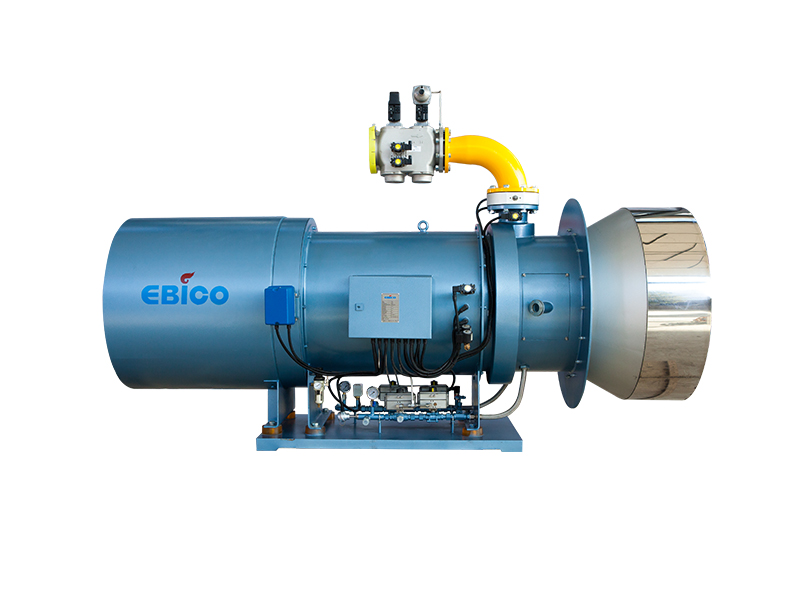
The EI-NQ is an axial-flow asphalt mixing plant burner series designed for aggregate drying in asphalt production. Six models provide published output capacities from 3,750 to 31,000 kW, with corresponding oil-consumption ratings from 300 to 2,800 kg/h.
The burner platform can be configured for approved heavy-oil or light-oil operation. Electronic proportional control regulates fuel delivery in response to the plant’s firing demand, helping coordinate burner output with aggregate drying and temperature control.
Final selection requires more than the nominal asphalt plant size. The dryer drum dimensions, aggregate throughput, incoming moisture, fuel properties, operating altitude, combustion-air system, exhaust draft, required discharge temperature, and local emission limit must all be reviewed.
Features
Ensures accurate matching with different asphalt plant capacities, preventing issues such as fuel oversupply in smaller plants or insufficient heating in larger units.
Supports both heavy oil and light oil in a single burner platform, giving customers greater flexibility in fuel sourcing and reducing dependence on a single energy type.
Generates finer oil mist for more complete combustion, delivering higher thermal output per unit of fuel and improving overall energy efficiency.
Automatically adjusts oil delivery based on real-time load demand, eliminating manual tuning errors and reducing unnecessary fuel consumption.
Achieves low-emission performance without the need for FGR, lowering compliance costs and simplifying environmental management.
Maintains steady oil consumption and consistent flame characteristics under continuous heavy-duty mixing operations, ensuring stable production cycles.
Light oil generally has lower viscosity and requires less preheating than heavy oil. The fuel system must still provide suitable filtration, stable inlet pressure, correct return conditions, and an approved shutoff arrangement.
Fuel quality should be checked for water, sediment, contamination, and variation between deliveries.
Heavy-oil operation normally requires controlled heating to bring the fuel within the viscosity range required by the selected atomization system. Depending on the project, the fuel installation may include:
A heated storage or service tank
Fuel circulation and return piping
Insulated or heat-traced pipework
Coarse and fine filtration
Temperature and pressure monitoring
A suitable oil pump and regulating valve
Drainage and cleaning provisions
Heating the oil by temperature alone is not sufficient if the resulting viscosity remains outside the burner’s permitted range.
Heavy oil and light oil should not be treated as interchangeable without adjustment. Fuel temperature, pressure, control parameters, atomization settings, ignition sequence, and combustion-air values may differ.
Where more than one fuel grade is required, the intended fuels and changeover procedure should be defined during burner configuration.
Technical Parameters
| Model | Output capacity (KW) | Oil Consumption (kg/h) | Specifications of the mixing plant |
| EI300NQ | 3750 | 300 | 500 |
| EI600NQ | 7000 | 650 | 1000 |
| EI1200NQ | 13500 | 1200 | 2000 |
| EI1800NQ | 21000 | 1900 | 3000 |
| EI2500NQ | 27000 | 2400 | 4000 |
| EI3000NQ | 31000 | 2800 | 5000 |
Application
Oil-fired asphalt mixing plants in 500 / 1000 / 2000 / 3000 / 4000 / 5000 capacity
High-duty highway & expressway paving projects
Remote infrastructure sites without stable gas supply
Oil-based energy regions (Middle East, Africa, Central Asia, South America)
Mobile asphalt plants using diesel & heavy oil as main fuel
Maintenance intervals should reflect operating hours, fuel cleanliness, dust conditions, and burner duty.
Routine checks may include:
Cleaning or replacing oil filters
Inspecting the nozzle and atomization components
Checking oil heaters and temperature sensors
Testing fuel-pressure switches
Inspecting pumps, valves, seals, and return lines
Cleaning flame-detector sight paths
Checking ignition electrodes or igniters
Inspecting combustion-air passages
Checking the burner refractory and mounting
Verifying fan vibration and motor current
Testing safety shutoff valves
Reviewing fault and shutdown records
Rechecking combustion after fuel-quality changes
A change in smoke, flame shape, exhaust oxygen, carbon monoxide, fuel pressure, or discharge-temperature stability should be investigated before it develops into an unplanned shutdown.
The burner must operate as part of a complete burner management and asphalt plant control system.
The safety sequence should address:
Pre-purge and post-purge
Flame establishment and supervision
Ignition failure
Flame loss during operation
Low and high fuel pressure
Fuel-temperature limits
Combustion-air proving
Dryer draft proving
Fan and drum permissives
Emergency stop
Safety valve closure
Controlled restart after a fault
The burner does not replace the plant’s fire protection, ventilation, fuel-storage protection, electrical isolation, or emergency procedures.
A safety shutdown should be investigated before reset. Repeatedly resetting the burner without identifying the fault may introduce unburned fuel or damage equipment.
EBICO provides industrial burner systems together with combustion controls, fuel-supply systems, air-supply equipment, automation, and engineering services.
Project support can include:
Burner capacity review
Dryer and flame matching
Heavy-oil system design
Fuel-conditioning review
Control and interlock definition
Retrofit interface review
Installation guidance
Commissioning support
Combustion adjustment
Fault diagnosis
Spare-parts planning
For an EI-NQ selection, provide the asphalt plant model, required production rate, dryer dimensions, aggregate moisture, target temperature, fuel specification, oil viscosity, fuel heating value, exhaust-system data, site altitude, and required emission limit.
It refers to the real adjustable oil usage per hour, allowing the burner to operate efficiently across small to super-large asphalt plants without over-burning or under-heating.
No. It fully supports both heavy oil and light oil, and the system is designed to maintain stable atomization quality for both fuels.
By automatically matching oil supply to actual thermal demand, EI-NQ avoids excess fuel injection, directly reducing daily operating fuel expenses.
The electronic proportional control system dynamically tracks load changes, so oil consumption adjusts in real time, keeping flame output stable.
Yes. With VIC ultra-low nitrogen oil combustion technology, NOx emissions can be kept within 30 mg, meeting multiple international standards.
Contact Us
Asphalt Plant Combustion Engineering
Send us your asphalt plant model, dryer dimensions, aggregate throughput and moisture, fuel grade and viscosity, target material temperature, draft conditions, and emission requirements. EBICO will review the burner capacity, fuel system, flame arrangement, and control interfaces for your project.
EI300NQ–EI3000NQ | 300–2,800 kg/hDryer drawings and fuel specifications are recommended for review.


