

Views: 0 Author: Site Editor Publish Time: 2026-11-05 Origin: Site
Operating an industrial boiler on multiple fuels provides immense operational flexibility for modern facilities. However, firing two distinct fuels inside a single combustion chamber introduces severe risks. When facilities switch between gaseous and liquid fuels, cross-contamination and unburned fuel accumulation become serious hazards. Plant managers must address these combustion risks proactively to protect their operations. Failing to implement correct safety interlocks triggers regulatory fines and voids commercial insurance policies. Worse, it creates catastrophic explosion hazards and costly unplanned downtime. You must understand the specific safeguards required to operate these complex systems safely and reliably. This article provides plant managers and facilities engineers with an evidence-based checklist of mandatory safety interlocks for dual fuel systems. We also explore essential evaluation criteria to help you upgrade legacy burner management systems successfully.
Code-compliant dual fuel operation requires distinct, fuel-specific interlocks alongside shared purge and flame safeguard controls.
Cross-connection risks demand strict Proof of Closure (POC) and mechanical/electronic fuel changeover interlocks.
Evaluating a new Dual Fuel Boiler Burner upgrade requires prioritizing multi-sensor flame detection and verifiable safety relay logic to prevent nuisance trips.
Compliance with NFPA 85, ASME CSD-1, and FM Global standards is non-negotiable for commercial and industrial liability protection.
Changing from a primary fuel, like natural gas, to a backup fuel, such as #2 diesel, represents the most hazardous operational phase for any facility. You introduce different fluid dynamics, pressures, and combustion characteristics into the same physical space. If operators mishandle this transition, the results can be disastrous. The stakes go far beyond temporary equipment failure.
Combustion chamber explosions happen when liquid and gaseous fuels mix inadvertently. Physics dictates that unburned fuel vapors expand rapidly when ignited. If a gas valve leaks while the burner fires on oil, the excess gas pools in the furnace. The primary flame ignites this unintended mixture, creating a pressure wave that breaches the boiler shell. To prevent simultaneous firing, you need rigorous isolation protocols.
Insurance underwriters understand these physical realities perfectly. This is why organizations rely heavily on standards like FM Global and NFPA 85. These frameworks mandate strict adherence to safety interlocks. Underwriters will void coverage instantly if they discover bypassed or faulty interlock systems during an audit. Compliance serves as your baseline for liability protection.
However, safety should not destroy efficiency. Proper interlocks balance stringent protection with operational reliability. Poorly integrated legacy systems often suffer from "false trips," shutting down production for no actual emergency. Modern safety controls eliminate these false trips. They keep your plant running smoothly while maintaining an absolute barrier against combustion hazards.
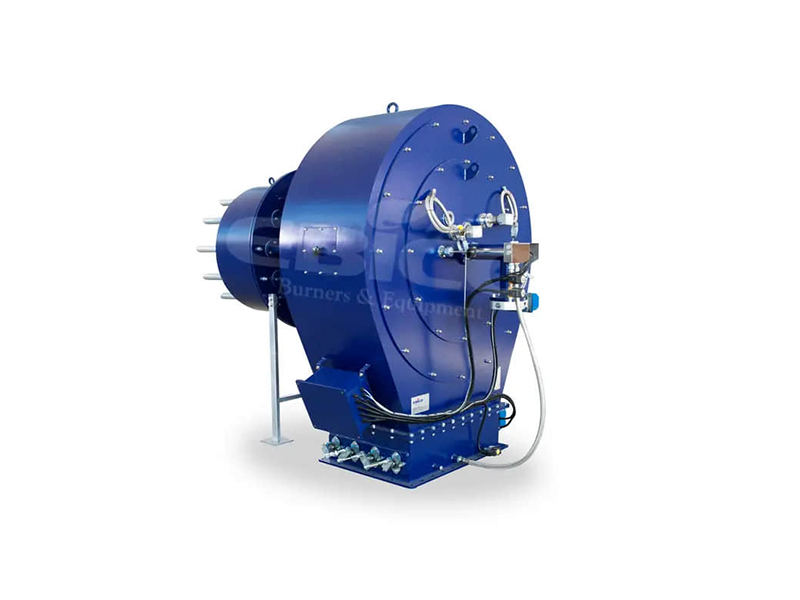
Before a burner introduces any spark or fuel, it must prepare the combustion chamber safely. The pre-ignition sequence clears out lingering vapors and ensures the equipment rests in a safe starting position. The Burner Management System (BMS) manages this process through several non-negotiable safety checks.
Purge Airflow Interlock: This control ensures the combustion chamber is cleared of combustible gases before the ignition sequence begins. The system runs the draft fan at high speed to sweep out the furnace. The interlock requires verifiable draft fan pressure to confirm actual airflow, not just fan motor activation.
Low-Fire Start Interlock: Igniting a burner at maximum capacity creates a dangerous concussive force. This interlock mechanically or electronically guarantees the burner actuator is in the minimum firing position. It prevents explosive light-offs by keeping initial fuel and air volumes safely contained.
Proof of Closure (POC) Valve Interlocks: These limits are essential for both fuel trains. The BMS must verify that main fuel valves are mechanically seated and closed prior to spark. POC switches physically monitor the valve stem. If a valve remains even slightly open from a previous cycle, the system aborts the startup sequence immediately.
These interlocks work together as a sequential barrier. The system halts the entire operation if any single switch fails to report the correct status. You cannot compromise on these pre-ignition steps without risking a major furnace explosion.
When operating an Oil and Gas Burner, the control system must manage two entirely different physical states of fuel. Gases compress, while liquids do not. Therefore, the safety sensors for each fuel train differ significantly. The system must also isolate the inactive fuel line completely.
The gas train requires specialized monitoring to maintain stability. High and low gas pressure switches protect the system constantly. A low-pressure event causes a flameout, while high pressure creates fuel-rich explosive mixtures. Furthermore, vent valve verification ensures the block-and-bleed system functions correctly. This setup traps and vents any gas that leaks past the primary isolation valve.
The oil train introduces mechanical complexities involving atomization. Low oil pressure prevents proper droplet formation, causing raw oil to pool inside the furnace. You also need atomizing media interlocks. These switches prove the system has adequate steam or compressed air pressure for oil atomization. The burner must trip immediately if atomizing pressure drops. For heavy fuel oils, temperature interlocks ensure the pre-heater maintains the exact viscosity required for combustion.
Fuel selector interlocks serve as the brain behind the transition. This logic ensures the non-selected fuel train remains electrically locked out and mechanically isolated. When you switch to oil, the system physically cuts power to the gas valves.
Primary Interlock Requirements by Fuel Type
Interlock Category | Gas Train Requirement | Oil Train Requirement |
|---|---|---|
Pressure Monitoring | High and Low Gas Pressure Switches | Low Oil Pressure Switch |
Valve Verification | Block-and-Bleed Vent System | Oil Safety Shutoff Valves (SSOV) |
Media Preparation | Not Applicable | Atomizing Air/Steam Pressure Limits |
Temperature Control | Not Applicable | High/Low Oil Temp (Heavy Oils) |
Once the flame establishes, a Dual Fuel Burner relies on continuous monitoring controls to sustain safe operation. The most critical component is advanced flame detection. Natural gas burns with a distinct ultraviolet (UV) signature, while atomized oil produces heavy infrared (IR) radiation. You need advanced scanners capable of registering both distinct flame signatures. A combined IR/UV scanner adapts seamlessly during fuel changeovers.
Beyond the flame scanner, the system actively monitors the boiler's physical environment. Standard operational limits include:
Combustion Air Pressure Switch: This switch provides continuous monitoring during the run cycle. It ensures the blower delivers adequate oxygen. If the fan belt breaks, this interlock trips the burner before the mixture turns dangerously rich.
Low Water Cutoff (LWCO): A standard but critical limit control. It prevents boiler dry-firing and vessel rupture by cutting power if the water level drops below the safe operating line.
High Limit Pressure/Temperature Interlocks: These act as redundant safety bounds. They shut down the burner if the system exceeds designed thermal or pressure capacities, preventing catastrophic over-pressurization.
These safeguards operate in the background every second the burner runs. They represent your last line of defense against mechanical failure. Modern systems wire these limits directly into the master safety relay circuit, guaranteeing an immediate response regardless of software states.
Upgrading safety systems forces facilities to choose between hardwired and PLC-based safety logic. Historically, engineers relied on physical relay logic panels. Today, we evaluate the shift toward modern, SIL-rated programmable Burner Management Systems. A Safety Integrity Level (SIL) PLC offers robust diagnostic capabilities while maintaining strict fail-safe parameters.
A major challenge in older facilities is the nuisance trip problem. Overly sensitive or poorly calibrated interlocks frustrate production teams. This frustration leads operators to dangerous bypass behaviors, commonly known as "jumping out" safeties. You must strictly prohibit bypassing interlocks. Replacing unreliable legacy controls with precise digital sensors eliminates the temptation to bypass them in the first place.
Testing and calibration durability also play massive roles in plant budgeting. Selecting industrial-grade pressure switches and sensors matters for long-term operational expenditure. Cheap switches suffer from diaphragm fatigue, shifting their setpoints over time. High-quality components hold their calibration, reducing maintenance labor and minimizing unscheduled downtime.
Finally, you must focus on audit preparedness. Insurance auditors and state boiler inspectors demand proof of compliance. Documenting interlock testing protocols satisfies these regulatory bodies. You should maintain detailed logs showing when each switch was tested, how it responded, and who performed the verification.
When you decide to modernize your Dual Fuel Boiler Burner, you must follow a structured evaluation process. You cannot simply bolt new sensors onto fifty-year-old piping. First, assess the legacy hardware. You need to audit your current fuel trains to identify missing block-and-bleed valves or outdated pneumatic controls. Older systems rarely meet current NFPA 85 requirements.
Next, apply strict vendor selection logic. Look for integration partners who offer pre-piped, factory-tested fuel trains. These skids should feature UL and FM-certified components. Field-pieced solutions often suffer from improper wiring and leaky pipe threads. A factory-tested skid guarantees compliance right out of the crate.
You must also consider integration with the plant DCS (Distributed Control System). Ensure the burner's safety interlocks communicate transparently with the broader network. While the BMS must stand alone for safety reasons, it should send rich diagnostic data to the DCS for predictive maintenance. This visibility helps technicians spot drifting pressures before they cause a shutdown.
Your next steps involve requesting a formal combustion safety audit. Bring in certified engineers to evaluate your specific setup. They will help you scope a BMS retrofit versus a total burner replacement. Sometimes, replacing the entire burner proves more reliable than trying to adapt modern sensors to an obsolete combustion head.
Safety interlocks on dual fuel systems are highly complex but entirely non-negotiable. They require precise, constant coordination of purge cycles, fuel isolation, and flame monitoring. Treating these systems casually invites catastrophic accidents and regulatory penalties.
Upgrading to a modern, code-compliant BMS protects your capital equipment and personnel. It provides the rock-solid reliability you need during emergency fuel changeovers. You eliminate false trips, secure your insurance coverage, and guarantee operator safety.
Take action before an incident forces your hand. Contact a certified combustion engineer today to audit your current interlock setup. Request a detailed quote for a compliant dual-fuel upgrade to keep your facility safe and productive.
A: Yes, modern multi-sensor (IR and UV) scanners auto-adjust to the fuel profile. They seamlessly transition between monitoring the ultraviolet signatures of gas and the infrared signatures of oil. However, they must be properly tuned during commissioning to avoid false flame failures.
A: Fluctuating atomizing air/steam pressure on the oil side, and draft control issues during the physical fuel changeover sequence. Poorly maintained pressure regulators often fail to deliver consistent atomizing media, causing immediate burner shutdowns.
A: No. Bypassing safety interlocks violates NFPA 85, voids insurance policies, and creates an immediate, severe explosion hazard. Standard protocol requires shutting down the system completely and replacing the faulty component before resuming operations.
A: Most regulatory bodies and insurance providers mandate documented testing of all critical safety interlocks at least annually. Some specific operational checks, like flame scanner response times and low water cutoffs, often require monthly verification.
