

Views: 0 Author: Site Editor Publish Time: 2026-09-01 Origin: Site
Operating a natural gas burner at theoretical stoichiometric perfection is a lab experiment, not an industrial reality. In live plant environments, excess air acts as the critical buffer. It ensures complete combustion, prevents carbon monoxide breakthrough, and maintains flame stability. Determining the right excess air level requires balancing thermal efficiency against safety and emissions compliance. Too little air risks explosive conditions and dangerous soot accumulation. Too much air wastes expensive fuel by venting heated oxygen and increasing blower power demands. For facility engineers and plant managers evaluating burner upgrades or retrofits, understanding air management is vital. How a burner modulates this excess air ratio across its firing range matters greatly. It serves as a primary indicator of operational lifespan and overall return on investment.
Standard industrial natural gas burners typically require 10% to 15% excess air (roughly 2% to 3% stack oxygen) for stable operation at high fire.
Finding the "too much" threshold is critical: every 5% increase in excess air beyond the optimal setpoint drops overall system efficiency by approximately 1%.
Advanced applications, such as a gas burner for thermal oil heater systems, require tighter excess air control due to specific heat transfer constraints and fluid degradation risks.
Upgrading to a low NOx gas burner often introduces flue gas recirculation (FGR), which changes the excess air mathematics and requires highly precise oxygen trim controls to maintain flame stability.
Theoretical combustion assumes perfect mixing of fuel and oxygen. We call this a stoichiometric mixture. It requires precisely 0% excess air. However, perfect mixing never happens inside real-world industrial environments. Variations in gas pressure and airflow create imperfect combustion zones. Standard burner heads simply cannot mix molecules flawlessly in milliseconds. Therefore, we must introduce an air buffer.
Industry guidelines establish a reliable starting point. Most operators target 10% to 15% excess air. This translates to about 2% to 3% oxygen in the flue gas stack. You should treat this as a baseline, not a fixed rule. Real-world draft conditions fluctuate daily based on barometric pressure. Fuel gas composition variations alter the required oxygen levels dynamically. Ambient temperature changes also drastically affect air density. A burner tuned on a freezing winter morning will pull denser air than it will during a hot summer afternoon.
This air buffer eventually reaches a critical tipping point. On one side, excess air acts as a mandatory safety mechanism. It prevents dangerously fuel-rich environments inside the furnace. Combustible gas buildup can lead to devastating furnace explosions, a primary concern outlined by organizations like the NFPA. On the other side, it becomes an operational liability. Pushing excessive air through the system physically quenches the flame. You waste massive amounts of thermal energy heating unnecessary nitrogen. Understanding this balance protects both your physical equipment and your operating budget.
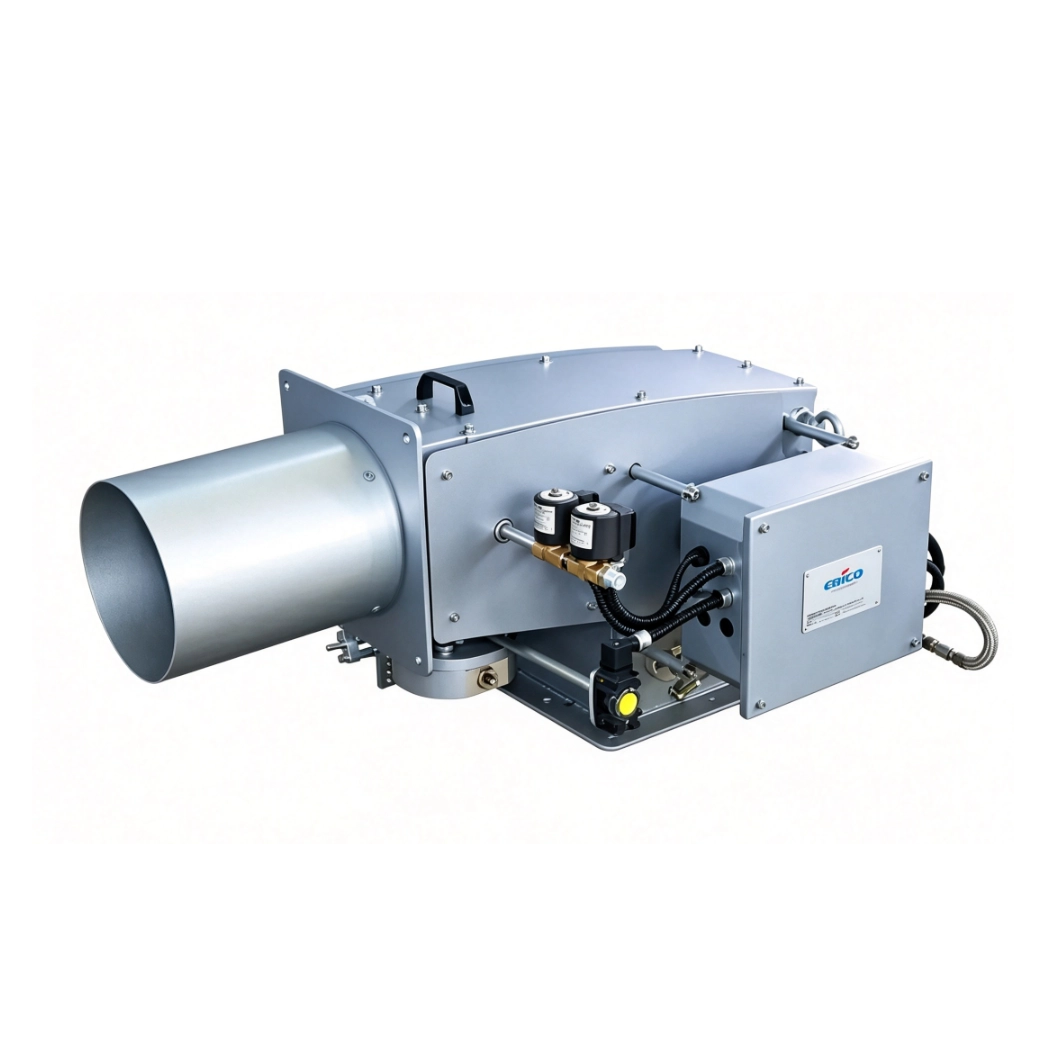
Thermal efficiency directly drives your operational fuel costs. Atmospheric air contains approximately 79% nitrogen. This nitrogen does not contribute to the combustion process. Instead, it absorbs valuable heat from the flame. The system then exhausts this expensive thermal energy out the stack. Every additional percentage of excess air increases this parasitic heat loss. You can directly tie these elevated air levels to higher fuel consumption metrics.
We must also look at turndown ratio realities. Excess air levels cannot remain static across the entire operational curve. A stable Natural Gas Burner must modulate air smoothly as it ramps down. When transitioning to low fire, burner heads often require significantly higher excess air percentages. This extra volume maintains sufficient flame velocity and shape. Without adequate velocity, the flame becomes unstable and retracts toward the burner head. Modulating this airflow correctly defines a high-performing combustion system.
How do you assess your existing equipment? Aging burners often display clear symptoms of poor air control. You should look out for the following operational warning signs:
Physical flame impingement against boiler tubes or refractory walls.
Acoustic vibrations or deep rumbling noises indicating severe air-fuel imbalances.
Frequent flame scanner trips pointing to a flickering or detached flame front.
Sudden spikes in carbon monoxide levels during load changes.
If you experience these issues routinely, your burner likely struggles to manage air volumes effectively.
Impact of Excess Air on Boiler Efficiency and Stack Oxygen
Excess Air (%) | Stack Oxygen (O2 %) | Approximate Efficiency Loss |
|---|---|---|
10% | 2.2% | Baseline (Optimal) |
15% | 3.2% | -1.0% |
20% | 4.0% | -2.0% |
30% | 5.5% | -4.0% |
50% | 7.5% | -8.0% |
Thermal fluid heaters present highly specific engineering challenges. They operate at much higher fluid temperatures than standard saturated steam boilers. This fundamental difference drastically changes the internal heat transfer dynamics. The acceptable temperature limit of the surrounding combustion gases narrows significantly. You must account for these stringent system constraints during the initial design phase.
Excess air heavily influences the critical film temperatures inside the heater tubes. It shifts the balance between radiant and convective heat transfer zones. Pushing too much air lowers the radiant heat absorbed in the primary furnace. Consequently, it forces an excessive volume of high-velocity hot gas through the convective section. This volume imbalance can cause localized overheating of the thermal oil. Overheated thermal fluid degrades rapidly. It leads to carbon fouling, commonly known as coking, and eventual system failure.
Choosing the right equipment requires rigorous evaluation criteria. When shortlisting options, buyers must verify specific vendor performance guarantees. You need accurate O2 level projections and comprehensive draft loss calculations. Vendors must model these figures specifically for thermal oil applications. Generic steam boiler data will not suffice for these demanding environments. An optimized Gas Burner for Thermal Oil Heater ensures safe film temperatures while maintaining high combustion efficiency.
Environmental regulations continue to tighten aggressively on a global scale. Many regions now enforce strict sub-9 ppm NOx emission limits for industrial facilities. This regulatory context drives the rapid adoption of specialized burner technologies. Facilities can no longer rely on traditional, high-temperature combustion methods. They must adapt immediately to meet these stringent environmental mandates or face operational fines.
Achieving regulatory compliance involves a complex engineering trade-off. A Low NOx Gas Burner reduces emissions by fundamentally lowering peak flame temperatures. Manufacturers typically use Flue Gas Recirculation (FGR) or lean-premix technologies to achieve this internal cooling effect. FGR extracts inert exhaust gases and injects them back into the active combustion zone. This process dilutes the oxygen concentration and effectively suppresses thermal NOx formation.
However, these emission reduction methods introduce significant implementation risks. Running incredibly lean air-fuel mixtures pushes the flame closer to its absolute flammability limit. The flame becomes highly susceptible to physical blowout. Excess air control must become drastically more precise in these specialized applications. A minor fluctuation in draft pressure can trigger destructive acoustic resonance. Poor air control often leads to complete flame failure. Operators must continuously balance strict emissions compliance against essential operational reliability.
Legacy mechanical linkages inherently drift and degrade over time. Metal rods expand under heat, pivot joints wear down, and precise calibration disappears. This gradual mechanical degradation causes sudden, unpredicted spikes in excess air. Modern parallel positioning systems solve this accuracy issue completely. Linkageless controls use independent servo motors for both fuel valves and air dampers. They provide repeatable, pinpoint accuracy across the entire firing curve.
You should also carefully assess the business case for active O2 trim control. This advanced technology relies on continuous stack oxygen monitoring. The sensor feeds live operational data directly to a variable frequency drive (VFD) on the combustion air blower. The system automatically adjusts fan speeds to maintain optimal oxygen levels. It autonomously compensates for weather changes and fuel pressure drops in real time. This automation guarantees long-term fuel savings and stabilizes flame geometry.
When specifying new equipment for your plant, follow a strict shortlisting logic. We highly recommend prioritizing these specific evaluation actions:
Look for burner manufacturers providing verified performance curves across the full turndown range.
Demand transparent engineering assumptions regarding fuel gas pressure stability and combustion air temperature variations.
Evaluate the integration capabilities of the burner management system (BMS) with your existing plant SCADA systems.
Request case studies demonstrating long-term servo motor reliability in similar industrial environments.
Thorough technical evaluation prevents costly operational surprises after the final commissioning phase.
Specifying industrial heating equipment involves far more than simply matching peak BTU outputs. It requires rigorously evaluating how effectively the system manages the dynamic air-to-fuel ratio. Proper excess air management protects your thermal efficiency, ensures site safety, and minimizes harmful atmospheric emissions. Every facility operates under completely unique draft conditions and process loads. You must select advanced controls capable of adapting to these variables autonomously.
We strongly recommend conducting a comprehensive baseline combustion analysis on your current equipment. Document your baseline oxygen levels, flue gas temperatures, and carbon monoxide emissions across multiple firing rates. You can then accurately calculate the specific financial waste caused by excessive air volumes. Use this hard data to justify upgrading to a high-efficiency burner equipped with automated draft control. Modernizing your combustion strategy consistently delivers immediate and highly measurable fuel savings.
A: Most industrial natural gas burners operate optimally at 10% to 15% excess air at high fire, which correlates to roughly 2% to 3% oxygen in the flue gas.
A: Operating below the optimal excess air limit causes incomplete combustion, resulting in sharp spikes in CO. Conversely, massive amounts of excess air can over-cool the flame, also leading to CO breakthrough (quenching).
A: To reduce thermal NOx, these burners run cooler flames (often using excess air or recirculated flue gas as a heat sink). This pushes the flame closer to its blowout threshold, requiring highly responsive and precise combustion controls.
A: Only within the mechanical limits of the burner head and controls. Blindly reducing excess air without continuous O2 monitoring and CO limits risks incomplete combustion, soot accumulation, and potentially explosive fuel-rich conditions in the stack.
