

Views: 0 Author: Site Editor Publish Time: 2026-09-18 Origin: Site
An unstable flame in an industrial setting isn't just a maintenance nuisance; it is a leading indicator of impending unplanned downtime, fuel waste, and severe safety hazards. Whether dealing with pulsating flames, constant burner lockouts, or lean blow-offs, operators must accurately diagnose the root cause to prevent catastrophic equipment failure. Ignoring these warning signs often leads to compromised production schedules and highly dangerous working environments.
This guide deconstructs the mechanical, fuel, and control-level failures causing flame instability. We provide a technical framework to evaluate whether your facility requires immediate component repair or a comprehensive burner retrofit. Understanding these core issues enables maintenance teams to restore optimal combustion efficiency rapidly. You will learn how to pinpoint atomization flaws, rectify airflow imbalances, and assess control system degradation to keep your operations running safely and smoothly.
Flame instability typically stems from three core areas: poor fuel atomization, incorrect air-to-fuel ratios, or failing control sensors.
Fluctuating fuel viscosity (often tied to inadequate pre-heating) is the most frequent hidden culprit in heavy oil applications.
Repeated "nuisance trips" degrade system lifespan; addressing them requires moving beyond superficial cleaning to auditing the draft and combustion control loops.
Evaluating a replacement Industrial Oil Burner becomes necessary when legacy mechanical linkages can no longer maintain precise combustion parameters across varying load demands.
Flame instability creates a ripple effect across industrial operations, directly impacting your bottom line. An erratic combustion profile is never an isolated issue. It signals underlying inefficiencies requiring immediate attention before they escalate into costly plant shutdowns.
Frequent flame scanner trips halt production instantly. When a scanner loses sight of the flame root, the safety system triggers an automatic lockout. Operators must then inspect the equipment and perform manual resets. These continuous interruptions cost valuable labor hours. They disrupt batch processes and drastically reduce overall equipment effectiveness (OEE). Over time, constant thermal cycling from emergency shutdowns stresses boiler components, accelerating metal fatigue.
Unstable flames indicate incomplete combustion. When fuel fails to mix properly with oxygen, unburned droplets travel through the exhaust passages. This leads directly to elevated fuel costs because you are burning more oil to achieve the same heat output. Furthermore, incomplete combustion increases soot deposition on internal heat exchanger tubes. Soot acts as a powerful insulator. A mere eighth of an inch of soot can reduce heat transfer efficiency dramatically, forcing the burner to work harder and consume even more fuel.
The safety hazards tied to poor flame stability are severe. Unburned fuel pooling inside the combustion chamber creates immediate explosion risks. Delayed ignition sequences often result in dangerous "puff-backs," sending concussive waves through the equipment and boiler room. Additionally, erratic flames produce inconsistent emission profiles. They cause localized spikes in carbon monoxide (CO) and particulate matter. These spikes easily exceed localized emissions compliance limits, inviting heavy regulatory fines and mandatory operational curtailments.
Troubleshooting starts at the physical level. Technicians and facility managers must evaluate fuel delivery mechanisms and air mixing dynamics to isolate the root cause.
Burners rely on precise spray patterns to mix fuel with incoming air. Worn or partially clogged burner nozzles distort this crucial spray pattern. Even microscopic carbon deposits on the nozzle tip create uneven droplet sizes. Large oil droplets resist rapid ignition. They pass through the combustion zone partially unburned, causing the flame to flutter and smoke.
Inadequate fuel pump pressure also prevents the oil from breaking into fine, combustible droplets. The fuel pump must overcome system resistance to deliver oil at a high velocity. If pump gears wear down or internal bypass valves fail, pressure drops. Low pressure produces a sluggish, unstable flame root struggling to maintain ignition at the burner head.
Heavy fuel oils demand strict temperature control for proper flow. Ambient temperature drops alter oil thickness rapidly. Failing line heaters or malfunctioning tank heating coils allow the fuel to cool. Thick oil resists atomization at the nozzle tip.
There is a direct correlation between fuel viscosity and burner flame shape. When viscosity fluctuates, the flame geometry changes unpredictably. The flame may become excessively long, impinging on chamber walls, or too short and wide, starving itself of primary air. Operators must maintain precise oil pre-heating to stabilize viscosity before the fuel reaches the nozzle.
Combustion requires exact air volumes delivered at specific velocities. Failing forced-draft blower motors restrict oxygen delivery. Motor bearing wear or voltage imbalances slow fan speeds subtly. Dirty fan impellers lose their aerodynamic efficiency, pushing significantly less air into the combustion chamber.
Barometric damper malfunctions cause unpredictable draft fluctuations. Dampers must open and close smoothly to manage stack draft. Rusted hinges or broken counterweights cause dampers to stick. This erratic draft pushes and pulls the flame front, creating physical turbulence destabilizing the entire combustion process.
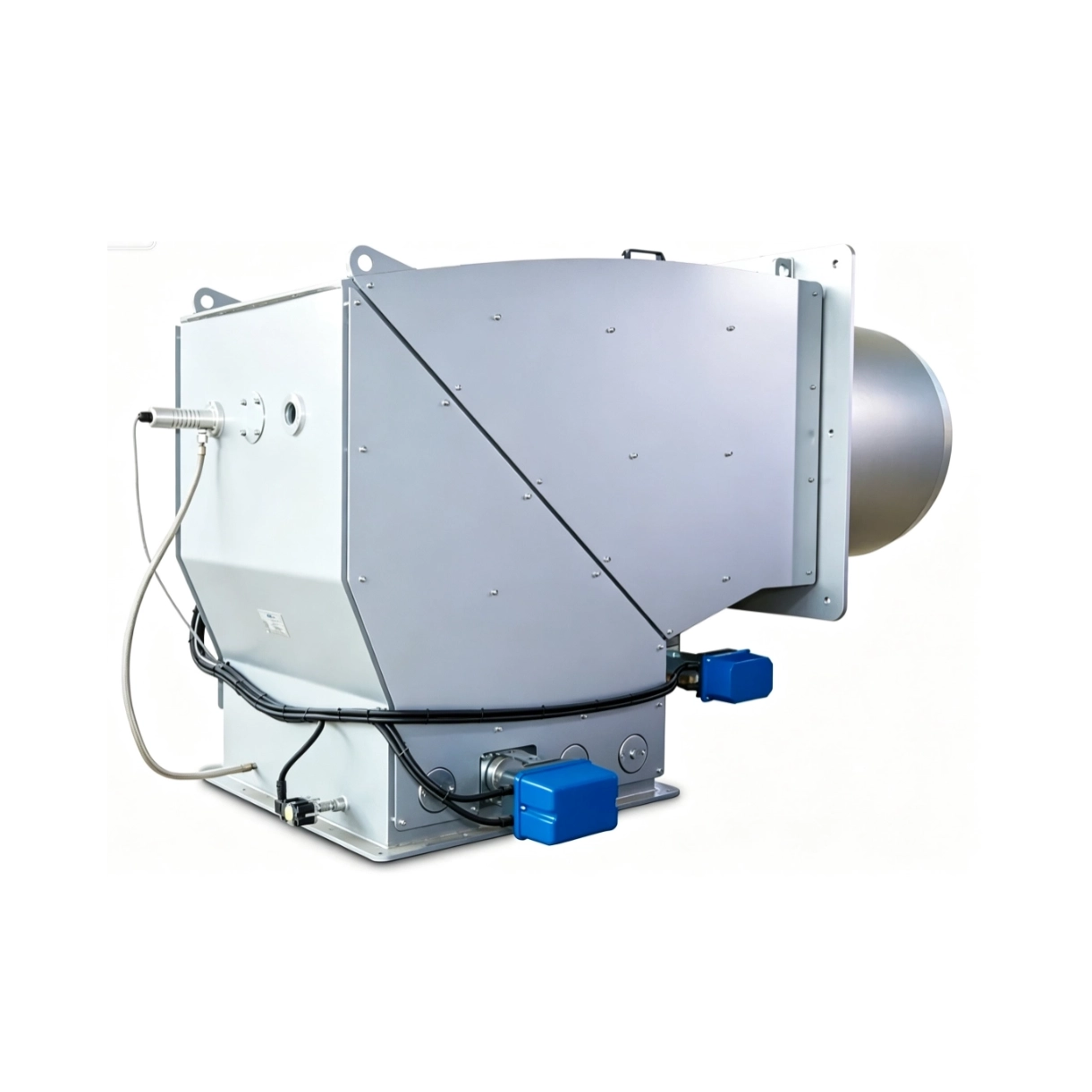
Modern combustion systems rely heavily on sensor feedback. Hardware failures falsely report instability, or worse, inadvertently cause it through erratic control signals.
Scanners monitor the flame profile constantly to ensure safe operation. Ultraviolet (UV) and infrared (IR) scanners degrade over time due to heat exposure. Sooted or misaligned scanners fail to read a stable flame profile. They miss the highest-intensity combustion zones. A degrading scanner intermittently "loses" the flame. This causes the burner management system to panic, initiating premature safety lockouts even when the actual flame burns perfectly well.
Traditional systems use single-point positioning. Cams and linkages connect the air damper and fuel valve to a single servo motor. Over time, these moving parts suffer physical wear. Constant movement creates joint slop, known as hysteresis.
Hysteresis results in inaccurate air-to-fuel ratio control. When the burner modulates down, the damper might not return to its exact calibrated position. Even a one-millimeter deviation in linkage position starves the flame of oxygen or floods it with excess air. This mechanical degradation makes consistent flame stability impossible across varying load demands.
Ignition sequences require high-energy sparks to ignite the atomized oil instantly. Transformers lose voltage output as internal windings break down. Electrodes wear out, widening the spark gap beyond functional limits.
Weak spark generation causes delayed ignition sequences. Fuel sprays into the chamber for several seconds before catching fire. When it finally ignites, the delayed ignition creates violent initial flame turbulence. This physical shock destabilizes the draft and causes the flame to pulse heavily during the crucial startup phase.
Facility managers need a clear decision-making matrix. Evaluating the next steps requires separating minor maintenance issues from fundamental equipment obsolescence. We recommend following a structured, phased approach.
Begin with aggressive preventative maintenance. Follow this numbered checklist to rule out superficial issues:
Replace all burner nozzles and inspect the nozzle assembly for carbon buildup.
Clean all flame scanner lenses using approved solvents.
Test fuel pump pressure against original manufacturer specifications.
Verify heater functionality by checking the oil temperature at the burner head.
Inspect and lubricate all barometric dampers and air intake louvers.
Executing these basic steps resolves the vast majority of sudden flame instability problems.
If instability persists after standard maintenance, look toward system upgrades. Consider upgrading from mechanical linkages to parallel positioning controls. Parallel positioning uses independent servo motors for the fuel valve and the air damper. This digital approach eliminates mechanical hysteresis completely. You achieve tighter fuel-to-air management, better turndown ratios, and highly stable flames throughout the entire firing range.
Constant troubleshooting drains maintenance budgets rapidly. There comes a breaking point where component repairs no longer make financial sense. When the cost of continuous downtime exceeds the return on investment of new equipment, evaluating a modern Oil Burner becomes mandatory.
Watch for severe warning signs of hardware obsolescence. Parts unavailability signals the end of equipment life. Persistent carbon monoxide spikes indicate fundamental aerodynamic design flaws inside the aging burner head. Finally, an inability to meet current NFPA (National Fire Protection Association) or local safety codes demands immediate replacement to protect your facility and personnel.
Problem Severity | Symptom | Recommended Action | Expected Outcome |
|---|---|---|---|
Low | Intermittent lockouts, dirty scanner faults | Clean scanners, replace nozzles, check oil temp | Immediate return to stable operation |
Medium | Flame flutter during load changes, hysteresis | Retrofit to parallel positioning controls | Elimination of linkage slop, improved efficiency |
High | Puff-backs, severe CO spikes, obsolete parts | Full burner replacement | Compliance with safety codes, modernized control |
Process heating applications demand specialized approaches. Thermal fluid systems require extreme temperature stability to protect the entire fluid circuit. When evaluating upgrades for a Thermal Oil Heater Burner, specific design features matter immensely.
Thermal fluid systems circulate heat transfer oils instead of water. They require highly stable, non-impinging flames. If a flame impinges on the internal coil surfaces, it causes extreme localized overheating. This thermal shock degrades the fluid inside the coils rapidly.
The industry calls this fluid degradation "coking." Coked coils lose their heat transfer efficiency. The fluid breaks down into solid carbon deposits. Eventually, these deposits clog the tubes, causing them to overheat and rupture. A ruptured thermal oil coil releases highly flammable fluid into the combustion chamber, leading to devastating facility fires. Therefore, flame geometry control is non-negotiable.
When shortlisting new equipment for thermal oil applications, prioritize these technological advancements:
Linkage-less burner management systems (BMS): These provide digital precision, ensuring the air-to-fuel ratio remains perfectly calibrated across all firing rates.
Variable Frequency Drives (VFDs): VFDs on the combustion blower motor allow for precise draft control. They reduce electrical consumption significantly during low-load operation.
Advanced atomization technologies: Look for air or steam atomization options rather than standard pressure atomization. These advanced methods handle variable oil grades and fluctuating viscosities seamlessly, guaranteeing a stable flame root.
Technology Feature | Legacy Systems | Modern Upgrades | Primary Benefit for Thermal Oil |
|---|---|---|---|
Control Mechanism | Cams and Mechanical Linkages | Linkage-less BMS / Servos | Eliminates hysteresis; exact temperature control |
Airflow Management | Fixed Speed Blower with Damper | VFD Driven Blower Motor | Precise oxygen delivery; prevents flame flutter |
Atomization Method | High-Pressure Mechanical | Air/Steam Atomized Nozzles | Handles heavy oil variations; prevents coil coking |
Selecting a vendor involves more than comparing technical specification sheets. Base your choice heavily on post-installation support. Demand total transparency during the commissioning phase. Require written guarantees on combustion efficiency and emissions compliance. Reliable vendors will support your facility long after the initial startup, providing operator training and responsive technical troubleshooting.
An unstable flame is always a symptom of underlying mechanical, fluid, or control inefficiencies. From poor fuel atomization and incorrect viscosity to degrading mechanical linkages and failing scanners, operators must diagnose these issues methodically. Ignoring nuisance trips only accelerates equipment degradation and compromises facility safety.
Take proactive steps today to secure your production reliability. Schedule a comprehensive combustion audit with your maintenance team. Consult with an application engineer to evaluate your current burner's viability. By exploring high-efficiency retrofits or complete replacements, you can eliminate fuel waste, reduce maintenance labor, and ensure strict compliance with modern safety codes.
A: Black smoke indicates incomplete combustion. This usually occurs due to a rich fuel-to-air ratio, meaning there is too much fuel and not enough oxygen. Common causes include clogged air intake louvers, failing draft blower motors, or poor fuel atomization from a damaged nozzle.
A: You should replace the nozzle at least annually during standard preventative maintenance. However, you must replace it sooner if your facility runs highly abrasive fluids or heavy fuel oils, as these harsh fuels accelerate internal nozzle wear and distort the spray pattern rapidly.
A: The scanner itself doesn't cause physical flame instability. However, a dirty or failing UV/IR scanner will intermittently "lose" sight of the flame. This causes the burner control system to initiate unnecessary and highly disruptive safety shutdowns, resulting in operational instability.
A: The ideal temperature depends heavily on the specific oil grade (e.g., #2 light oil versus #6 heavy oil). Your primary goal is to achieve a specific fuel viscosity—typically 100 SSU (Saybolt Seconds Universal) right at the nozzle tip—rather than aiming for a universal temperature setting.
