

Views: 0 Author: Site Editor Publish Time: 2026-07-13 Origin: Site
Industrial facilities can no longer afford single-point failures in their thermal processes. Supply grid disruptions, volatile energy markets, and shifting emissions regulations are forcing plant managers to rethink their combustion infrastructure. Upgrading to a combination oil and gas burner transitions a facility from a reactive position to a proactive one. However, the initial capital expenditure and complex integration require a calculated business case. You must evaluate these specific engineering variables carefully to guarantee long-term operational success. This guide breaks down the financial triggers, technical specifications, and implementation realities of selecting a dual fuel system. We explore how varying control types impact daily efficiency. You will learn the exact sizing parameters required to avoid costly equipment mismatch. Ultimately, this helps you determine if the operational resilience justifies the investment.
Operational Resilience: Dual fuel systems prevent costly downtime by allowing seamless switching between gas and oil during grid interruptions or extreme weather events.
Fuel Arbitrage: Facilities can optimize long-term operating costs by switching fuels based on real-time market pricing.
System Compatibility is Critical: A burner must be geometrically and thermally matched to the boiler’s Maximum Continuous Rating (MCR) within a ±5% to ±10% tolerance to prevent thermal stress and maintain warranties.
Dual Compliance Reality: Emission limits (like low-NOx requirements) must be independently tested and verified for both fuel types; compliance on natural gas does not guarantee compliance on oil.
Relying on a single fuel source exposes operations to severe external risks. Plant downtime translates directly to lost revenue. An unexpected pipeline shutdown can halt production for days. Managers need a reliable backup plan. A dual fuel setup mitigates these threats effectively.
Energy cost optimization is a major driver. We call this fuel arbitrage. Facilities can toggle between natural gas and #2 fuel oil based on spot market prices. Natural gas pricing remains relatively stable. Propane or light oil serves as an excellent alternative when gas prices spike. You also gain protection against interruptible gas tariffs. Utility companies often offer lower rates if you agree to potential shut-offs during peak demand. A backup fuel allows you to accept these cheaper rates safely.
Supply chain redundancy provides another layer of security. Geopolitical supply shocks happen frequently. Local pipeline maintenance can disrupt fuel flow without warning. Natural disasters, like freezing wellheads, cripple single-fuel plants. Having a secondary fuel on site ensures uninterrupted operation. You stay online while competitors face forced shutdowns.
Meeting dynamic air quality mandates requires strategic flexibility. Environmental audits are becoming stricter. You can default to natural gas during high-smog days. Natural gas generates roughly 30% fewer carbon emissions compared to liquid fuels. You then reserve oil strictly for emergency redundancy. This balanced approach keeps the plant compliant while maintaining a reliable safety net.
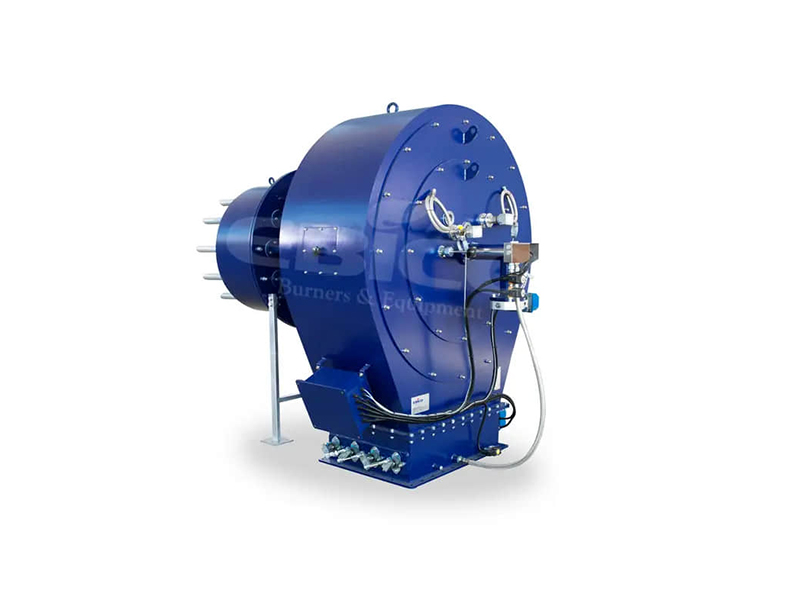
The control logic dictates both fuel efficiency and emission outputs. Selecting the right control mechanism is a critical engineering decision. It affects how smoothly you transition between fuels.
On-Off (Single-Stage) Burners: These units operate at 100% capacity or shut down completely. They have a lower upfront cost. However, they are highly inefficient for variable loads. Frequent purging and ignition cycles waste fuel. They can also increase emissions by up to 25% over time. We do not recommend them for complex industrial processes.
Modulating Burners: These precisely adjust the fuel-to-air ratio across a continuous range. They match the exact boiler load required at any given moment. This precision reduces fuel consumption by up to 15%. They are essential for dual fuel configurations. Modulating controls ensure a smooth transition and optimized combustion for both fuel types.
Parallel Positioning Systems: Older mechanical linkages suffer from hysteresis, or mechanical slop. Parallel positioning uses dedicated servo motors for fuel valves and air dampers. It eliminates hysteresis entirely. This ensures highly repeatable, precise combustion tuning.
Below is a quick comparison chart of these control categories:
Control Type | Mechanism | Efficiency Impact | Best Application |
|---|---|---|---|
On-Off | 100% fire or complete shutdown. | Poor. Increases emissions up to 25%. | Small, highly consistent base loads. |
Modulating | Continuous fuel-to-air ratio adjustment. | Excellent. Cuts fuel use by up to 15%. | Variable loads needing smooth fuel transitions. |
Parallel Positioning | Independent servo motors for valves/dampers. | Superior repeatability. Eliminates mechanical slop. | Strict emission compliance environments. |
Sizing a Boiler Burner requires strict adherence to engineering parameters. You cannot simply match output labels on a spec sheet. System engineering dictates performance.
Capacity matching is your first critical dimension. The maximum firing rate must align perfectly with the boiler's Maximum Continuous Rating (MCR). Deviations outside a ±5% to ±10% window create severe problems. An oversized unit leads to rapid short-cycling. An undersized unit fails to meet peak thermal demand.
Turndown ratio requirements depend heavily on your process. We categorize them as follows:
Stable Loads: A 4:1 turndown ratio is typically sufficient. It handles consistent base-load operations well without compromising flame stability.
Variable or Batch Loads: Industrial processes like food processing or chemical batching fluctuate wildly. These require an 8:1 or higher turndown. High turndown maintains efficiency during low-demand periods.
Excess air and O2 trim automation represent the next vital specification. Industrial baselines for excess air typically range from 5% to 15%. This translates to an equivalence ratio (λ) of 1.05 to 1.15. Implementing automated O2 trim controls offers immense value. The system adjusts the air damper in real-time. It compensates for changes in ambient temperature and fuel viscosity instantly.
Implementation realities often surprise plant managers. Buying the hardware is only 30% of the project. Seamless integration ultimately dictates project success. Overlooking physical constraints can ruin an installation.
Geometric and physical compatibility requires intense scrutiny. The flame shape must match the boiler furnace dimensions accurately. Firetube designs require different flame geometries than watertube designs. Flame impingement on boiler walls causes severe thermal stress. It eventually leads to catastrophic tube failure. Installers must verify this geometry beforehand. Installing an unverified or non-rated combination unit carries high liability. It can easily void the primary boiler manufacturer's warranty.
Fuel storage and handling baselines vary drastically by fuel type. Each demands specific auxiliary infrastructure.
Natural Gas: You must assess the facility inlet pressure carefully. It typically ranges from 20 to 200 mbar. Ensure all gas train components are sized correctly to prevent pressure drops.
Light Oil (#2): This fuel offers excellent flow characteristics without pre-heating. However, it requires dedicated storage tanks. You must also install proper spill containment and leak-monitoring logic.
Heavy Oil: This requires significant auxiliary infrastructure. You need heated lines and pre-heaters to manage high viscosity. It also requires specialized atomizing nozzles to ensure a clean burn.
Experience and adoption risks are very real. How engineers set up the system directly impacts safety and equipment longevity. A sloppy commissioning phase guarantees future operational headaches.
The "Gas-First" tuning protocol is a standard industry practice. Proper commissioning requires establishing the combustion baseline on the gas side first. Engineers utilize the gas meter for precise firing rate confirmation. Natural gas provides a highly stable, easily measurable baseline. The oil side air settings are then matched proportionally. Incorrect tuning sequences cause severe problems. They can lead to dangerous soot buildup in the boiler tubes. They also spike Carbon Monoxide (CO) emissions.
Emission compliance verification is mandatory after installation. Retrofitting a dual fuel system triggers re-certification immediately. Facilities must pass strict emissions tests on both fuels independently. Regulators test for NOx and CO limits. Achieving low-NOx on natural gas does not guarantee compliance when burning oil.
Budgeting for long-term maintenance is an area facility managers often neglect. Managers frequently under-budget these essential tasks. Dual systems inherently require more oversight. They need routine nozzle inspections. Technicians must perform regular fuel line leak tests. Safety interlock verifications are non-negotiable. This includes testing auto-shutoff valves and flame safeguards. Neglect is expensive. A poorly maintained system can drop overall efficiency by up to 30%.
Upgrading your combustion infrastructure is a strategic risk-management decision. It effectively insulates B2B facilities from grid unreliability and fuel market volatility. The initial capital outlay pays off by preventing catastrophic production halts. It secures your operational continuity.
We recommend prioritizing modulating control types for optimal efficiency. Always demand rigorous compatibility checks between the vessel and the new combustion unit. Verify that your facility infrastructure can support the secondary fuel safely. Pay close attention to geometric flame constraints.
Take action by engaging with a certified combustion engineer today. Audit your current boiler's MCR accurately. Assess your local emission limits for both gas and liquid fuels. Map out the return on investment of a dual-fuel retrofit before the next energy disruption hits.
A: No, provided it is commissioned correctly. High CO is a symptom of poor air-to-fuel ratio tuning or mismatched flame geometry. It is not a flaw of dual-fuel technology itself. Utilizing parallel positioning and O2 trim controls mitigates this risk almost entirely.
A: Not universally. The boiler's combustion chamber must geometrically accommodate the new flame pattern. Furthermore, many boiler manufacturers require explicit approval of the specific model. Skipping this step can void the vessel's warranty and pressure certifications.
A: Yes, in most jurisdictions. Because #2 or heavy oil burns with different emission profiles than natural gas, regulations treat them separately. Liquid fuels typically generate higher NOx and particulate matter. Your facility must demonstrate compliance and hold operating permits for both fuel states.
