

Views: 0 Author: Site Editor Publish Time: 2026-05-15 Origin: Site
Industrial thermal efficiency, operational continuity, and fuel security depend heavily on strategic burner selection. Choosing the right equipment dictates whether a facility thrives or struggles during sudden energy crises. Escalating energy costs, supply chain disruptions, and tightening emission regulations force facility managers to adapt. They must move away from rigid, single-fuel systems. Relying on one fuel source exposes plants to severe operational risks. Evaluating between a dual fuel and a multi fuel burner requires analyzing your facility’s risk tolerance, sustainability mandates, and capital availability. This guide provides a framework to make an evidence-based selection. We will explore system configurations, evaluate footprint requirements, and review implementation risks. You will learn how to balance initial investments against long-term fuel flexibility. This ensures your thermal infrastructure remains resilient and highly efficient.
Dual fuel systems provide critical redundancy, typically utilizing natural gas as the primary source with an oil backup to mitigate supply interruptions.
Multi fuel burners offer maximum flexibility, allowing facilities to utilize three or more fuels, including alternative energy sources like biogas, hydrogen blends, or process waste.
Burner selection must balance initial capital expenditure (CAPEX) with long-term fuel arbitrage opportunities (OPEX), site infrastructure constraints, and local emissions permitting.
Upgrading any boiler burner introduces implementation realities regarding Burner Management Systems (BMS), furnace geometry, and operator training that must be scoped upfront.
Dependence on a single fuel source exposes operations to volatile spot market pricing. Winter supply constraints often force unexpected shutdowns. Carbon taxation risks loom over heavy emitters continuously. Single-fuel systems lack the flexibility needed to navigate these modern industrial challenges. A sudden pipeline disruption can halt production entirely. This causes massive revenue losses and missed delivery deadlines.
Several operational triggers usually force managers to consider an equipment upgrade. Aging thermal equipment rapidly loses its original combustion efficiency. Approaching the end-of-life for these units makes replacement inevitable. Many facilities transition to interruptible natural gas tariffs to save money. These utility contracts offer lower rates but allow the supplier to cut off gas during peak winter demand. Corporate decarbonization mandates also drive major upgrades. Companies must reduce Scope 1 emissions to meet aggressive sustainability targets.
An ideal upgrade achieves uninterrupted steam or heat generation under all conditions. It stabilizes operational costs over time. Maintaining strict regulatory compliance across all operating modes remains non-negotiable. Upgrading your system should directly address these core business problems. The right choice transforms your heating system from a liability into a strategic asset.
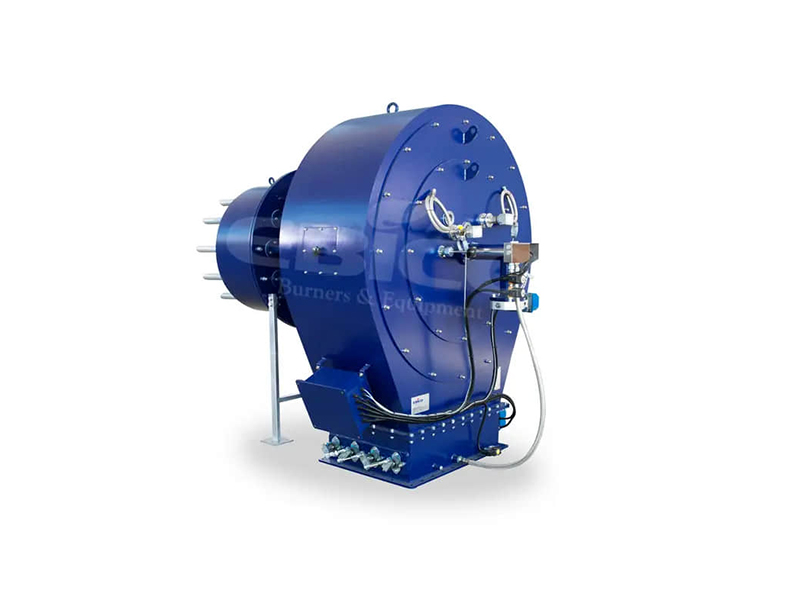
These systems are strictly designed to switch between two distinct fuels. Almost universally, a dual fuel Boiler Burner uses natural gas and light fuel oil. Natural gas serves as the primary, cost-effective fuel. Light fuel oil, typically diesel, acts as the reliable backup. This configuration provides a straightforward safety net against primary fuel losses.
Facilities utilizing "interruptible" natural gas contracts depend heavily on these units. They secure lower daily utility rates. When the utility interrupts the gas supply, they switch to oil immediately. Hospitals require mandatory backup generation by law. Dual fuel setups ensure patient care never stops during winter storms. Standard manufacturing plants also need this basic supply security to protect continuous production lines.
They offer several distinct operational advantages. They require a significantly lower initial CAPEX. Complexity remains very low compared to highly advanced multi-fuel systems. These burners deliver highly standardized, proven reliability. They fit seamlessly across most commercial and industrial boiler designs. The control systems are streamlined and easy to operate. Simplified fuel train requirements reduce installation headaches.
However, they have inherent limitations. You remain restricted to two conventional, fossil-based fuels. This offers limited protection if both gas and oil markets experience simultaneous price shocks. Wide-scale supply chain issues can still threaten your operation. They do not help facilities aiming to burn alternative, renewable energy sources.
These advanced systems are engineered to handle three or more fuel types. They often feature complex co-firing capabilities. A true multi fuel burner can burn multiple fuels simultaneously. It blends primary fuels with alternative streams directly inside the combustion zone. This requires sophisticated engineering and precision control.
Waste-to-energy plants rely entirely on these strategic capabilities. Petrochemical facilities utilize by-product gases instead of venting them. Heavy industrial sites integrate biogas, hydrogen blends, or pulverized biomass into their energy mix. Paper mills frequently burn wood waste alongside natural gas. This maximizes energy recovery across the entire plant footprint.
The operational advantages are substantial for large-scale facilities. They deliver maximum operational resilience. You gain massive fuel price arbitrage opportunities. Operators switch to whichever fuel is cheapest on any given day. You gain the ability to monetize waste streams effectively. Converting digester gas or landfill gas into usable heat cuts utility bills drastically. It future-proofs the boiler system against evolving environmental regulations. You can seamlessly blend low-carbon fuels as they become commercially available.
These systems do possess inherent limitations. They require an exceptionally high upfront CAPEX. They demand a massive physical footprint. Complex fuel handling and large storage tanks consume valuable site space. They demand highly specialized maintenance teams. Routine tuning procedures are intense and require advanced technical knowledge.
You must assess site constraints thoroughly before selecting a system. Secondary or tertiary fuel storage tanks take up significant real estate. Complex piping networks require careful routing through existing structures. Advanced gas trains demand heavy structural support. You must evaluate the physical weight of the new equipment. Ensure the existing boiler front handles the mounting requirements safely. A simple dual fuel system fits into tight spaces easily. A multi-fuel system requires extensive structural planning and reinforced foundations.
Analyze the direct impact of different fuels on emissions carefully. Measure NOx, SOx, and particulate matter (PM) outputs. Different fuels burn at varying temperatures. Higher flame temperatures typically increase thermal NOx production. Determine your local regulatory requirements early. Continuous emissions monitoring systems (CEMS) might be mandatory. Switching or co-firing fuels triggers strict reporting rules. Authorities demand proof that emissions stay below legal limits across all firing modes. Your chosen equipment must guarantee compliance regardless of the fuel mixture.
Calculate your ROI timeline meticulously. You must balance the high installation costs of a multi-fuel unit against long-term savings. Burning cheaper alternative fuels lowers your daily OPEX significantly. Factor in the cost of consumable parts heavily. Different fuels require different atomizing mediums. Steam atomization consumes boiler output. Compressed air atomization requires massive electrical compressors. Routine maintenance intervals dictate labor expenses. Multi-fuel units require more frequent inspections and sensor replacements.
Compare the requirements for Burner Management Systems closely. Dual setups use relatively standard controllers. Multi-fuel operations require complex, cross-limiting combustion controls. Continuous oxygen trim is absolutely essential. This maintains safe fuel-to-air ratios automatically. It adapts across varying fuel calorific values in real-time. If a waste gas suddenly drops in heating value, the BMS must instantly compensate. It adds natural gas to prevent flame failure. This level of automation demands high-end programmable logic controllers and precise flame scanners.
Evaluation Dimension | Dual Fuel Setup | Multi-Fuel Setup |
|---|---|---|
CAPEX Requirement | Moderate investment; standard components. | High investment; custom engineering required. |
Footprint | Small; requires one extra tank and fuel train. | Large; needs extensive piping and storage yards. |
Fuel Flexibility | Limited to two distinct conventional fuels. | High; capable of burning three or more fuels. |
BMS Complexity | Standard programming; easy to troubleshoot. | Highly complex; requires cross-limiting controls. |
Retrofitting an existing boiler introduces significant engineering challenges. Furnace geometry compatibility is a major risk factor. Different fuels produce fundamentally different flame shapes. Their luminosities vary widely. Natural gas burns with a relatively transparent, compact flame. Heavy oils or biomass produce long, highly luminous flames. Ensure the selected burner's flame profile does not cause flame impingement. If flames touch the boiler tubes, they cause localized overheating. This leads to rapid carbon buildup and catastrophic tube ruptures.
Assess changeover downtime carefully. Consider whether the system allows for seamless, on-the-fly fuel switching. This is called a bumpless transfer. Advanced systems manage this without dropping steam pressure. Basic systems require a complete manual shutdown. You must initiate a purge cycle and a full restart. This takes valuable time and disrupts sensitive manufacturing processes.
Evaluate operator competency realistically. Your team must safely operate complex fuel delivery systems. They must troubleshoot multi-fuel BMS panels effectively. Lack of training leads to dangerous combustion events. Invest heavily in simulation training and vendor-led workshops. Operators must understand how varying fuel qualities affect draft pressures and emission outputs.
Best Practice: Always conduct a computational fluid dynamics (CFD) study before installing a complex burner. This models the flame shape and prevents tube impingement.
Common Mistake: Ignoring induced draft fan limits. Alternative fuels often require more combustion air, overwhelming older fans.
Use a strict decision matrix to guide your process. Match facility needs directly to burner capabilities. Choose dual fuel for standard backup reliability. It solves basic winter curtailment issues perfectly. Choose multi-fuel for deep decarbonization initiatives. Waste-gas utilization explicitly demands multi-fuel setups. Do not overcomplicate your plant if you only need emergency backup power.
Prioritize manufacturers with proven track records. Match their specific experience to your exact boiler type. Watertube boilers and firetube boilers handle flames differently. A vendor must understand your specific furnace dynamics.
Ask these critical questions during procurement:
What specific performance and emission guarantees do you provide for each individual fuel?
Are the control systems completely proprietary, or can they integrate into our existing plant DCS?
What are the realistic lead times for equipment delivery, installation, and final commissioning?
How does the system handle sudden drops in alternative fuel supply pressure?
The choice between a dual fuel and multi fuel burner represents a critical operational calculation. You must weigh immediate risk against operational complexity. Your long-term energy strategy dictates the correct path. Financial constraints play a massive role in this decision.
While dual fuel systems offer a straightforward path to reliability, multi-fuel architectures provide a distinct strategic edge. They empower facilities dealing with alternative energy streams to dominate their utility costs. They future-proof industrial plants against unpredictable fossil fuel markets and stringent carbon regulations.
Consult with a specialized thermal engineering firm immediately. Conduct a comprehensive site audit. Perform a rigorous structural analysis before finalizing your procurement. Proper planning ensures your new combustion system delivers decades of safe, efficient, and profitable performance.
A: Yes, retrofitting is standard practice. While you can easily swap the burner unit, you must overhaul the entire fuel delivery infrastructure. You need new piping, isolation valves, and a secondary gas train. The control systems must also undergo significant upgrades. This ensures they manage the dual sequencing and safety interlocks properly.
A: Not always. Many existing boilers accept these advanced retrofits. However, engineers must analyze your specific furnace volume closely. Draft capabilities and heat transfer surfaces must match the new flame profiles. Compatibility ensures new fuels burn efficiently. Proper analysis prevents the new flames from damaging internal boiler tubes.
A: The speed depends entirely on your specific control system. Advanced Burner Management Systems perform automatic "bumpless" transfers seamlessly. This allows on-the-fly switching without dropping your steam pressure. Basic or older systems require manual changeovers. These basic methods involve a complete shutdown, a mandatory safety purge, and a full restart cycle.
