

Views: 0 Author: Site Editor Publish Time: 2026-07-21 Origin: Site
Steam generation serves as the operational lifeline of modern commercial vessels. It powers critical daily functions like cargo heating, fuel viscosity control, and routine tank cleaning. A sudden failure in your heating equipment directly equals cargo delays. You will face immediate and severe revenue loss. Procurement and engineering teams now handle intense operational pressure. They must balance strict MARPOL emissions compliance within SECA zones against the absolute need for reliable multi-fuel handling. Transitioning seamlessly from heavy fuel oil (HFO) to marine gas oil (MGO) is no longer an optional feature. We built this pragmatic, evidence-based framework to help you navigate these complex demands. You will learn how to accurately evaluate modern burner technologies. We explain how to understand vital safety interlocks and system controls. We also provide actionable strategies for planning seamless retrofits. You can achieve compliance without sacrificing your critical operational uptime.
Fuel Agility is Non-Negotiable: Modern burners must transition between residual fuel oils (RFO) and marine distillate fuels (MDF) without requiring manual atomization pressure adjustments.
Turn Down Ratios Dictate Efficiency: High turn down ratios (e.g., up to 20:1 in Y-Type burners) prevent short-cycling and maintain stable flames during fluctuating port and voyage loads.
Compliance Drives Procurement: Burner selection must be validated by Internationally Recognized Classification Societies (ABS, DNV, LR) and align with MARPOL Annex VI sulfur limits.
System-Level Integration: A burner upgrade is not an isolated hardware swap; it requires alignment with the Burner Management System (BMS), feed water quality controls, and existing boiler architecture (fire-tube vs. water-tube).
Alternating between heavy fuels and distillates poses severe operational risks. Vessels must meet strict 0.1% SECA sulfur limits seamlessly. Legacy systems frequently fail during these mandatory fuel changeovers. Crews often experience dangerous flame instability, severe fuel pump wear, or sudden system pressure drops. Distillates lack the inherent lubricity of heavy oils. This viscosity drop causes older fuel pumps to cavitate or seize entirely. Every mechanical failure threatens vessel maneuverability and overall crew safety.
Modernizing your Boiler Burner yields highly measurable operational success. Verified industry data highlights massive emissions reductions from upgraded equipment. Modern systems utilizing low-sulfur fuels reduce PM2.5 and SOx emissions by orders of magnitude. They outperform legacy HFO configurations easily and consistently. This upgrade directly supports corporate ESG reporting requirements. It also ensures immediate port authority compliance during random inspections.
Shipyards and shipowners approach this procurement upgrade differently. Shipyards focus heavily on standardized installation metrics. They prioritize a compact equipment footprint and immediate Class approval. Shipowners focus strictly on long-term lifecycle reliability. They demand easy global troubleshooting and strong voyage fuel economy. A successful technical specification satisfies both sets of priorities perfectly. It bridges the gap between easy installation and decades of reliable service.
Turn Down Ratio (TDR) acts as a core performance metric for any evaluation. It defines the minimum versus maximum heat input of your equipment. A wider ratio prevents dangerous flameouts during highly variable steam demand. You rely on high TDR when transitioning from steady sea passage to heavy cargo discharge operations. If a burner cannot turn down far enough, it shuts off completely. It must then purge and reignite constantly. This short-cycling destroys system efficiency and wears out ignition components rapidly.
Let us examine the primary technology options available for commercial vessels today.
Burner Type | Primary Mechanism | Typical TDR | Best Application | Operational Limitation |
|---|---|---|---|---|
Pressure Jet | Fuel pressure atomization | 3:1 to 5:1 | Constant steady loads | Prone to atomization loss at lower capacities |
Rotary Cup | Centrifugal force atomization | Up to 10:1 | High-viscosity sludge | Requires higher mechanical maintenance |
Y-Type (Steam/Air) | High-speed steam shearing | Up to 20:1 | Variable heavy loads | Requires auxiliary steam to operate |
Pressure Jet Burners remain reliable for constant heating loads. They offer a limited TDR, typically ranging from 3:1 to 5:1. They remain prone to severe atomization loss at lower capacities. Rotary Cup Burners work excellently for high-viscosity sludge and dirty oils. They use rapid centrifugal force for fuel atomization. They offer a much better TDR up to 10:1. However, they do require significantly higher mechanical maintenance from the engine crew.
Y-Type Burners utilize high-speed steam or compressed air to shear oil droplets. They deliver an industry-leading TDR up to 20:1. They operate highly efficiently across diverse profiles. They do require continuous auxiliary steam to operate correctly. Decision logic matters greatly during procurement. Match the burner type directly to the primary steam consumers on board. You must also consider the physical constraints of auxiliary versus composite boilers.
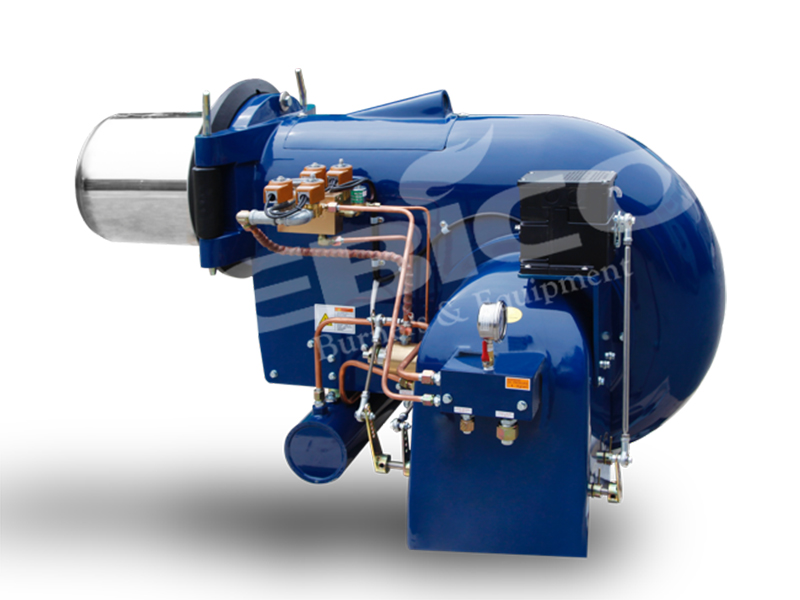
Procurement teams must scrutinize multi-fuel handling capabilities closely. Look for advanced pump sets and dedicated gas/air separators. These components prevent dangerous cavitation and fuel airlocks. You need this specific protection when switching to highly volatile, low-flashpoint fuels. A robust marine boiler burner manages sudden viscosity shifts automatically. It does not require manual pressure tuning from engineers during critical SECA zone boundary crossings.
Evaluate the ongoing shift from pneumatic to solid-state digital controls. Automation through a sophisticated Burner Management System (BMS) reduces human error drastically. Require intuitive HMI displays for your onboard crew. Engineers must diagnose complex faults swiftly. They should understand error codes without needing OEM technicians flown on board. Digital systems provide historical trending data. This data helps identify degrading fuel pump performance before a total failure occurs.
Classification Society Approvals remain strictly non-negotiable for commercial shipping. Verify your specified equipment holds valid Type Approvals. Look for certifications from major bodies like ABS, BV, DNV, or CCS. Operating without these approvals voids your vessel insurance immediately. It also severely restricts port entry access globally. Port State Control (PSC) inspectors check these compliance certificates routinely during standard boarding procedures.
Pre-ignition and purge sequences form your absolute first line of defense. Mandatory safety protocols prevent explosive combustible gas buildup. Systems execute multi-minute furnace air purges before the pilot ever engages. You cannot bypass these sequences safely under any circumstances. If an engineer attempts to force an ignition without a full purge, catastrophic furnace explosions often follow. The BMS enforces these timings via hardcoded relay logic or secure PLC programming.
Flame failure defenses protect the furnace dynamically during operation. Optical or UV flame eyes actively monitor the combustion zone. They distinguish rapidly between an actual flame and merely glowing refractory brick. A sudden loss of UV signal triggers an immediate fuel shut-off protocol. The system isolates the fuel train in milliseconds. This prevents unburned fuel from flooding the hot furnace chamber.
Vessels burning cargo slops or crude oil face far stricter ABS compliance rules. You must implement specific safety architectures.
Implement mandatory physical isolations, including gas-tight bulkheads and dedicated double-walled pipe ducting.
Integrate advanced gas-detection systems throughout the machinery space.
Ensure automatic system cut-off triggers immediately when atmospheric LEL reaches exactly 30%.
Maintain negative pressure within the vent hood covering the boiler front.
These protocols handle the extreme volatility of crude oil vapors. They keep explosive gases isolated from standard engine room ignition sources.
Retrofitting complex engine room equipment requires highly careful planning. Ready-to-install conversion kits offer a highly viable path. They upgrade legacy heavy oil units to multi-fuel capacity. They save significant downtime compared to complete full replacements. Conversion kits usually replace the fuel delivery manifold, atomizers, and primary control software. Full replacements take much longer but resolve deeper structural limitations. You should assess the remaining hull life before choosing between a kit or a total replacement.
Understand entire system balance to avoid frustrating common pitfalls. Crews often wrongly blame burner hardware for all steam faults. Poor boiler water chemistry causes massive performance drops. High Total Dissolved Solids (TDS) lead to foaming. Improper blowdown routines manifest as severe operational issues. Exhaust gas economizer imbalances also disrupt furnace draft pressures. You might see heavy soot buildup or dangerous water carryover into main steam lines. The hardware merely reacts to these upstream system imbalances.
Establish strict, non-negotiable maintenance mandates for your engineering crew.
Clean atomizer nozzles on a rigid weekly schedule to prevent fuel streaking.
Wipe flame scanners gently to ensure highly accurate UV detection.
Clear hard carbon deposits from high-voltage ignition electrodes frequently.
Inspect rotary cup bearings for vibration anomalies monthly.
Enforce physical lockout/tagout procedures without exception during any inspection.
Regular maintenance ensures the equipment reaches its designed operational lifespan. It prevents emergency call-outs during rough weather transits.
Selecting reliable marine combustion equipment represents a highly strategic business decision. It requires balancing strict environmental compliance, multi-fuel flexibility, and overall thermal efficiency. Upgrading legacy systems prevents costly downtime during SECA zone transitions. Advise your procurement and engineering teams to act proactively today. They should audit your current TDR capabilities immediately. Review upcoming voyage routes carefully for changing emission zones. Finally, consult authorized OEM partners for a comprehensive retrofit feasibility study.
A: A ratio of 10:1 to 20:1 is ideal for modern variable-load operations. Older models typically hover around 4:1. A higher ratio prevents the system from constantly shutting down and reigniting during low steam demand periods.
A: Yes. You can achieve this via OEM conversion kits. Upgraded multi-fuel pump systems and advanced gas separators handle lower distillates viscosities safely without experiencing dangerous pressure loss or cavitation.
A: Flameouts usually stem from overall system imbalances. Look for air-to-fuel ratio faults, severe water contamination in the fuel supply, or dirty UV flame sensors. These issues occur far more frequently than immediate mechanical hardware failures.
A: Society approvals remain crucial for validating vessel seaworthiness. They ensure insurance validity and strict legal compliance in international waters. Operating unapproved equipment restricts port entry and invites severe regulatory penalties.
