

Views: 0 Author: Site Editor Publish Time: 2026-06-19 Origin: Site
Industrial facilities face mounting pressure to reduce facility emissions rapidly. Operating steam or thermal oil boilers today requires strict adherence to tightening local and federal air quality mandates. Authorities like the EPA and the California SCAQMD are setting aggressive new benchmarks for environmental compliance.
Achieving strict NOx compliance under 30 ppm or even 9 ppm introduces complex operational trade-offs. Plant managers often grapple with reduced equipment efficiency, higher electrical loads, and more demanding maintenance schedules. Balancing stringent environmental standards against daily production demands remains a constant struggle for engineering teams.
You need an objective framework to evaluate a new or retrofit Boiler Burner effectively. We will explore verifiable emission guarantees, physical integration constraints, and long-term operational performance. You will learn how to select the right combustion technology to meet both rigid regulatory caps and internal facility goals.
Compliance is Tiered: Upgrading a boiler burner requires defining your specific target—standard low NOx (<30 ppm) vs. ultra-low NOx (often <9 ppm or even "near-zero" <3 ppm)—as this dictates the technology required.
FGR is Not the Only Path: Advanced surface-combustion technologies (like metal fiber pre-mix) achieve <9 ppm NOx without the physical footprint and electrical overhead of Flue Gas Recirculation (FGR).
Control Systems Drive ROI: Coupling hardware with microprocessor-based parallel positioning and O2 trim recovers the efficiency lost to emission controls.
TCO Trumps Capital Cost: Evaluating a burner for 3–30T boiler applications requires modeling long-term fuel consumption, maintenance downtime, and blower motor horsepower demands.
Environmental regulations are shifting quickly. Voluntary ESG goals once guided corporate strategies exclusively. Now, hard regulatory caps enforce strict operational limits on industrial plants. The EPA Clean Air Act mandates rigorous emission reductions across various sectors. Similarly, European Best Available Techniques (BAT) standards push boundaries globally. You must evaluate your combustion equipment proactively to stay compliant.
Before upgrading, you should understand how thermal NOx forms. It generates during combustion when nitrogen and oxygen combine. Three core variables drive this chemical reaction. First is the peak combustion temperature. Higher heat accelerates NOx formation rapidly. Second is the oxygen concentration. Excess air provides more oxygen for the chemical reaction. Third is flame residence time. Longer exposure to high heat increases total emissions. Controlling these three physical variables represents your primary engineering challenge.
You face a critical initial decision. Should you retrofit your existing equipment or replace the entire package? Consider these baseline factors before committing capital:
Furnace Geometry: Your existing vessel must physically accommodate the new flame shape.
Refractory Condition: Aging internal brickwork might fail under new combustion profiles.
Thermal Efficiency Limits: Older vessels might bottleneck the performance of modern upgrades.
Retrofitting makes sense when your vessel retains structural integrity. Complete replacement becomes necessary when vessel age limits overall thermal performance. Old boilers often lack the physical clearance required for modern ultra-low NOx flames.
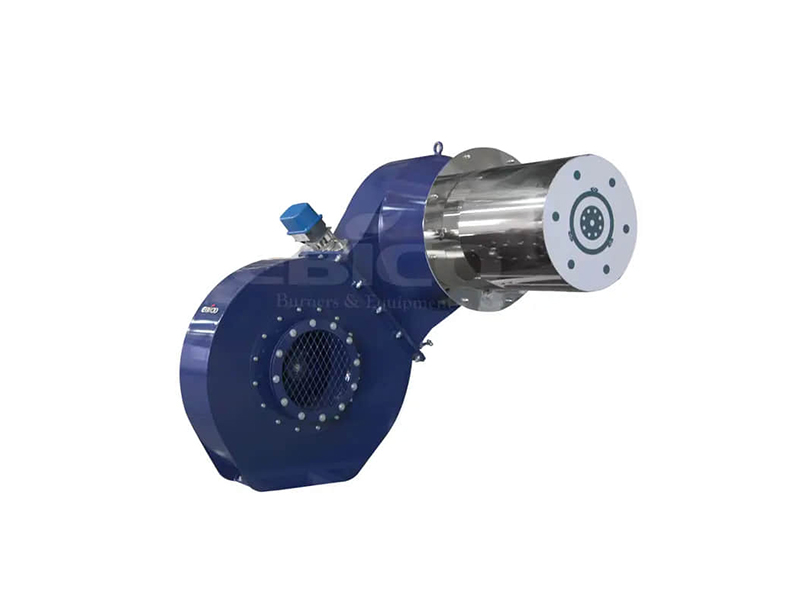
Selecting the right emission reduction method dictates your facility layout and ongoing expenses. Two primary technology paths dominate the industrial market today. You must weigh their mechanisms against your specific operational constraints.
Flue Gas Recirculation takes hot exhaust gases from the stack. It pipes them back into the active combustion zone. This process dilutes the internal oxygen concentration. It also acts as a massive heat sink to lower the peak flame temperature. Lowering the temperature prevents thermal NOx formation effectively.
FGR represents a proven legacy technology. It works exceptionally well for dual-fuel setups relying on both gas and heavy oil. However, FGR systems require bulky external piping. They increase blower motor horsepower significantly. This raises facility electrical loads over time. FGR setups often need independent cooling mechanisms to prevent premature component wear.
Ultra-Low NOx Fiber Metal Pre-Mix offers a modern non-FGR approach. It pre-mixes raw fuel and air perfectly before combustion begins. The mixture passes through a high-porosity alloy fiber head. This unique mechanism creates a very short, ultra-lean flame across the metal surface.
This technology achieves under 9 ppm or even under 3 ppm natively. It eliminates bulky FGR ductwork entirely. Eliminating external pipes saves valuable space in constrained mechanical rooms. We often see this applied in crowded hospitals or urban retrofits. Conversely, pre-mix units remain highly sensitive to air-fuel ratios. They are usually restricted to clean gaseous fuels like natural gas, propane, or hydrogen-ready blends.
Feature | Flue Gas Recirculation (FGR) | Fiber Metal Pre-Mix (Non-FGR) |
|---|---|---|
Core Mechanism | Recirculates exhaust gas to lower flame temperature. | Pre-mixes air and fuel through a porous alloy head. |
Footprint | Large. Requires external piping and heavy ductwork. | Compact. Eliminates recirculation piping completely. |
Fuel Flexibility | High. Excellent for dual-fuel (gas and heavy oil). | Low. Restricted primarily to clean gaseous fuels. |
Electrical Demand | High. Needs larger blowers to overcome static pressure. | Low. Uses efficient radial blowers. |
Procuring a new system requires looking beyond basic brochure claims. You must evaluate how the equipment handles fluctuating plant demands. Pay close attention to control precision, fuel adaptability, and physical compatibility.
Look for guaranteed turndown ratios around 4:1 or 5:1. Some aggressive low-NOx designs sacrifice turndown capabilities to meet emission targets. Poor turndown leads to rapid short-cycling during low-demand periods. Short-cycling wastes valuable fuel and damages internal boiler components over time. You need guaranteed operational flexibility across your entire firing range.
Ditch outdated mechanical linkages immediately. Mechanical linkages suffer from hysteresis and loosen over years of operation. Opt for microprocessor-based parallel positioning instead. Parallel positioning controls fuel valves and air dampers independently using precision actuators. Furthermore, you should mandate O2 trim capabilities. O2 trim monitors exhaust gas continuously. It adjusts the mixture to keep efficiency high as seasonal air densities change.
Think critically about future energy supplies and supply chain disruptions. Can your new equipment handle secondary fuels? Heavy fuel oil or diesel backup might save your production schedule during sudden gas interruptions. Also, consider long-term decarbonization goals. Specifying 100% hydrogen-ready designs prepares your facility for a net-zero future seamlessly.
Your selected burner for 3–30T boiler units must physically match your combustion chamber dimensions. Fire-tube boilers and thermal oil heaters have vastly different internal geometries. A flame mismatch causes severe impingement. When the flame physically touches the metal surfaces or refractory, it degrades the fluid inside and destroys the boiler lining.
Environmental compliance is only one part of your project. Upgrading industrial equipment introduces substantial operational realities. You must anticipate hidden electrical demands, installation downtime, and changing maintenance profiles.
Aggressive FGR setups demand massive blower motors. You need high static pressure to push heavy exhaust gas back into the pressurized chamber. This mechanical requirement trades fuel efficiency for higher facility electricity bills. You must model these long-term electrical demands accurately before finalizing your procurement decision.
Retrofits always cause operational downtime. Plant processes stop entirely during integration and commissioning phases. You can mitigate this scheduling risk through smart procurement. Specify pre-piped, pre-wired, and factory-tested packages. Factory testing compresses on-site integration time dramatically. Plug-and-play setups get your facility back online much faster.
Maintenance profiles differ widely between technologies. FGR systems rely on numerous valves, linkages, and external dampers. They require frequent manual calibration to maintain precise recirculation ratios. In contrast, metal-fiber surface units have fewer moving parts. However, they need strict clean air intake filtration. Airborne dust or facility debris will foul the porous metal surface quickly. You must replace their intake filters regularly to prevent surface blinding.
Moving from technical research to actual procurement requires a structured approach. Follow a logical sequence to ensure your investment delivers guaranteed compliance and reliable performance.
Conduct a Baseline Emissions & Efficiency Audit: Gather your current fuel bills. Collect three years of historical maintenance logs. Perform a recent stack emissions test under varying loads. You cannot improve what you do not accurately measure first.
Define Environmental Constraints: Evaluate your physical facility limitations. Is mechanical room space a premium? Are local neighborhood noise regulations strict? Pre-mix units utilize radial blowers. They operate significantly quieter than the massive fans required for high-FGR systems.
Request Field-Tested Verification: Do not rely on idealized lab data. Laboratory conditions represent perfect environments. Boiler rooms contain dust, drafts, and fluctuating fuel pressures. Demand field-tested final reports. Ask manufacturers for data from similar 3–30T setups demonstrating stable sub-9ppm output under actual varying load conditions.
Selecting a low NOx solution is a strategic balance between regulatory compliance, fuel economy, and daily operational stability.
Move beyond basic brochure specifications. Prioritize systems featuring microprocessor-based smart combustion controls.
Evaluate the underlying technology strictly based on your facility's physical space constraints and primary fuel type.
Recognize how aggressive FGR increases electrical loads, while pre-mix systems require cleaner operational environments.
Engage an integration specialist early. Request a site-specific thermal analysis and long-term operational modeling before finalizing any capital expenditure.
A: Yes. Advanced pre-mix burners utilizing alloy metal fiber combustion heads can achieve <9 ppm (and sometimes <3 ppm) without FGR. This technology relies on precise surface combustion, provided your primary fuel is a clean gas like natural gas or propane.
A: It can, if improperly specified. While standard FGR increases excess air requirements and blower power consumption, pairing the new equipment with parallel positioning and O2 trim controls often yields a net-positive efficiency gain over older mechanical-linkage systems.
A: A reliable low-NOx setup in this capacity range should maintain a minimum of 4:1 to 5:1 turndown. Achieving this flexibility without breaking emission guarantees reduces internal component wear and minimizes energy waste from persistent boiler short-cycling.
A: Yes. However, thermal oil heaters typically possess tighter coil geometries than traditional steam fire-tube boilers. Engineers must apply careful flame-shaping and utilize short-flame technologies, like surface combustion, to avoid direct coil impingement and localized fluid degradation.
