

Views: 0 Author: Site Editor Publish Time: 2026-06-05 Origin: Site
Selecting the optimal combustion equipment for mid-to-large industrial applications shapes your entire operational efficiency. Facilities processing 4 to 120 tons of steam per hour face incredibly high stakes. They must constantly balance thermal dynamics against strict regulatory compliance. You cannot afford simple guesswork. A misaligned Boiler Burner quickly triggers severe mechanical consequences. It leads directly to flame impingement and localized overheating. It causes excessive fuel waste through unmanaged excess air. Eventually, it guarantees premature boiler tube failure and catastrophic production halts.
This guide delivers an evidence-based, procurement-ready framework. It helps you evaluate specific combustion requirements accurately. You will learn how to calculate precise operating capacities. We will explore mechanical alignment protocols and modern efficiency upgrades. We will expose common marketing myths surrounding turndown ratios. You will gain actionable engineering steps. These steps empower you to specify the exact combustion system your industrial boiler genuinely requires for safe, long-term operation.
Base capacity calculations must account for boiler efficiency and ambient conditions (altitude/temperature derating).
High turndown ratios are often a marketing trap if they rely on massive excess air at low loads.
Boiler geometry must dictate flame shape; mismatched flames cause direct mechanical damage.
Capital expenditure represents less than 30% of a burner's Total Cost of Ownership (TCO); O₂ trim and VFDs offer reliable ROI.
Verify local emissions (Low-NOx) and safety certifications (UL, CSA, EN676) before final specification.
You must start your selection process with precise capacity mathematics. Many engineers make a fundamental error here. They match the combustion unit directly to the boiler output rating. This mistake ignores inevitable thermodynamic losses. You must always account for baseline efficiency.
Use the standard baseline equation. Burner Input Capacity equals Boiler Heat Capacity divided by Boiler Efficiency. Consider a simple example. A 700 kW boiler requirement operating at 90 percent efficiency demands a 777 kW input. You must supply this higher value to meet your actual load.
Industry professionals rely on a dependable rule of thumb for steam applications. Generating one ton per hour of steam requires approximately 700 kW of boiler capacity. You can scale this metric linearly for larger industrial setups.
Ambient conditions introduce a significant engineering trap. Standard manufacturer ratings always assume sea-level operation at 20°C. This translates to an atmospheric pressure of 1.01325 bar. High elevations dramatically reduce air density. High ambient temperatures cause similar density drops. A combustion unit installed at 1,000 meters operating at 40°C demands a Correction Factor (CF). You must apply a roughly 20 percent upward capacity adjustment. This ensures you maintain the required oxygen mass flow for complete combustion.
Elevation (Meters) | Ambient Temp (°C) | Estimated Correction Factor | Adjusted Demand (1000 kW Base) |
|---|---|---|---|
0 (Sea Level) | 20 | 1.00 | 1000 kW |
500 | 30 | 1.08 | 1080 kW |
1000 | 40 | 1.20 | 1200 kW |
1500 | 40 | 1.27 | 1270 kW |
Always target a strict capacity tolerance boundary. Aim for a capacity match within a plus or minus 5 to 10 percent range. This prevents short-cycling. Short-cycling happens when oversized equipment repeatedly fires and shuts down. Conversely, it prevents under-firing during peak production demands.
Mechanical and thermodynamic alignment guarantees safe daily operation. A burner for 4–120T boiler systems must mechanically align. It must suit the specific furnace type flawlessly.
Firetube and watertube designs require vastly different combustion dynamics. Firetube boilers typically operate below 300 psig. They feature much narrower furnace chambers. They require precise, tightly controlled flame shapes. You must match the flame length to the specific pass design. Watertube boilers easily accommodate larger capacities. However, they demand highly specific heat distribution patterns across their complex tube networks.
Proper flame geometry serves as a critical safety boundary. The flame must never physically touch the furnace walls. It must never touch the boiler tubes. Direct contact causes immediate flame impingement. Impingement disrupts heat transfer instantly. It triggers rapid carbon buildup. It creates severe localized thermal stress. Eventually, this stress causes catastrophic tube rupture.
You must specify physical mounting requirements rigorously. Consider these structural elements before finalizing your procurement:
Insertion Depth: Keep the combustion head completely flush with the refractory. Alternatively, allow a precise 10-20mm protrusion depending on the manufacturer specification.
Structural Fit: Ensure the unit matches your specific wind box design seamlessly. Check mounting flange dimensions twice.
Refractory Interface: Confirm your refractory cone angle matches the expected flame expansion rate.
Mounting Style: Verify whether your facility requires heavy-duty wall-mounted brackets or complex duct integration.
Ignoring these geometric physical boundaries ruins system longevity. It directly voids warranties. It creates unacceptable safety hazards for your operating personnel.
Many procurement teams assume a higher turndown ratio automatically guarantees better performance. This assumption creates a dangerous marketing trap. Extreme turndown ratios often mask terrible low-load efficiency. Manufacturers push these numbers aggressively.
Consider the engineering reality behind the turndown versus excess air trade-off. A highly marketed 20:1 turndown unit might require up to 75 percent excess air simply to stabilize its flame at minimum load. This massive volume of cold air absorbs valuable heat. It carries your expensive thermal energy straight up the exhaust stack. An 8:1 modulating unit maintaining 3 percent O₂ offers significantly better fuel economy. It outperforms a 20:1 unit running extremely lean every single time.
Let us quantify these hidden efficiency losses clearly:
Every 15 percent reduction in excess air improves your total boiler efficiency by approximately 1 percent.
Every 40°F reduction in your exhaust stack temperature yields another 1 percent efficiency gain.
Maintaining optimal oxygen levels prevents unburned fuel accumulation inside the furnace.
Automated O₂ trim systems solve this excess air problem definitively. We highly recommend them for any setup consuming over $50,000 annually in fuel. O₂ trim systems utilize specialized exhaust sensors. They provide continuous real-time air-to-fuel ratio adjustments. They compensate for daily shifts in air density and fuel pressure. You can expect them to save 2 to 4 percent on natural gas. They save 4 to 5 percent on light oil applications. They pay for themselves rapidly through sheer fuel conservation.
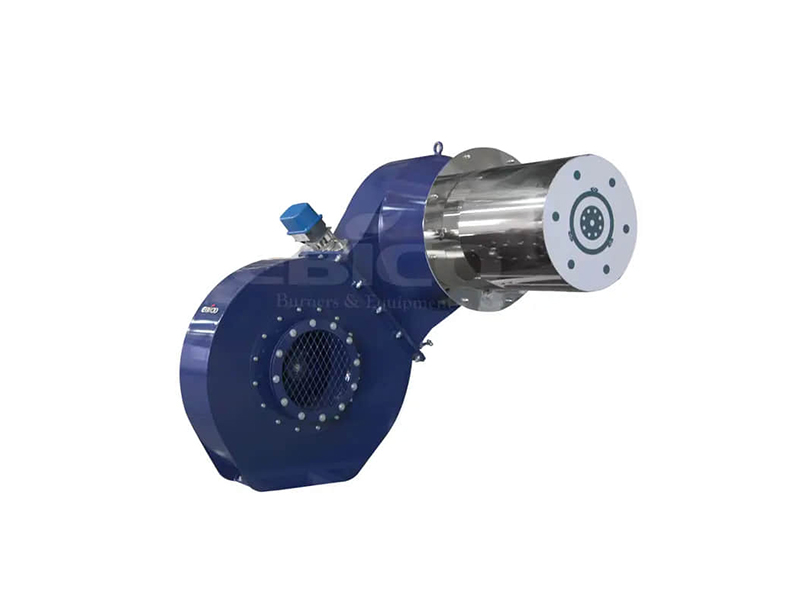
The internal control mechanisms you select directly influence mechanical longevity. Step-fired systems operate on simplistic On/Off or High/Low settings. They suffer constantly from frequent cycling. This continuous starting and stopping causes severe thermal shock. The repeated expansion and contraction destroys refractory material. It leads directly to premature component wear across the entire pressure vessel.
Modulating control provides a vastly superior alternative. It smoothly matches your exact load demand without shutting down completely. This specific control type proves absolutely essential for fluctuating industrial processes. Batch food manufacturing and chemical refining demand this smooth modulation. It keeps steam pressure perfectly stable across dynamic shifts.
You should heavily consider integrating Variable Frequency Drives (VFD). Placing VFDs on your combustion air fans yields massive electrical benefits. They eliminate damaging motor starting currents. They drastically extend bearing and belt life. Most importantly, VFDs follow standard fan affinity laws. This physical law dictates power consumption drops proportionally to the cube of the fan speed. Halving the fan speed cuts electrical power consumption by nearly eighty-seven percent. They exponentially lower your electrical costs at reduced operating loads.
Finally, you must specify parallel positioning control systems. Older systems use clunky physical linkages and mechanical cams. These metal linkages warp and slip over time. This slippage introduces hysteresis into your combustion process. Parallel positioning replaces these mechanical rods. It utilizes highly accurate, independent servo motors. These servos control precise air and fuel valve positioning. They eliminate mechanical drift completely. They lock your air-to-fuel ratio exactly where your engineers set it.
Regulatory compliance dictates your equipment selection just as strictly as thermal capacity. Local environmental permits routinely mandate ultra-low NOx operation today. You must verify these specific local limits long before issuing any purchase order. Failing to meet air quality standards results in massive fines. It forces expensive retrofits.
You must examine the practical impact of Flue Gas Recirculation (FGR). FGR technology significantly lowers NOx emissions. It works by reintroducing cooler exhaust gases back into the active combustion chamber. This process effectively quenches the peak flame temperature. Lower temperatures prevent thermal NOx formation. However, you must assess how FGR impacts your operation. It alters flame geometry slightly. It increases electrical loads on your fan motors. It adds maintenance complexity to your ductwork.
Use this pre-purchase verification checklist to ensure total regulatory compliance:
Emissions Standard: Confirm site-specific air permit compliance based on local EPA regulations or municipal guidelines. Know your exact parts-per-million (ppm) limit.
Equipment Certifications: Verify EN676 standards for European markets. Demand UL or CSA certifications for North American installations.
Safety Systems: Demand robust safety shut-off valves compliant with rigorous standards like EN161.
Monitoring Integration: Ensure the control panel seamlessly integrates via Modbus or BACnet. It must communicate flawlessly with your continuous emissions monitoring system (CEMS).
Prioritizing compliance prevents painful operational bottlenecks later. It keeps your facility running safely within strict legal boundaries.
Selecting the right combustion technology demands careful engineering logic. You must never default to the cheapest initial hardware. You must ignore flashy marketing claims about extreme turndown ratios. Instead, focus entirely on matching thermal physics to your precise operational reality.
Always calculate your true derated capacity based on local altitude and temperature constraints. Prioritize automated O₂ management systems to lock in daily fuel efficiency. Verify your geometric fit rigorously to eliminate any chance of flame impingement. These steps safeguard your immense capital equipment investment.
Take decisive action now. Consult an experienced combustion specialist directly. Request a site-specific computational fluid dynamics (CFD) model. This model verifies flame geometry safely before physical installation begins. Calculate your facility-specific ROI for O₂ trim automation and VFD upgrades. Making these evidence-based upgrades ensures your facility operates at peak efficiency for decades.
A: Start with the baseline industry rule. Generating 1 ton per hour of steam requires roughly 700 kW of boiler capacity. Next, divide this calculated heat capacity requirement by your boiler's operational efficiency. For example, a 700 kW demand on a 90 percent efficient boiler requires a 777 kW burner input. Always factor in elevation derating.
A: A 4:1 ratio serves as a solid baseline for highly stable processes. For fluctuating industrial loads, an 8:1 modulating ratio provides an optimal balance of flexibility and efficiency. Beware of ratios pushing 20:1. They often require massive amounts of excess air at low loads to stabilize the flame, ruining your overall thermal efficiency.
A: Flame impingement occurs when the active flame physically touches the furnace walls or internal boiler tubes. This direct contact violently disrupts proper heat transfer. It causes severe localized overheating. Over time, it accelerates hard carbon buildup, creates massive thermal stress, and ultimately leads to catastrophic tube rupture and dangerous system failure.
A: Yes, retrofitting remains highly feasible. However, upgrading usually requires integrating Flue Gas Recirculation (FGR) systems. FGR changes your flame dimensions. It can slightly reduce your overall system capacity. You must recalculate your specific capacity needs. Ensure the newly shaped flame still mechanically matches your existing boiler geometry flawlessly.
