

Views: 0 Author: Site Editor Publish Time: 2026-10-12 Origin: Site
An Oil Burner relies entirely on precise fluid dynamics to convert liquid fuel into usable heat energy. It cannot achieve optimal combustion efficiency without exact fuel temperature control. This internal temperature directly dictates the fuel's viscosity. It completely shapes the final atomization quality at the nozzle. Poor temperature management severely damages your entire thermal operation. Facilities routinely suffer from excessive soot generation, unburned fuel waste, premature component failure, and increased maintenance downtime. The resulting financial drain and emission compliance risks escalate rapidly. We wrote this technical guide for facility managers and engineers. You will learn how to evaluate temperature control upgrades effectively. You will also discover how to specify new combustion systems correctly. By understanding the exact mechanics of fuel heating, you can eliminate wasteful burn cycles and stabilize your facility's output.
Precise temperature control is required to maintain the specific viscosity target for different fuel grades (e.g., No. 2 vs. No. 6 oil) prior to the nozzle.
Overheating causes coking, vapor lock, and burner degradation; underheating leads to poor atomization, delayed ignition, and soot accumulation.
Modernizing temperature control through advanced pre-heaters and modulating sensors yields measurable ROI via fuel savings and reduced emissions.
Evaluating a system requires matching the thermal load, fuel type, and flow rate against the capabilities of the specific industrial oil burner.
Fuel must reach an exact kinematic viscosity to burn properly. Engineers typically measure this viscosity in Saybolt Universal Seconds (SSU). If the fluid is too thick, the nozzle cannot shear it into a fine mist. We call this critical shearing process atomization. Efficient atomization exposes maximum oil surface area to oxygen. This physical reaction guarantees complete, clean combustion.
When you underheat the fuel, disaster strikes the combustion chamber. Cold oil remains incredibly thick and viscous. The nozzle spits large, heavy droplets instead of a highly combustible mist. These heavy drops resist initial ignition. They often crash into the cylinder walls completely unburned. This washes away protective boiler lubricants. It also builds heavy, dangerous carbon deposits. You will notice much higher fuel consumption as raw energy escapes up the stack.
Overheating brings an equally dangerous set of mechanical problems. Excessive heat causes severe thermal cracking. The fuel actually breaks down chemically before it ever reaches the flame. This leaves hard carbon coking inside your pre-heater tubes. It destroys heat transfer efficiency rapidly. Hot oil also vaporizes too early inside the delivery pipes. This vapor lock starves the fuel pump and causes violent, unexpected burner shutdowns.
We define successful temperature control through strict visual and mechanical criteria. You want a stable flame geometry at all firing rates. You demand absolutely zero smoke at the exhaust stack. You need consistent pump pressure without any erratic fluctuations. Finally, your entire system must easily clear EPA and local air emission standards.
Table 1: Target Viscosity and Heating Characteristics by Fuel Grade
Fuel Grade | Common Application | Typical Pre-Heating Requirement | Target Viscosity at Nozzle (SSU) |
|---|---|---|---|
No. 2 Heating Oil | Light commercial, residential | None (Ambient conditions suffice) | 35 - 40 SSU |
No. 4 Fuel Oil | Medium industrial facilities | Moderate (100°F - 130°F) | 50 - 70 SSU |
No. 6 Fuel Oil | Heavy industrial, power generation | High (180°F - 250°F) | 100 - 150 SSU |
Engineers use several methods to condition fuel before it reaches the combustion zone. The correct engineering choice depends entirely on your flow rate and specific fuel grade.
Electric in-line pre-heaters deliver precise, rapid heat right before the nozzle. They work exceptionally well for light to medium fuel setups. These heaters respond immediately to sudden temperature drops. However, they consume significant electrical power. You must balance their high energy demand against the benefits of instant temperature correction.
Heavy fuels demand much more robust thermal solutions. A heavy-duty Industrial Oil Burner typically relies on steam or hot water heat exchangers. These systems manage heavy No. 4 to No. 6 oils efficiently. They excel by recovering waste heat from the primary boiler. This dramatically reduces external electrical energy consumption. However, they struggle during cold plant start-ups when baseline steam is entirely unavailable.
Suction bell heaters handle the very first stage of thermal preparation. Heavy oil turns into a solid, unpumpable sludge at standard ambient temperatures. You must heat it inside the bulk storage tank first. Suction bells warm the immediate localized area around the intake pipe. They liquefy just enough fuel for the main pumps to pull it into the primary loop safely.
Older facilities relied heavily on basic binary thermostats. They turned heaters completely on or completely off. This created massive, unacceptable temperature swings in the fluid stream. Modern designs utilize automated modulating controls. These are often driven by advanced PID controllers. These algorithmic systems provide continuous, micro-adjustments to the heating elements. They prevent dangerous thermal overshoot and keep your fuel viscosity perfectly flat.
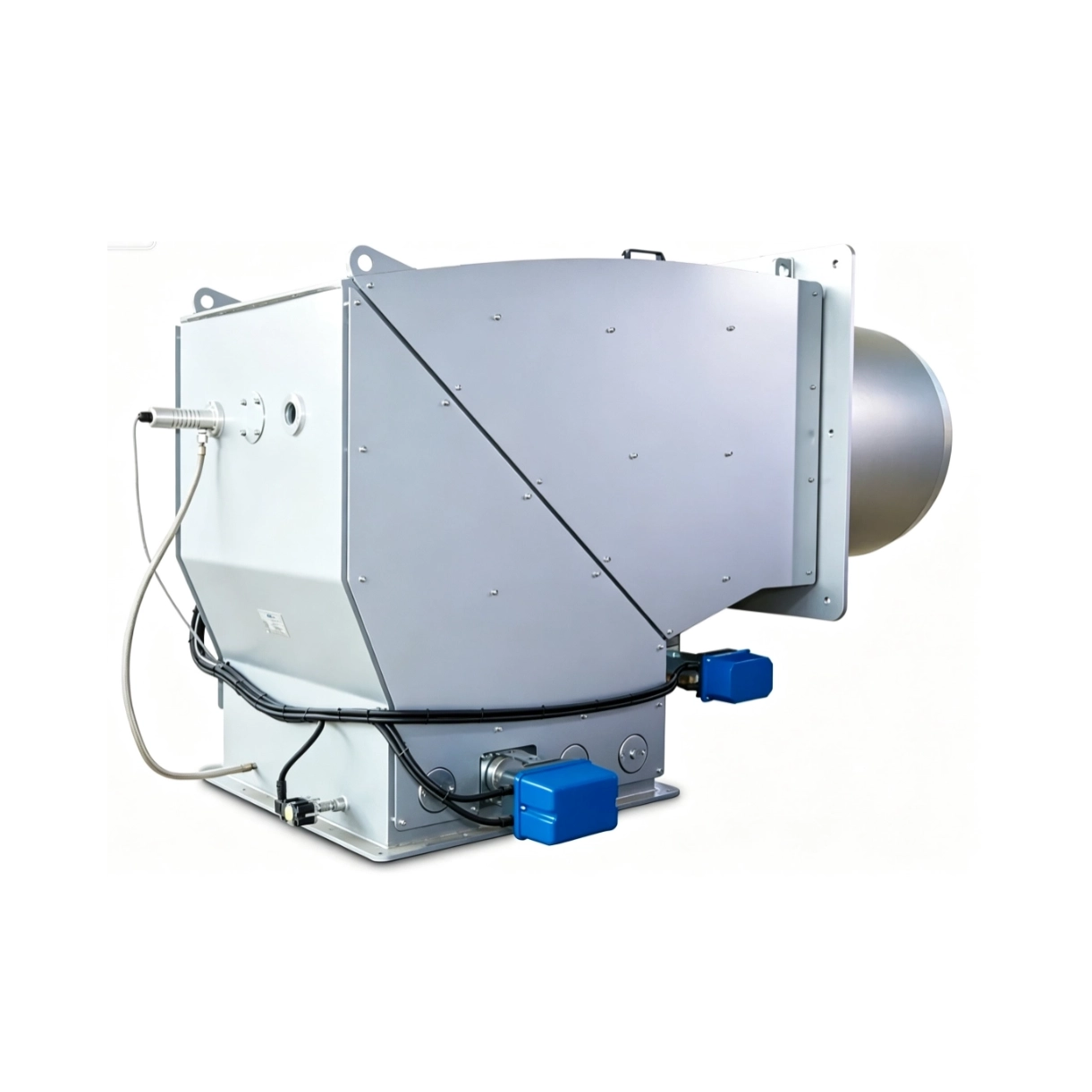
Evaluating a standard HVAC commercial boiler is vastly different from managing extreme industrial process heating. A Thermal Oil Heater Burner operates at severely high internal fluid temperatures. These specialized units require advanced heat dissipation strategies. They need heavy structural burner shielding to survive the intense radiant heat bouncing back from the chamber.
Different fuels require entirely different setpoints. No. 2 heating oil flows easily at room temperature. It rarely requires any pre-heating unless your storage tanks sit in freezing climates. Heavy fuel oils require a complex, staged heating approach. You might heat it to 100°F in the main tank, boost it to 150°F at the transfer pump, and flash it to 250°F directly at the burner nozzle.
You must tie these complex heating stages into your main control architecture. Temperature controllers must communicate seamlessly with your Building Management System (BMS) or your specific Burner Management System. This deep integration allows plant operators to monitor fuel viscosity trends remotely and catch failures early.
Security remains absolutely non-negotiable. The National Fire Protection Association (NFPA) mandates strict fuel handling protocols. Your system requires independent high-temperature and low-temperature interlocks. If the oil gets too cold, the low-limit switch prevents ignition outright. If the heater runs away thermally, the high-limit switch immediately kills the pump. These safeguards prevent catastrophic mechanical burner failure.
Chart 1: Standard Boiler Controls vs. Thermal Oil Heater Requirements
Feature | Standard Commercial Boiler | Thermal Oil Heater Application |
|---|---|---|
Operating Fluid Temperature | Below 250°F (Water/Steam) | Up to 750°F+ (Synthetic Oils) |
Burner Shielding | Standard refractory lining | High-grade radiant heat shielding required |
Control Loop Sensitivity | Moderate tolerance for temperature swings | Zero tolerance; requires aggressive PID modulation |
Safety Interlocks | Basic high/low limits | Advanced flow-rate and extreme-temp fail-safes |
Theoretical designs often clash hard with physical reality on the plant floor. Upgrading an aging system introduces significant friction. Slapping a secondary heater onto an old burner frame rarely works perfectly. Buying an integrated, factory-tested package is much safer. Factory units eliminate mismatched electrical voltages and incompatible piping threads.
Engineers frequently overlook system pressure drops. Every time you insert a complex pre-heater into the loop, you create fluid friction. Internal baffles and heating coils severely restrict the liquid flow. This limits the suction and delivery capacity of your primary fuel pump. You must often upsize your pumps to overcome this newly introduced restriction.
Sensor placement determines the success of your entire control loop. Never place temperature probes too far away from the atomizing nozzle. Physical distance creates severe thermal lag. The heated oil cools as it travels down the uninsulated pipe. The controller then chases false readings. We call this erratic behavior hunting. Always install the sensor as close to the point of atomization as physically possible.
A brilliant system will still fail without strict, enforced maintenance. Heavy oils contain incredibly high levels of sludge and particulate matter. Routine cleanouts are mandatory for survival. You must pull the heating elements out and inspect them for coking. Calibrate your temperature probes every quarter. Drift in a thermocouple causes false controller readings and wreaks absolute havoc on your viscosity.
Adopt these strict maintenance practices to avoid unexpected shutdowns:
Schedule quarterly sludge removals from all bulk tank suction bell housings.
Inspect electric heating elements monthly for localized carbon coking and scaling.
Perform bi-annual calibrations on all PID controllers and thermocouple sensors.
Test low-limit and high-limit safety interlocks under simulated fault conditions.
Monitor daily pump pressure logs to detect early signs of internal flow restriction.
Selecting the perfect setup requires a logical, phased approach. Do not guess your operational parameters. First, conduct a thorough audit of your existing variables. Measure your exact fuel flow rates under maximum facility load. Document the ambient temperatures around your bulk storage tanks. Calculate the acceptable viscosity range for your specific nozzle type.
Next, put your prospective vendors under a microscope. Demand transparent pump curve charts from them. Ask for precise thermal limitation data regarding their heating elements. Ensure they provide verifiable warranty terms against coking damage inside their heat exchangers. A reputable supplier will confidently share these vital engineering documents.
You should assess vendors using these specific criteria:
Request pump performance curves tested under heated, high-viscosity fluid conditions.
Demand documented thermal watt-density ratings for all internal electric elements.
Review warranty clauses specifically addressing heat exchanger fouling and thermal cracking.
Verify their hardware integrates natively with your existing Burner Management System.
Never commit blindly to a massive system overhaul. Run a proof of concept first. Hire an independent technician to perform a baseline combustion analysis audit. Document your current oxygen levels, exhaust stack temperatures, and soot generation. Use this exact data to justify the capital expenditure of your new heating controls. You need hard numbers to prove the investment works.
Finally, stop analyzing and take direct action. Gather your operational data and schedule a technical consultation. Ask an expert to perform a custom heat-load calculation for your specific facility footprint.
Controlling your fuel temperature is far more than a basic operational necessity. It remains a primary driver of profitability and compliance across commercial combustion systems. Ignoring this variable guarantees wasted fuel and invites heavy regulatory fines.
Upgrading to precise, modulating temperature controls secures your operational baseline. You eliminate thick, unburnable sludge entirely. You also prevent dangerous vapor locks. This technology serves as a proactive, high-return investment. It quickly pays for itself by maximizing your fuel efficiency and extending the physical lifecycle of your equipment. Take control of your fluid dynamics today to ensure a cleaner, more reliable thermal operation tomorrow.
A: The optimal setting depends entirely on the fuel grade you burn. Light No. 2 heating oil requires no pre-heating and flows well at ambient temperatures. Conversely, heavy No. 6 fuel oil forms a thick sludge when cold. It demands a stepped heating process, often reaching up to 250°F at the nozzle to achieve the correct atomizing viscosity. Always consult your nozzle manufacturer's viscosity charts to find the exact target for your fuel type.
A: These controls act as critical safety interlocks for your combustion system. The low-limit switch prevents the burner from firing if the oil is too cold and thick, which causes poor atomization and explosive soot buildup. The high-limit switch shuts down the system if the oil overheats. Overheated oil causes dangerous vapor locks in the pump and carbon coking in the pipes. Together, they prevent catastrophic failures.
A: Under stoichiometric conditions, heating oil and propane generate similar maximum theoretical flame temperatures, hovering around 3,500°F. However, achieving this high temperature in reality depends heavily on fuel preparation. Liquid oil requires aggressive pre-heating to atomize effectively. If the oil is too cold, the droplets burn slowly, significantly lowering the actual flame temperature. Pre-heating ensures rapid vaporization, allowing oil to match the stable combustion of propane.
A: Pre-heaters generally fail due to severe sludge buildup and carbon coking. When electric heating elements use overly high watt-densities, they bake the oil onto the metal surface, completely destroying heat transfer. Failed or drifting thermostats also contribute to premature failure by allowing the system to run away thermally. Routine maintenance, element inspection, and replacing aging sensors are critical to preventing these costly breakdowns.
