

Views: 0 Author: Site Editor Publish Time: 2026-08-20 Origin: Site
Tightening global and regional emissions standards are actively forcing facilities to upgrade their combustion equipment. Environmental agencies worldwide now mandate exceptionally strict limits on nitrogen oxides. These rules push plant operators to modernize their thermal systems aggressively. However, industrial plants face an inherent technical conflict. They struggle between achieving high combustion efficiency and minimizing thermal NOx formation. Generating the intense heat necessary for optimal boiler performance inherently creates a fundamental problem. It builds the exact high-temperature conditions where harmful nitrogen oxides rapidly develop. You will discover how flame staging serves as a foundational, mathematically proven design methodology. We will explore how a well-engineered Low NOx Burner utilizes this specific approach. It effectively decouples high heat release from peak flame temperatures. You will learn the mechanical differences between staged configurations. Finally, we will outline clear steps for evaluating these advanced systems properly.
Temperature Control is King: Flame staging physically separates the combustion process into distinct zones, preventing the localized high-temperature hotspots that trigger thermal NOx formation.
Air vs. Fuel Staging: Burner manufacturers use either staged air or staged fuel (or a combination) to manipulate the stoichiometric ratio, starving the primary flame of either oxygen or fuel.
Operational Trade-offs: While highly effective for emissions compliance, staging requires precise engineering to avoid unintended consequences like flame instability or increased Carbon Monoxide (CO) output.
System Integration: Flame staging is rarely a standalone fix; it is typically evaluated alongside Flue Gas Recirculation (FGR) to achieve sub-9 ppm compliance.
Standard combustion equipment routinely fails modern environmental compliance audits. The core issue traces back to the rapid formation of thermal NOx. This specific chemical reaction occurs violently at peak temperatures exceeding 2,370°F (1,300°C). Facilities must generate intense heat continuously to produce high-pressure steam. Yet, these extreme operational temperatures trigger a highly harmful atmospheric reaction.
The widely accepted Zeldovich mechanism explains this phenomenon clearly. Nitrogen and oxygen molecules in the standard combustion air usually ignore each other. They remain perfectly stable at ambient temperatures. But under extreme furnace heat, they break their internal molecular bonds. They fuse together rapidly in the combustion zone. This thermal fusion creates harmful nitrogen oxides. As furnace temperatures rise higher, the rate of this chemical formation accelerates exponentially. You cannot ignore this fundamental chemistry when operating industrial boilers.
Older boiler systems cannot solve this fundamental chemical reality safely. They typically rely on outdated tuning methods. If operators intentionally lower the overall boiler temperature, they cripple their thermal efficiency. The system struggles to maintain operational steam pressure. Alternatively, if operators flood the combustion chamber with massive excess air, they waste precious fuel. The burner must heat this cold external air needlessly before it exits the stack. Both traditional tuning methods lead to unacceptable efficiency losses. They inflate daily fuel consumption significantly. Facilities require a much smarter, mathematically engineered approach. They must physically decouple heavy heat generation from aggressive NOx creation.
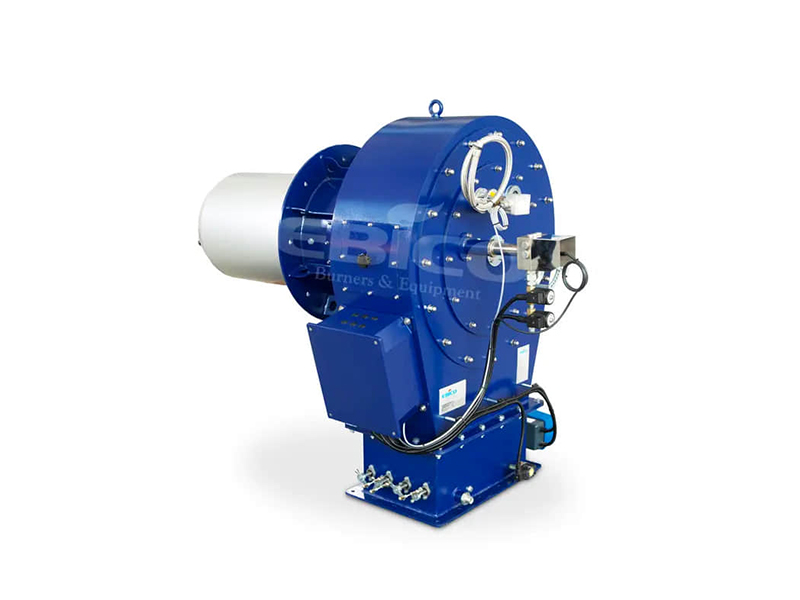
A modern Low Nitrogen Boiler Burner uses flame staging to fundamentally alter internal combustion dynamics. Staging intentionally delays the initial mixing of raw fuel and combustion air. It expands the overall flame volume significantly inside the furnace. This physical expansion distributes the heat release over a much larger surface area. It aggressively prevents the localized thermal hotspots where thermal NOx breeds most rapidly. Burner manufacturers rely on distinct mechanical pathways to manipulate these ratios successfully.
Engineers typically deploy two primary staging methods to achieve compliance:
Method 1: Air Staging (Two-Stage Combustion): This method creates a highly specific sub-stoichiometric primary zone. It remains intentionally fuel-rich but highly oxygen-deficient. By starving the initial flame front of oxygen, it completely suppresses peak ignition temperatures. The secondary zone then introduces the remaining combustion air downstream. This secondary mixing happens at significantly lower temperatures. It completes the carbon burnout safely without triggering a secondary NOx spike.
Method 2: Fuel Staging: Here, the primary combustion zone operates in a highly fuel-lean state. The massive volume of excess air acts as a powerful thermal heat sink. It absorbs rapid energy releases and limits the temperature rise drastically. Secondary fuel injection then completes the combustion process. It injects the remaining gas into a lower-oxygen environment further down the furnace length.
Visualizing the physical flame helps us understand its effectiveness. A conventional industrial burner produces a remarkably tight, bright, and incredibly intense flame. It concentrates all thermal energy into a small geometric space. A staged flame looks physically different inside the boiler. It appears considerably longer, somewhat softer, and much more dispersed. This elongated profile reflects the highly controlled, intentionally delayed energy release. Operators must maintain this specific flame geometry to keep their stack emissions fully compliant.
Facilities must navigate a complex hierarchy of emission reduction technologies. Flame staging represents a primary, preventative combustion modification. We must evaluate it objectively against other common industry alternatives. Plant engineers need to understand where staging fits into their broader operational strategy. Choosing the wrong mechanism can severely disrupt daily plant reliability.
Let us compare internal staging directly to Flue Gas Recirculation (FGR). Staging offers distinct mechanical simplicity. It relies entirely on the internal physical geometry of the burner head itself. FGR, conversely, requires external metal piping to recirculate hot exhaust gases back into the blower. This external routing adds a heavy parasitic load to the boiler system. It forces the forced draft fan to work much harder continuously. This extra aerodynamic resistance consumes extra electricity every single hour of operation.
Next, consider staging versus water or steam injection methods. Water injection physically cools the raw flame by introducing liquid moisture directly into the combustion zone. However, vaporizing this injected water steals valuable thermal energy from the boiler. Staging operates as a completely dry, aerodynamic measure. It prevents peak temperatures through precise mixing alone. It never penalizes your underlying thermal efficiency.
Emissions Reduction Technology Comparison
Technology Type | Primary Mechanism | Efficiency Impact | System Complexity |
|---|---|---|---|
Flame Staging | Delays fuel/air mixing to lower peak temperatures | Minimal to None | Moderate (Internal geometry changes) |
Flue Gas Recirculation (FGR) | Dilutes oxygen and adds thermal mass via exhaust | Moderate (Parasitic fan load increases) | High (Requires external piping and larger fans) |
Moisture Injection | Absorbs heat physically by vaporizing water | High (Direct loss of boiler thermal efficiency) | Moderate (Requires treated water lines) |
In modern practice, engineers rarely choose just one solitary method for ultra-stringent targets. Achieving absolute single-digit ppm limits almost always demands a comprehensive hybrid approach. A well-designed thermal system evaluates integration. It balances how effectively a burner integrates internal staging alongside moderate FGR. This smart combination maximizes emission reductions smoothly. It prevents the operator from pushing fan energy consumption too high. It provides the most stable operational baseline across various seasonal changes.
Altering combustion stoichiometry intentionally always introduces certain operational risks. We must acknowledge these practical tradeoffs transparently. A perfectly staged flame in a laboratory might behave differently inside an aging industrial furnace. Facility managers must monitor several critical performance metrics to maintain plant safety.
First, operators must manage the delicate CO and NOx seesaw. If you push air staging too far to lower your NOx aggressively, you risk severe incomplete combustion. Starving the primary flame of too much oxygen delays carbon burnout dangerously. This can cause Carbon Monoxide (CO) emissions and harmful soot to spike rapidly. High CO levels indicate wasted unburned fuel. Soot accumulation heavily fouls the internal heat transfer surfaces. Engineers must tune the system rigorously to find the exact compliance sweet spot between these two gases.
Second, flame stability requires highly careful monitoring. Staged flames are inherently longer and more voluminous by design. This extended length introduces a severe risk of physical flame impingement. If the longer flame physically touches the colder carbon steel boiler tubes, it quenches prematurely. This sudden quenching damages the metal tubes over time. Furthermore, manipulating air and fuel separately can sometimes restrict the boiler's overall turndown ratio. The combustion system might struggle to maintain stable ignition at very low firing rates.
Finally, existing furnace geometry heavily dictates your available staging limits. You cannot blindly retrofit a highly staged combustion head into a compact older boiler. The existing furnace dimensions must safely accommodate the expanded, softer flame profile. Plant managers must conduct a thorough dimensional evaluation before proceeding. If the furnace is too short, the staged flame will crash into the rear wall.
Upgrading your combustion equipment represents a major mechanical intervention. Plant engineers and procurement teams need a highly practical evaluation framework. You cannot rely on marketing brochures alone. When assessing vendor proposals for an Ultra Low Emission Burner, you must demand specific technical validations.
Demand CFD Modeling: Never accept simple guesswork for flame geometry. Insist on comprehensive Computational Fluid Dynamics (CFD) modeling from the manufacturer. This rigorous mathematical simulation proves the proposed staged flame will actually fit your specific boiler geometry safely. It visualizes the thermal contours before installation begins.
Evaluate Control Compatibility: Staged burners strictly require highly delicate air-to-fuel ratios. You must upgrade your obsolete control systems simultaneously. Evaluate the necessity of advanced, parallel positioning controls integrated with precise O2 trim technology. Outdated mechanical linkages simply cannot maintain the rapid accuracy required for modern staging. They drift too much over time.
Secure Contractual Guarantees: Do not accept steady-state baseline promises. Advise your purchasing team to demand strict contractual emissions guarantees. The chosen manufacturer must guarantee NOx and CO compliance across the entire operating firing range. The burner must remain compliant during rapid load swings, not just at high fire.
Following these strict evaluation dimensions protects your facility comprehensively. It ensures the proposed staging technology translates into actual, real-world regulatory compliance. It bridges the gap between theoretical burner design and practical plant operations.
Flame staging stands as a completely non-negotiable architectural feature of any serious emissions reduction strategy today. By deliberately decoupling high thermal output from dangerous peak temperatures, facilities can meet strict mandates safely. Staging provides a highly elegant, preventative solution to a complex chemical problem.
We strongly recommend that facility managers initiate a comprehensive engineering study immediately. Map your current boiler dimensions meticulously. Document your existing draft limits and record your daily operational load swings. Compile these highly specific operational parameters clearly. You must finalize this data before issuing any formal request for proposal (RFP) for a burner replacement project.
A: Typically no. While staging drastically reduces baseline NOx, achieving ultra-low single-digit emissions usually requires combining a staged burner with FGR or advanced surface combustion technologies. Combining methods offers the best operational stability.
A: Unlike water injection, staging maintains high thermal efficiency. However, if the delayed combustion results in a longer flame that impinges on boiler tubes, it can disrupt heat transfer and cause maintenance issues. Proper upfront dimensional sizing prevents this entirely.
A: It depends heavily on the fuel type and specific boiler design. Air staging is more common and highly effective for standard natural gas applications. Conversely, fuel staging is often utilized to maintain flame stability in highly specific or alternative fuel scenarios.
