

Views: 0 Author: Site Editor Publish Time: 2026-09-14 Origin: Site
Industrial burner efficiency transcends simple environmental compliance. It serves as a direct driver of your daily operational expenditure. Managers frequently prioritize overall boiler capacity. However, the true measure of fuel economy lies hidden inside the combustion process itself. The fundamental bridge between liquid fuel and efficient combustion is atomization. Poor atomization leads directly to incomplete combustion, heavy soot accumulation, and massive fuel waste. When liquid droplets remain too large, they escape the flame zone before burning completely. In this article, you will learn how evaluating atomization technology proves critical when shortlisting combustion equipment. We move beyond basic BTU outputs. We explore the distinct technologies available today. You will discover hidden efficiency penalties and learn to match atomizers to your plant demands. We will help you determine the most effective path forward for your specific thermal requirements.
Surface Area dictates Efficiency: Finer atomization drastically increases the fuel's surface-area-to-volume ratio, enabling faster, more complete mixing with combustion air.
Technology Matching Matters: Selecting between mechanical, air, or steam atomization depends heavily on fuel viscosity, application (e.g., boiler vs. thermal fluid), and available plant utilities.
Hidden Energy Penalties: While steam and air atomization handle heavy/waste oils better, they carry a parasitic energy cost that must be factored into net efficiency calculations.
Maintenance is Non-Negotiable: Even top-tier atomizers experience nozzle wear; slight degradation in droplet consistency can cause a measurable drop in seasonal efficiency.
Engineers define unburned carbon loss as a direct failure of droplet vaporization. When an atomizer fails to shear fuel into microscopic particles, the resulting drops lack sufficient surface area. They travel rapidly through the high-temperature combustion chamber. Large droplets simply cannot vaporize quickly enough. They exit the flame zone partially burned. We call this phenomenon unburned carbon loss. It represents a massive leakage of potential thermal energy.
You must translate this physical failure into operational consequences. The impacts cascade through your entire facility.
Fuel Waste: Every unburned droplet equates directly to wasted money. You must burn significantly more gallons or liters to maintain your required thermal output. The system continually over-fires to compensate for the energy gap. Over a single heating season, this invisible fuel penalty compounds rapidly. You essentially throw raw material up the exhaust stack.
Soot and Scaling: Unburned carbon never simply vanishes. It transforms into dense soot. This sticky residue coats the internal heat exchanger surfaces. Soot acts as a highly effective thermal insulator. It severely degrades heat transfer rates between the hot combustion gases and the internal fluid. We call this the insulator effect. You eventually lose efficiency on two distinct fronts. First, you waste unburned fuel. Second, you fail to transfer the successfully generated heat effectively. Exhaust stack temperatures rise because the heat cannot penetrate the soot layer.
Emissions Non-Compliance: Larger droplets create severe regulatory risks. Incomplete combustion generates dangerous levels of carbon monoxide (CO) and fine particulate matter (PM). Environmental agencies monitor these emissions strictly. Excess particulate output risks severe financial fines. High opacity readings can force unexpected plant shutdowns. Maintaining microscopic droplet sizing remains your best defense against compliance failures.
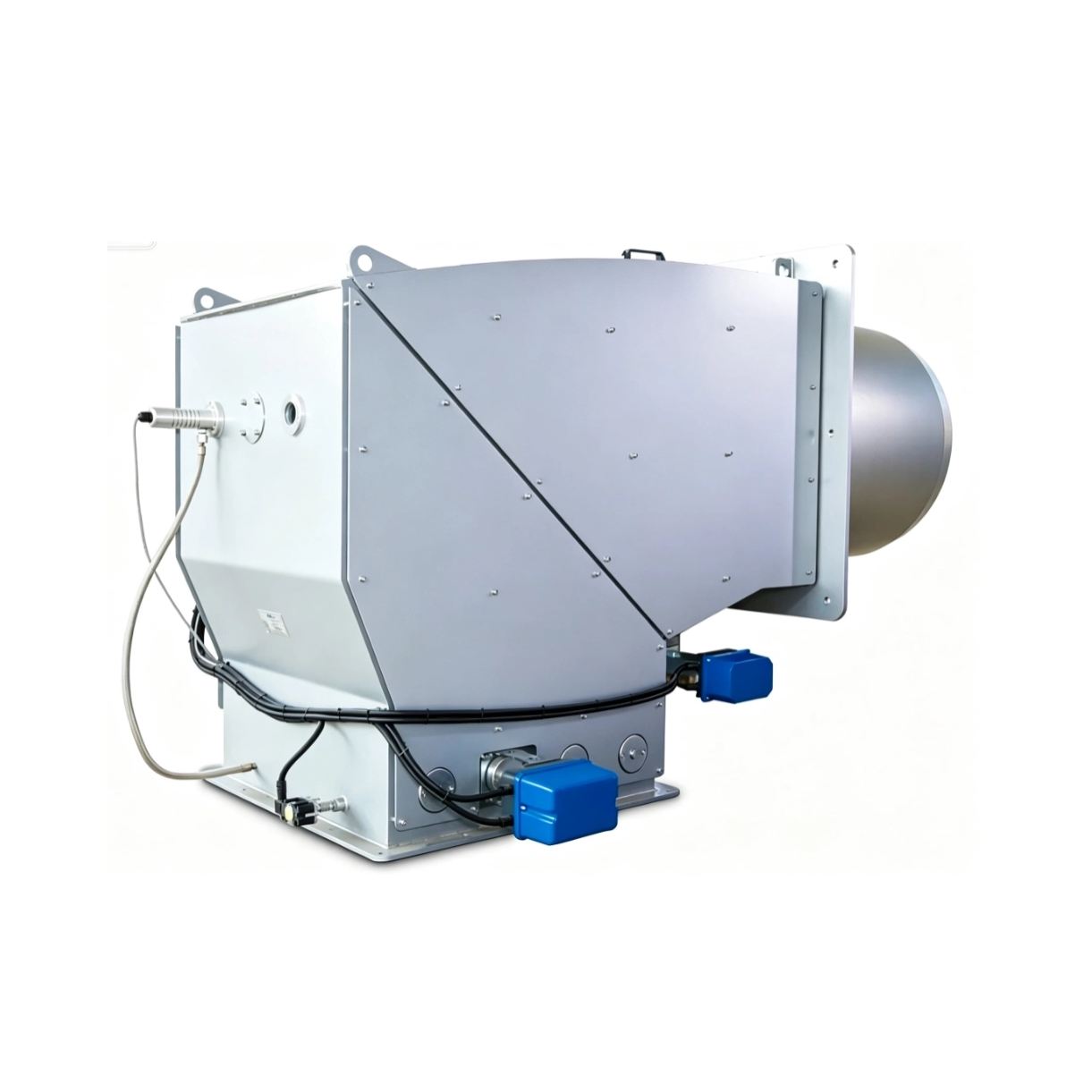
You cannot apply a single atomization solution to every facility. Engineers must carefully match the shearing mechanism to the specific fuel type. Let us examine the three primary technologies dominating the industrial market today.
This traditional mechanism relies entirely on high fluid pressure. A dedicated pump forces the liquid through a highly engineered internal orifice. The sudden pressure drop across the nozzle tip shatters the liquid into a fine spray. It requires no external utilities.
This design works best for clean, light fluids like No. 2 diesel. Facilities choose it for simpler setups. It requires lower initial capital investment. However, it suffers from a remarkably narrow turndown ratio. When you reduce the firing rate, the internal fluid pressure drops squarely. This drop ruins the atomization quality instantly. Droplets become large and heavy. Efficiency plummets during low-load operation.
This modern method uses compressed air to shear the liquid into a fine mist. The external air provides constant shearing force regardless of the actual fuel flow rate. The two fluids mix internally or externally right at the nozzle tip.
It works best for variable loads. You need high turndown ratios here. Plants commonly use this technology in a Thermal Oil Heater Burner. Precise temperature control remains critical in these systems. You must avoid flame impingement. Localized hot spots destroy thermal fluids quickly. Air atomizers provide the necessary flame stability. The main limitation involves utility reliance. You must supply an external compressed air source. This introduces additional capital costs and ongoing electrical energy consumption for the compressors.
This robust design utilizes high-pressure steam for liquid shearing. The immense thermal energy of steam provides excellent atomization. It pre-heats the liquid slightly at the mixing point.
It works best for extremely heavy fuel oils like No. 6, viscous waste oils, and large-scale industrial boilers. It handles highly resistant fluids easily. However, you must demand transparency regarding the energy penalty. The process consumes roughly 1% to 3% of the boiler’s own generated steam. We consider this a parasitic load. You must subtract this load from your gross combustion efficiency. Only then can you calculate the true net operational return.
Atomization Technology Comparison Chart
Technology | Primary Mechanism | Best Used For | Primary Limitation |
|---|---|---|---|
Mechanical Pressure | High fluid pressure through an orifice | Light oils (No. 2 diesel), simple setups | Narrow turndown ratio; poor low-load efficiency |
Air Atomization | Compressed air shearing | Variable loads, thermal fluid heating | Requires external compressed air supply |
Steam Atomization | High-pressure steam shearing | Heavy fuel oils (No. 6), large boilers | Consumes 1-3% of generated plant steam |
How do you select the correct system? Plant managers must evaluate their specific operational context. We recommend assessing three core dimensions before finalizing any equipment upgrades. You need a burner featuring the right capabilities for your facility.
Viscosity Flexibility vs. Pre-Heating Requirements: You must evaluate if the system can handle varying fuel grades. Can it operate smoothly without extensive pre-heating equipment? Heavy fuels require intense pre-heating to reach the correct flowing viscosity. This heating demands significant electrical or steam energy. You must balance the cheaper cost of heavy bulk fuels against the energy needed to heat them. Air and steam atomizers handle viscosity fluctuations much better than mechanical pressure types.
Turndown Ratio Scalability: You must understand how well the atomization quality holds up under partial loads. Consider when your Industrial Oil Burner operates at 20% capacity versus 100% capacity. Mechanical pressure nozzles struggle immensely here. Their droplet sizes increase dramatically as fuel pressure drops. You lose significant efficiency during low-demand periods. External fluid atomizers maintain their precise shearing force independent of the fuel flow. They scale much better across broad operational ranges.
Flame Geometry Compatibility: The atomizer must produce a flame shape matching your specific furnace. You must prevent wall impingement at all costs. If the flame touches the combustion chamber walls, it causes localized refractory damage. It also quenches the flame prematurely, creating instant soot. Your chosen nozzle must cast a geometric pattern entirely suitable for your vessel's exact internal dimensions. Short, bushy flames fit specific boilers. Long, narrow flames suit deep cylindrical furnaces.
Even the most advanced engineered designs require strict maintenance. You will face several harsh implementation realities on the factory floor. Ignoring these realities destroys combustion efficiency.
Atomizer nozzles erode constantly. Particulate matter in the liquid acts like microscopic liquid sandpaper. It slowly enlarges and deforms the precision orifice. This slow erosion degrades the spray pattern over time. You must schedule frequent mechanical inspections. We highly recommend analyzing the spray angle and droplet consistency during every routine plant shutdown. Replace worn nozzles proactively.
External atomizers rely heavily on steady plant utilities. You face significant operational risks from unexpected pressure drops. A sudden drop in plant air or steam lines instantly degrades atomization quality. The droplets grow rapidly larger. The flame becomes highly unstable. This instability often triggers immediate safety lockouts. Modern burner management systems will shut down the entire process to prevent explosive accumulations inside the chamber. You must ensure utility headers remain robust.
Ambient temperature changes easily alter liquid viscosity. This change occurs long before the liquid ever reaches the nozzle. Viscosity drift ruins droplet consistency entirely. You require dynamic pre-heater controls. These advanced controls adjust the thermal heating input automatically. They ensure the fluid always hits the optimal viscosity target right at the burner head. Operators cannot rely on manual temperature dials when weather conditions fluctuate.
Facility managers eventually face a critical mechanical choice. Should you retrofit your existing setup or replace the entire combustion system? You must base this decision on data.
Sometimes your existing boiler or heater pressure vessel remains structurally sound. The water tubes show minimal scaling. In these situations, replacing just the burner head or the atomizer lance offers a highly rapid return on investment. You can often recover your capital costs in under 18 months. The financial savings come directly from reduced daily fuel consumption. Upgrading to an advanced air-atomized Oil Burner can completely revitalize an older, inefficient heater. You gain modern turndown capabilities without replacing massive steel structures.
However, retrofits cannot solve every systemic problem. You might face outdated legacy controls. You might have incompatible fuel trains lacking modern safety valves. Changing environmental emissions regulations frequently force comprehensive equipment changes. In these scenarios, a complete system replacement becomes the most compliant choice. It also represents the most cost-effective long-term operational decision. You avoid patching a failing, unsafe system. You gain modern digital safety features and superior load tracking capabilities.
Do not guess your current baseline efficiency. We advise requesting a comprehensive combustion analysis immediately. You should demand a baseline efficiency audit from prospective equipment vendors. Obtain this hard data before finalizing any purchase order. Hard data reveals the exact scale of your current unburned carbon losses. It proves exactly how much fuel you waste daily.
Your heavy heating equipment relies entirely on microscopic droplet formation. Any industrial system remains only as efficient as its ability to vaporize liquid fuel. Evaluating this fundamental process goes far beyond basic engineering tasks. It involves complex daily financial calculations. You must balance potential fuel savings against strict mechanical maintenance intervals and external utility costs.
Take immediate action by reviewing your facility's most recent combustion reports. Look closely at the carbon monoxide levels and particulate emission trends. High numbers indicate failing atomization. Contact a qualified combustion technician today. Ask them to evaluate your current droplet sizing and oxygen trim data directly. Fixing neglected atomization issues offers one of the fastest, most reliable paths to increased operational profitability.
A: The ideal viscosity depends entirely on your specific fuel type. Light fuels generally atomize perfectly at normal ambient temperatures. Heavy fluids require significant thermal input. The standard industry target for optimal burner performance is 90 to 100 SSU (Saybolt Seconds Universal) right at the nozzle. You typically achieve this crucial metric via dedicated pre-heating equipment for heavier grades. Proper viscosity ensures the shearing fluid creates uniform microscopic droplets.
A: Yes, it lowers gross efficiency slightly. You must account for the parasitic load. The process constantly consumes generated steam to shear the fuel. This means less steam leaves the plant header. However, for heavy and dirty fuels, the resulting improvement in combustion efficiency usually outweighs the steam loss. You achieve a much cleaner burn. This reduces internal soot buildup and prevents severe heat transfer degradation.
A: Replacement timelines vary based on your fuel characteristics. Clean, light fuels cause minimal erosion. You can usually implement an annual replacement schedule for these setups. Waste fluids or heavy bunker fuels contain highly abrasive particulates. These harsh fluids degrade precision orifices rapidly. You might need to inspect and replace these specific nozzles every few months. Always monitor combustion efficiency metrics to detect early signs of erosion.
A: Turndown ratio measures the operational range between maximum and minimum firing rates. As fuel flow decreases at low loads, mechanical atomizers lose their internal driving pressure. This pressure drop dramatically increases droplet size, ruining combustion. Air and steam atomizers utilize external energy sources for shearing. They maintain their required shearing force better at very low flows. This capability allows for wider turndown ratios without sacrificing droplet quality.
