

Views: 0 Author: Site Editor Publish Time: 2026-09-10 Origin: Site
Flame lift-off transcends simple combustion physics. It acts as a critical operational failure triggering hard lockouts, dangerous unburned fuel hazards, and severely costly production downtime. Industrial facilities simply cannot afford the cascading risks associated with an unstable flame front. Plant managers must address these vulnerabilities proactively.
We define flame lift-off as the exact moment gas exit velocity exceeds the fundamental flame propagation speed. This physical mismatch causes the active flame front to detach completely from the burner port. Left unchecked, it rapidly destabilizes the entire thermal process and forces automatic safety shutdowns. Your boiler management system will cut the fuel supply immediately to prevent a catastrophe.
Modern engineering provides robust mechanisms to maintain flame retention under high-velocity or extreme high-turndown conditions. You will discover exactly how advanced physical and aerodynamic designs firmly anchor the flame. We will explore why mastering these combustion mechanics proves absolutely essential for smart procurement and executing successful facility upgrades.
Flame lift-off directly impacts safety compliance, fuel efficiency, and uptime in industrial thermal applications.
Modern burners utilize physical retention heads, swirlers, and pilot stabilization to anchor the flame front regardless of velocity changes.
Achieving compliance with a Low NOx Gas Burner requires advanced air-fuel staging, which inherently complicates flame stability—requiring careful evaluation of burner design.
Selecting the right Natural Gas Burner requires matching the burner’s turndown ratio and flame retention technology to the specific thermal load, especially in high-demand systems like thermal oil heaters.
Operating a combustion system with persistent flame instability introduces massive liabilities. Facility managers often underestimate how quickly a minor detachment issue escalates into a complete operational shutdown. You must evaluate these risks across three primary domains.
Safety remains the most pressing concern when dealing with flame lift-off. Unburned combustible gas accumulates rapidly inside the furnace if the flame detaches and extinguishes. This accumulation creates an immediate explosive ignition risk. Modern flame safeguard systems react instantly to this loss of signal. They trigger hard lockouts to prevent catastrophic furnace explosions.
These hard lockouts force operators into mandatory, time-consuming pre-ignition purge cycles. You also face severe compliance risks. Strict NFPA guidelines and local safety codes mandate reliable flame retention. Failing to maintain a stable flame compromises your operating permits. It exposes your facility to significant regulatory fines and increased insurance premiums.
Process disruption hits your bottom line relentlessly. Frequent flame-outs lead directly to extensive boiler downtime. Your production lines lose their critical heat supply and stop moving entirely. Furthermore, sudden flame loss causes immediate temperature drops inside the chamber.
This rapid cooling induces severe thermal shock to the refractory brick and internal steel components. Repetitive thermal stress causes micro-cracks in boiler tubes. We consistently see shortened equipment lifespans in facilities plagued by lift-off events. You bleed money through lost production hours and emergency repair bills.
Thermal consistency remains vital for sensitive industrial manufacturing processes. Fluctuating thermal output easily destroys product quality across entire batches. Consider chemical processing operations requiring exact temperature maintenance. You must maintain incredibly strict tolerances when relying on a Gas Burner for Thermal Oil Heater.
Thermal fluid applications cannot tolerate sudden heat loss. Even minor flame instability ruins heat transfer rates. The fluid viscosity changes unpredictably, which damages pumping equipment downstream. Relentless reliability ensures your end product meets tight quality assurance standards.
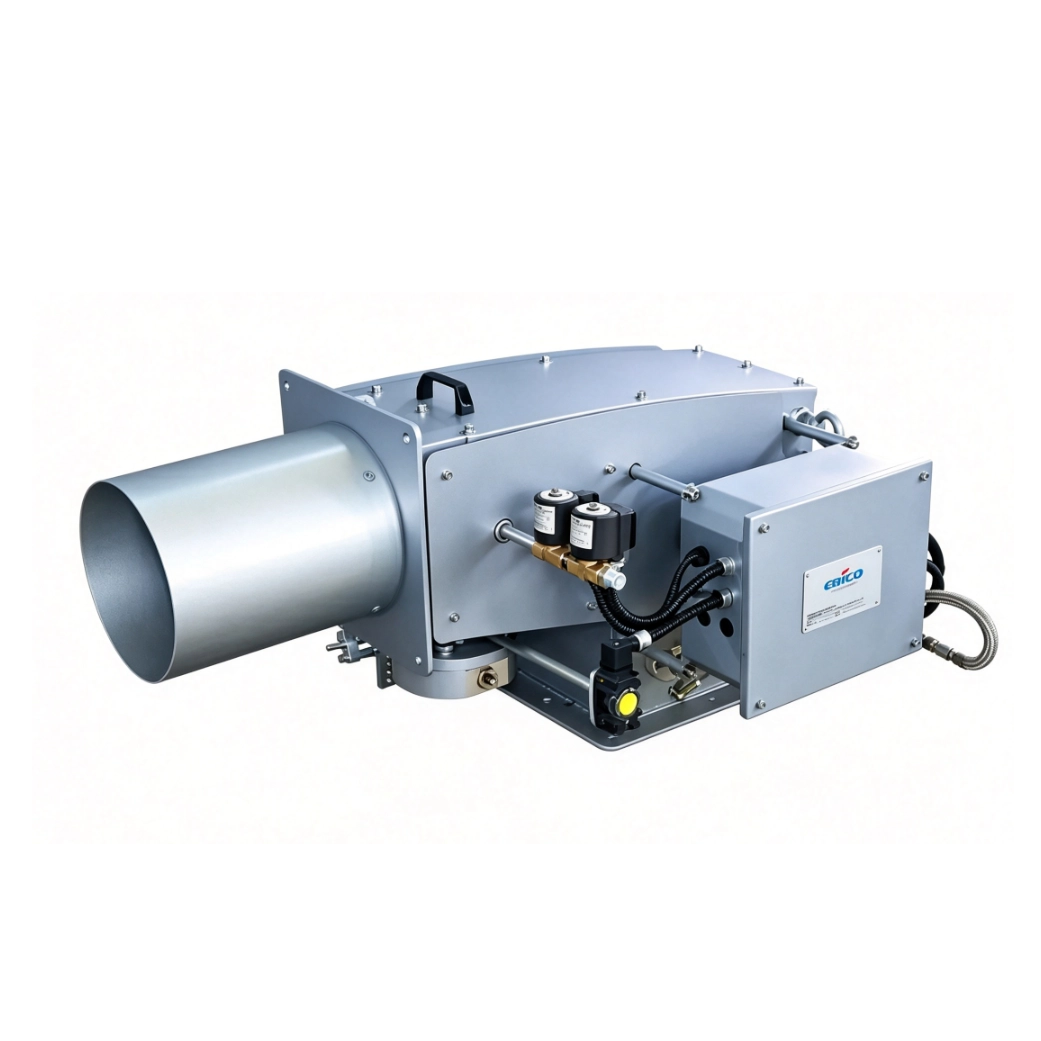
Combustion engineers rely on proven fluid dynamics to keep the flame securely anchored. Upgrading a Natural Gas Burner involves understanding these fundamental physical mechanisms. They manipulate incoming gas velocity and air mixing patterns perfectly.
Flame Retention Heads and Baffles: Mechanical baffles solve the velocity mismatch problem at its source. They physically obstruct the high-speed air and gas flow near the nozzle exit. This obstruction creates a localized low-velocity zone right at the root of the burner. The reduced localized speed allows the flame propagation rate to match the incoming gas velocity exactly. It anchors the base of the flame securely to the port. You avoid lift-off even when ramping up the firing rate aggressively.
Swirlers and Bluff Bodies: Aerodynamic stabilization takes a different approach. Swirlers introduce an aggressive rotational spin to the primary combustion air. This spinning motion generates a toroidal recirculation zone right in the flame core. It acts as a continuous reverse flow pattern. Hot combustion products constantly travel backward toward the burner root. They continuously ignite the fresh incoming gas mixture. Solid bluff bodies achieve a similar protective wake without mechanical spin. They sustain solid ignition under highly turbulent furnace conditions.
Continuous or Intermittent Pilot Stabilization: Sometimes main burner velocities fluctuate too wildly during aggressive load swings. A highly stable pilot flame becomes mechanically necessary. Pilots operate at much lower, tightly controlled velocities. They act as an unbreakable continuous ignition source for the main fuel stream. If the main flame front begins to detach, the pilot instantly re-ignites it. Many systems utilize an intermittent pilot during critical load changes. This redundancy guarantees you never lose the flame front entirely.
Verify swirler angles match the specific furnace geometry to prevent flame impingement.
Specify high-temperature alloy baffles to resist radiant heat warping over time.
Ensure pilot assemblies feature independent pressure regulation for absolute stability.
Environmental regulations demand drastically lower nitrogen oxide emissions today. Achieving this regulatory compliance often destabilizes the flame inherently. You face a direct engineering tradeoff between burning clean and burning stable.
Reducing nitrogen oxides requires lowering the peak flame temperatures inside the chamber. Engineers commonly implement Flue Gas Recirculation (FGR) or lean premixed combustion to achieve this drop. FGR dilutes the oxygen concentration by piping inert exhaust gases back into the combustion air stream. Lean premixing forces excess air into the mixture to absorb combustion heat.
Both methods successfully drop the overall flame temperature to compliant levels. However, they introduce a serious physical side effect. Inert gases and excess air significantly lower the fundamental burning velocity of the gas. The flame slows down dramatically.
Lower burning velocities drastically increase your susceptibility to flame lift-off. The high-speed incoming gas easily overtakes the sluggish, diluted flame front. You walk a precarious tightrope between emissions compliance and operational stability. Pushing FGR rates too high almost guarantees frequent flame safeguard lockouts. Your flame simply cannot burn fast enough to stay attached to the nozzle.
Premium manufacturers engineer their way around these physical limitations. Implementing a superior Low NOx Gas Burner requires advanced internal staging. These advanced designs feature variable geometry combustion heads. The mechanical heads adjust the internal airflow paths dynamically as firing rates change.
Precise mass-flow air-to-fuel ratio controls eliminate traditional mechanical linkage guesswork. Furthermore, segmented flame zones split the combustion process into multiple manageable stages. They maintain a fuel-rich, highly stable root zone while achieving lean, clean emissions in the secondary outer zones. This staged approach gives you both stability and compliance simultaneously.
Upgrading your combustion equipment requires rigorous evaluation beyond standard brochure specifications. You must interrogate the engineering realities behind the manufacturer's claims. Focus heavily on real-world stability metrics.
Manufacturers frequently boast about exceptionally high turndown ratios. You must assess if this stated ratio actually maintains flame stability at the bottom end. Many inferior designs achieve high turndown simply by dumping massive amounts of excess air into the chamber.
This excess air kills your thermal efficiency completely at low firing rates. It also risks blowing the flame right off the retention head. You want a system capable of holding a stable, attached flame at the absolute minimum firing rate. It must accomplish this without relying on wasteful air flooding.
Burner flame geometry must match your specific furnace dimensions perfectly. A long, narrow flame profile works well in extended watertube boilers. However, it might cause direct flame impingement on the rear walls of a shorter firetube chamber. Impingement causes dangerous carbon buildup and rapid tube failure.
Conversely, a short, bushy flame requires highly specific retention techniques. Thermal fluid applications demand this precise spatial matching to prevent localized fluid overheating. You must audit the volumetric heat release rate of your chamber before selecting the retention head type.
Mechanical retention needs highly intelligent control systems backing it up. Fast-acting servos must adjust fuel valves instantaneously. Modern digital parallel positioning systems replace outdated, sloppy mechanical linkage systems.
These digital systems prevent momentary velocity spikes during rapid facility load changes. They keep the air and fuel ratios locked in perfect mathematical step continuously. You avoid those split-second pressure imbalances that easily induce lift-off during aggressive ramping.
Evaluation Criterion | What to Verify During Procurement | Risk if Ignored |
|---|---|---|
Turndown Stability | Demand O2 trim data at the absolute minimum firing rate. | Severe efficiency loss and frequent low-fire flame lockouts. |
Furnace Geometry | Compare predicted flame dimensions against chamber blueprints. | Flame impingement, refractory damage, and localized overheating. |
Control Actuation | Specify independent digital servos for fuel and air dampers. | Mechanical hysteresis leading to dangerous velocity spikes. |
FGR Integration | Ensure FGR is metered dynamically via mass-flow sensors. | Flame blowout due to excessive inert gas at low loads. |
Procuring excellent hardware represents only half the battle. Maintaining aerodynamic stability demands meticulous execution on the plant floor. Field realities often degrade theoretical burner performance if left unmanaged.
You cannot simply bolt a new burner to the boiler and walk away. Even the absolute best-designed unit experiences lift-off if commissioning falls short. Technicians must execute highly precise draft settings and initial air-to-fuel mapping.
Poorly executed startups ruin the hardware's built-in aerodynamic advantages entirely. You need seasoned combustion professionals tuning the fuel curve across every single load point. They must use calibrated combustion analyzers to verify the exact velocity match at the burner root.
Aerodynamic stability relies heavily on pristine physical components. You must routinely inspect flame retention baffles, diffusers, and swirlers. Technicians should look closely for thermal degradation, carbon buildup, or severe metal warping.
Even minor warping alters the critical airflow vectors drastically. Dirty, soot-covered swirlers fail to create the necessary recirculation zone. Routine manual cleaning preserves your flame stability over the long haul. Neglecting the physical head guarantees erratic velocity profiles.
External facility variables constantly threaten your combustion stability. Inconsistent gas train pressure sends sudden, high-velocity fuel surges directly to the nozzle. Changing stack drafts pull combustion air through the system unpredictably.
You must mitigate these external variables mechanically. Install high-quality, fast-acting gas pressure regulators upstream. Utilize automated draft dampers or variable frequency drives on forced draft fans. They maintain consistent internal chamber pressure. This isolation protects the burner from inducing lift-off regardless of external weather changes or local grid fluctuations.
Preventing flame lift-off ultimately comes down to matching the precise aerodynamic burner design to your facility's unique operational limits. Relying on advanced mechanical retention heads, strategic swirlers, and intelligent control systems mitigates the physical velocity mismatches that cause detachment. It requires meticulously balancing your dynamic operational demands against increasingly strict emissions requirements.
Take proactive measures to secure your thermal operations:
Audit your current combustion system's turndown performance and document any recent instability events.
Inspect your existing mechanical retention baffles for signs of thermal degradation or severe carbon fouling.
Consult a qualified combustion engineer for a comprehensive system retrofit analysis before upgrading.
Prioritize advanced variable geometry features when reviewing new equipment bids for low emissions applications.
A: Flame lift-off occurs when the exiting gas velocity greatly exceeds the fundamental flame propagation speed, blowing the flame actively away from the port. Flashback represents the exact opposite physical scenario. During flashback, the flame propagation speed exceeds the incoming gas velocity. This dangerous imbalance causes the flame to travel backward into the burner body or mixing tube.
A: Temporarily, yes. Richening the fuel mixture increases the fundamental flame speed, helping it anchor to the nozzle. However, you severely sacrifice fuel economy and cause heavy carbon monoxide emissions. It serves as a temporary operational band-aid rather than a permanent mechanical fix. You must address the underlying velocity mismatch mechanically.
A: Cold combustion chambers absorb radiant heat rapidly from the initial flame. This intense heat absorption severely lowers the localized flame temperature. A lower overall temperature reduces the fundamental flame propagation speed. Until the refractory brick and internal chamber walls heat up sufficiently, the sluggish flame struggles to outpace the incoming gas velocity, causing detachment.
A: Yes, FGR introduces a significant operational risk. It injects inert exhaust gases into the fresh combustion air. This dampens the overall combustion process and reduces flame propagation speed significantly. Proper burner design, utilizing advanced aerodynamic retention heads and variable geometry, is absolutely required to counteract this dampening effect and prevent continuous lift-off.
