

Views: 0 Author: Site Editor Publish Time: 2026-11-02 Origin: Site
For industrial facilities running critical boiler systems, maintaining continuous steam or heat generation is paramount. Unexpected fuel interruptions often translate into immediate revenue loss, serious process disruptions, or severe safety hazards. This operational reality demands highly robust contingency plans. Transitioning between gas and liquid fuels smoothly presents a massive engineering challenge. To avoid tripping the Burner Management System (BMS) or losing the flame entirely, you need precise synchronization of air-fuel ratios, valve timing, and combustion control. A sudden drop in manifold pressure can easily trigger a costly system shutdown.
This article provides plant engineers and facility managers a comprehensive technical evaluation framework. We will explore how seamless changeovers work, why systems occasionally fail, and what criteria matter most when specifying or retrofitting combustion equipment. You will learn actionable strategies to keep your plant online safely and efficiently.
Simultaneous Firing is Key: True seamless switching relies on a brief, controlled overlap where both fuels burn simultaneously while modulating to the new fuel source.
BMS Precision Prevents Tripping: Advanced PLC-based Burner Management Systems are required to manage valve sequencing and prevent pressure drops that cause flame loss.
Retrofitting Carries Hidden Risks: Converting a single-fuel system to an oil and gas burner requires verifying furnace dimensions, draft capabilities, and FM compliance.
Compliance is Non-Negotiable: Any dual fuel boiler burner specification must align with strict NFPA guidelines and FM Approvals for safe changeover sequences.
Modern combustion environments rely heavily on advanced programmable logic controllers (PLCs). They orchestrate the complex transition between fuels. The BMS functions as the central brain of the combustion system. It monitors flame scanners, pressure switches, and valve positions in milliseconds. During a fuel switch, the PLC calculates the precise moment to engage secondary systems. It guarantees safety limits remain unbreached. Without this computational speed, the system would immediately trip offline to prevent an explosive hazard.
Seamless switching requires an intentional, highly controlled fuel overlap phase. Engineers often call this co-firing. True co-firing ensures the boiler never loses its heat output during the transition. The physical sequence generally follows specific numbered steps:
The boiler modulates down to a predetermined, safe firing rate.
The secondary fuel valve opens at a minimum firing position.
Both fuels ignite and burn concurrently in the combustion chamber.
The primary fuel valve slowly begins to close as the secondary fuel ramps up.
The primary fuel shuts off entirely, leaving the secondary fuel to carry the load.
The control system actively maintains the total BTU output during this cross-modulation. It constantly adjusts the air damper to supply a stable air-fuel ratio. A high-quality Dual Fuel Burner executes this transition without visible smoke or sudden draft fluctuations.
A true multi-fuel design uses completely independent, dedicated piping networks. You will find separate safety shut-off valves, delivery nozzles, and regulators for natural gas and liquid fuel. Dedicated fuel trains prevent catastrophic cross-contamination. You never want liquid oil backing up into a natural gas line. Separate trains also ensure instantaneous availability. When the primary fuel drops below safe pressure thresholds, the secondary train stands fully pressurized and ready to deploy.
Sudden drops in line pressure often starve the flame. Gas compressors might fail, causing immediate volume loss. Conversely, delays in oil pump atomization create lag times. When the control system commands liquid fuel to enter the chamber, the oil must flow at a precise pressure. If the pump hesitates, the flame extinguishes before the secondary fuel catches fire. Maintaining steady header pressure remains a constant priority.
Flame scanners act as the safety eyes of the BMS. They must verify flame presence at all times. Gas flames typically emit ultraviolet (UV) light. Oil flames emit infrared (IR) light. Scanner blindness occurs when standard sensors fail to recognize these distinct signatures during the overlap phase. If a UV-only scanner looks at a newly ignited oil flame, it might read darkness. This immediately triggers a nuisance safety shutdown.
Air-fuel ratio imbalances frequently ruin changeover sequences. Older mechanical linkage systems struggle to maintain correct excess air levels during a switch. A single physical cam tries to dictate air volume for two entirely different fuels. This mechanical compromise often provides too much air for gas or too little air for oil. Modern parallel positioning controls solve this problem by assigning independent servo motors to every valve and damper.
Liquid fuels require robust atomization to burn properly. The physical reality of switching to heavy or light fuel oil demands perfect timing. The system must inject atomizing steam or compressed air just before the oil enters the nozzle. If steam or air atomization is not perfectly timed, the oil exits the nozzle as a solid stream rather than a fine mist. Solid liquid fuel will not ignite. It pools in the furnace and causes an immediate flame failure.
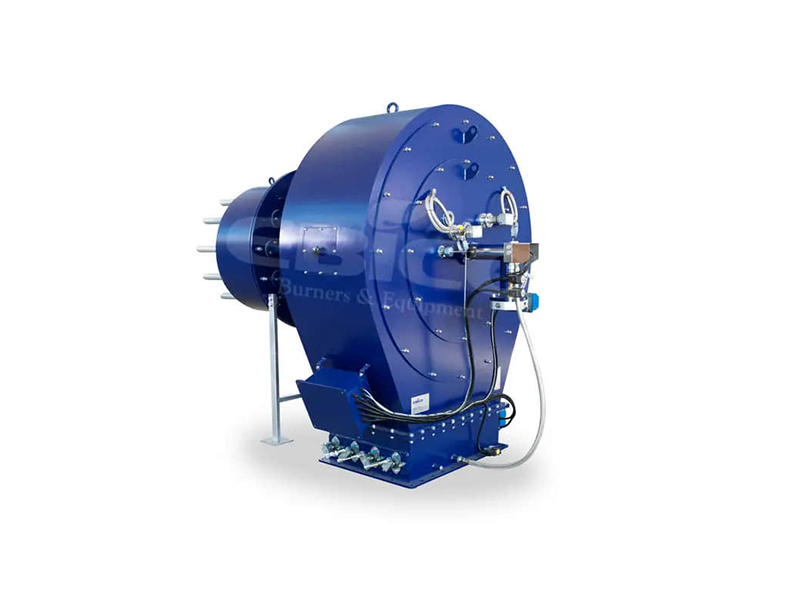
When selecting a new Oil and Gas Burner, you must evaluate the control architecture. Plant engineers debate linkageless versus traditional mechanical linkages. Linkageless systems, also known as parallel positioning, offer vastly superior performance. They allow technicians to map exact fuel curves for every point in the firing range. They guarantee repeatability.
Control System Architecture Comparison
Feature | Mechanical Linkage | Linkageless (Parallel Positioning) |
|---|---|---|
Actuation Method | Single motor with physical cams and rods | Independent servo motors for air and fuel |
Fuel Curve Mapping | Compromised across both fuels | Precise, independent mapping for each fuel |
Changeover Stability | High risk of air-fuel imbalance | Extremely stable during cross-modulation |
Long-term Maintenance | High wear on moving metal parts | Low wear, digitally controlled |
Burner flexibility relies on a wide turn-down ratio. This measures how well the burner maintains combustion efficiency at low boiler loads. You must evaluate this metric on both fuels independently. A burner might operate highly efficiently on natural gas at low loads. However, it may perform poorly on backup oil at similar firing rates. Insist on reviewing independent performance data for both fuel curves.
Never underestimate flame scanner technology. Assess whether the vendor includes advanced multi-sensor scanners out of the box. These sophisticated viewing heads must detect varying electromagnetic spectrums simultaneously. They read UV and IR wavelengths concurrently. This prevents scanner blindness and eliminates nuisance tripping during the critical co-firing phase.
Environmental compliance dictates many equipment choices. You must factor in flue gas recirculation (FGR) systems. FGR helps suppress nitrogen oxide (NOx) formation on natural gas. However, switching to a backup liquid fuel drastically changes the emissions profile. Oil burning inherently produces more NOx and particulate matter. You need to understand how activating the backup fuel impacts your facility's temporary emissions permits and reporting requirements.
Many facilities consider retrofitting a single-fuel setup instead of buying a completely new unit. This path requires a strict feasibility study. Furnace geometry considerations are critical. Oil flames burn differently than gas flames. They are typically longer and much more radiant. You must ensure the existing boiler vessel can handle this intense heat flux. If the oil flame touches the rear boiler wall, it causes severe tube impingement and metal failure.
Additionally, review the forced draft fan capacity. Liquid fuels often require higher static pressure and different excess air volumes. Verify if the existing fan motor and blower wheel can handle the demanding aerodynamic requirements of a secondary fuel.
Financial evaluation drives the final engineering decision. Compare the capital expenditure (Capex) of a full Dual Fuel Boiler Burner replacement against the engineering costs of a retrofit. Retrofits often incur hidden downtime expenses and complex integration hurdles. Alternatively, consider the operational expenditure (Opex) benefits. Having two fuels allows you to practice fuel arbitrage. You can switch to the cheaper commodity on demand. It also allows facilities to sign lucrative interruptible gas contracts, knowing they can reliably fall back on stored oil.
Combustion safety leaves no room for creative interpretation. Adhering to regulatory standards is an absolute necessity. In North America, systems must align with NFPA 85 (Boiler and Combustion Systems Hazards Code). This code dictates purge times, valve proving sequences, and flame failure response times. Furthermore, insurance providers often require FM Approvals or local equivalents for all fuel train components. Using unlisted valves or homemade PLC logic risks voiding your facility's insurance coverage completely.
Marketing brochures often promise a "seamless" transition. In reality, seamless performance is only as good as the commissioning engineer. Tuning these complex systems requires immense patience and skill. The technician must physically map the combustion curves for gas and oil separately. Then, they must map the transition phase across the entire firing range. Rushed commissioning guarantees future flame failures.
Maintain a highly skeptical view of "maintenance-free" claims. Backup systems suffer greatly from neglect. Oil systems experience severe fuel degradation over time. Stored diesel or #2 oil separates and grows algae. Clogged nozzles and pump seizures happen frequently if operators do not test the equipment regularly. A robust preventative maintenance program prevents emergency switchover failures.
Choosing to implement a seamless multi-fuel combustion system acts as a direct insurance policy. It protects your facility against crippling downtime and volatile energy markets. Successful implementation hinges on recognizing the complex physics of co-firing and respecting safety codes.
When you start shortlisting potential equipment, prioritize vendors who offer fully integrated BMS packages. Demand parallel positioning controls over mechanical linkages. Ask for transparent commissioning support to ensure smooth tuning.
Your next step should be action-oriented. We recommend conducting a comprehensive site audit. Assess your existing boiler geometry, evaluate your liquid fuel storage feasibility, and review your current control system compatibility. Gather these engineering metrics before requesting vendor quotes to ensure a successful integration.
A: Generally, no. Most systems require the boiler to modulate down to a lower firing rate (e.g., 20-30%) before initiating the switch to ensure safety and stability, before ramping back up.
A: Older systems rely on mechanical cams and lack the sophisticated PLC logic required to safely manage the simultaneous firing overlap. They require a physical purge cycle between fuels.
A: Not necessarily two physical units, but you need a sophisticated scanner capable of reading both UV (typical for gas) and IR (typical for oil) signatures, often integrated into a single advanced viewing head.
A: Regularly (often monthly or quarterly depending on facility protocols and insurance mandates) to ensure oil viscosity, pump functionality, and valve integrity remain ready for an emergency switch.
