

Views: 0 Author: Site Editor Publish Time: 2026-05-29 Origin: Site
Industrial facilities face mounting pressure today. They must balance volatile fuel prices, stringent NOx emission compliance, and absolute operational reliability. Plant managers can no longer rely on outdated thermal technology to meet modern production demands.
Traditional mechanical linkage or basic on/off burner designs inherently introduce mechanical hysteresis. They generate hidden fuel waste and subject delicate equipment to damaging thermal shock. Relying on these older mechanisms quietly drains operational budgets while increasing the risk of regulatory non-compliance.
Upgrading to a parallel positioning architecture shifts combustion from a static, physically bound process to a dynamic, data-driven PID loop. We will provide a transparent, engineering-focused evaluation of these modern controls. You will discover the technical mechanisms, quantifiable performance metrics, and real-world implementation prerequisites required for a successful facility upgrade.
Precision over mechanical wear: Electronic controls eliminate linkage backlash, utilizing independent servomotors to achieve up to 0.1-degree control accuracy across the firing range.
Measurable efficiency gains: Combining accurate air-fuel ratio (AFR) control with features like oxygen trim can reduce fuel consumption by 8–15% and cut NOx emissions by 15–40%.
Safety and stability: Advanced systems utilize cross-limiting logic to prevent fuel-rich explosive conditions and enable bumpless transfer for smooth operational mode switches.
Implementation reality check: High turndown ratios and modulation capabilities require matched downstream systems and stricter maintenance protocols to realize their full ROI.
Single-linkage systems physically connect the air damper and the fuel valve using rigid metal arms and pins. These mechanical connections suffer from continuous wear and tear caused by vibration and heat. Over time, the pivot points enlarge. This degradation creates mechanical backlash, commonly known as hysteresis.
Because of hysteresis, the physical position of the air damper varies slightly depending on whether the burner is modulating up or down. This wear causes inaccurate positioning everywhere except at the extreme high-fire and low-fire points. Operators lose the ability to maintain precise control over the flame during normal mid-range operation.
Technicians often push excess air through older systems. They do this intentionally to compensate for mechanical inaccuracy. Tuning the burner "air-rich" prevents dangerous fuel-rich conditions from forming when linkages slip. However, this safety buffer carries a severe energy penalty.
Every 10% of excess air pushed through the system results in a 1–2% loss in overall thermal efficiency. The system wastes valuable energy heating cold ambient air. It then vents this heated air directly up the exhaust stack. Eliminating this specific waste stream remains a primary driver for modernization.
Basic on/off or simple step-control systems operate inefficiently during periods of low demand. When facility load drops below the burner's minimum firing rate, the unit must shut down completely. It then restarts when pressure drops again.
Every single restart forces a mandated pre-purge cycle. This safety cycle typically lasts around two minutes. During the purge, the system blows cold air through the hot heat exchanger. It effectively blows usable BTU heat directly out the stack. This frequent short-cycling also accelerates physical wear on ignition electrodes, gas valves, and blower motors.
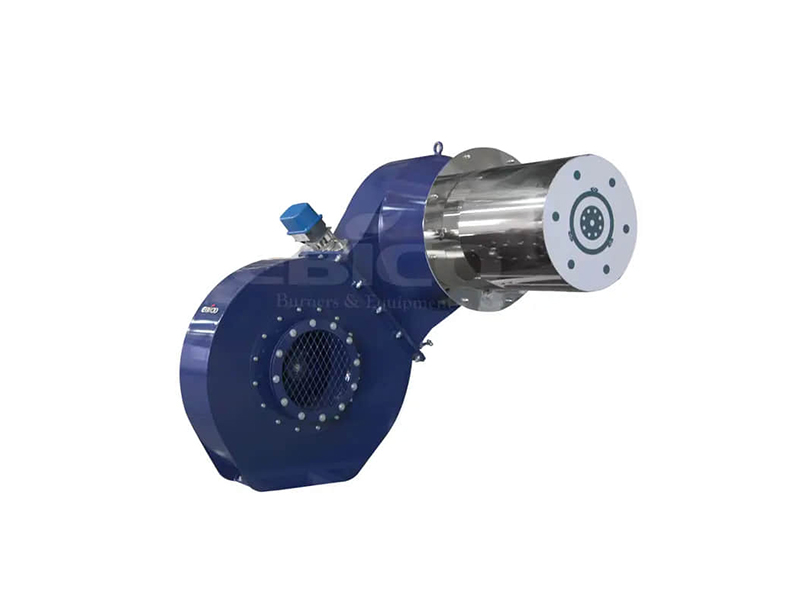
Modernizing a plant often involves moving away from physical linkages entirely. Parallel positioning architecture replaces rigid metal connections using independent, software-linked servomotors. One motor controls the fuel valve. Another motor controls the air damper.
This separation allows highly granular, closed-loop control over the entire combustion process. By installing an electronic proportional burner, facilities can program hundreds of precise setpoints along the firing curve. The servos adjust their positions to within 0.1 degrees of accuracy, completely eliminating mechanical hysteresis.
Proportional systems react continuously to changing process variables like steam pressure or water temperature. They utilize Proportional-Integral-Derivative (PID) control loops. The software constantly calculates the exact difference between the current process value and the target setpoint.
Instead of jumping clumsily between pre-set stages (like low, medium, and high), the burner adjusts the flame dynamically. It smoothly glides to the exact capacity required to meet the real-time thermal load. This continuous modulation mimics the accelerator pedal of a modern vehicle.
Continuous modulation handles facility demand spikes exceptionally well. When a heavy industrial process comes online, the continuous PID loop anticipates the pressure drop. It ramps up the firing rate smoothly.
This intelligent response maintains boiler pressure and temperature within a highly stable ±2–3% variance. In stark contrast, constant-output step burners typically fluctuate by ±5–10%, causing uneven heating and potential process disruptions downstream.
Performance Metric | Traditional Mechanical Linkage | Electronic Proportional Control |
|---|---|---|
Positioning Accuracy | Low (Prone to wear and backlash) | High (0.1-degree servo resolution) |
Load Variance | ±5–10% fluctuation | ±2–3% highly stable output |
Efficiency Penalty | High excess air required for safety | Optimized air-fuel ratio at all times |
Maintenance Focus | Frequent physical adjustments | Software tuning and sensor checks |
Engineering teams must carefully evaluate the turndown ratio. A high turndown ratio, such as 5:1 or even 10:1, matters immensely for operational stability. A 5:1 ratio means a burner rated for 10 million BTUs can successfully operate down to 2 million BTUs without shutting off.
A higher ratio allows the unit to stay online at much lower capacities. This capability drastically reduces the thermal shock associated with constant on/off cycles. It also minimizes wasteful pre-purge sequences during low-load weekend shifts.
Integrating O2 sensors elevates performance further. An oxygen trim system dynamically maintains optimal oxygen levels in the exhaust stack. High-fire loads typically require an optimized 3–4% oxygen reading.
Ambient air density changes constantly due to shifting weather, temperature, and barometric pressure. Fuel calorific values can also fluctuate. The O2 trim system senses these minute changes in the exhaust gas. It immediately signals the air servo to make micro-adjustments, ensuring optimal combustion efficiency regardless of environmental factors.
Environmental regulators enforce increasingly strict emission limits. Precise air-fuel ratio control directly links to your facility's regulatory compliance. Modern systems tightly control the flame temperature and geometry.
This precision enables operators to lower harmful NOx and CO emissions safely. It achieves these reductions without starving the flame of necessary oxygen or creating soot. Upgrading your core Boiler Burner to an electronic proportional model simplifies the annual emission testing process.
Operational safety demands strict sequential logic. When increasing the firing rate, the air flow must always increase before the fuel flow increases. When decreasing the firing rate, the fuel flow must always decrease before the air flow decreases.
Electronic systems enforce this cross-limiting safety logic natively. If the air servo jams or slows down, the fuel servo will halt its advance immediately. This strict rule prevents dangerous "fuel-rich" accumulations inside the combustion chamber, virtually eliminating the risk of internal explosions.
Operators frequently need to switch control modes during maintenance or troubleshooting. Output tracking in PID controllers ensures these transitions remain smooth. We call this capability bumpless transfer.
When an operator switches the system from manual override back to automatic cascade mode, the controller matches the current output state before engaging. Bumpless transfer ensures these mode shifts do not introduce sudden, disruptive operational shocks or violent pressure swings to the thermal network.
Facility modernization requires deep digital integration. Standalone equipment no longer satisfies the demands of modern plant managers. Modern electronic controllers seamlessly transmit real-time data logs to central networks.
They utilize standard industrial protocols like Modbus or BACnet. This connectivity feeds directly into Building Management Systems (BMS) or SCADA platforms. It enables predictive maintenance, remote troubleshooting, and automated alerts before a minor fault becomes a hard shutdown.
An advanced modulating controller cannot fix a poorly designed distribution network. Facility engineers must understand the reality of system matching. Putting a highly sensitive burner on a primitive distribution loop wastes the investment.
Modulation works best when paired with proportional flow devices. Thermostatic Radiator Valves (TRVs) or variable-position steam valves complement the system perfectly. Low-mass, purely digital on/off zone valves will hinder performance, causing the central controller to hunt endlessly for a stable setpoint.
High-efficiency heat exchangers frequently pair with modern modulating setups. These advanced exchangers feature narrow internal passages designed to extract maximum heat. These complex geometries demand exceptional care.
They require stringent water treatment protocols. Operators must actively monitor pH levels and dissolved solids. You must perform more frequent chemical cleaning to prevent rapid scaling. A heavily scaled heat exchanger will instantly negate the efficiency gains generated by the proportional control system.
The operational return on investment typically hits within two to three years. However, plant managers must prepare for the initial setup phase. Installing these advanced systems requires highly skilled combustion technicians.
The commissioning phase takes significantly longer than older step-fire units. Technicians must manually program precise combustion curves at multiple load points. They must also fine-tune Variable-Speed Drive (VSD) fan integrations to ensure the blower motor perfectly matches the air damper position across the entire firing range.
Before contacting vendors, plant managers should conduct a thorough baseline audit. Look for specific warning signs indicating your current equipment is failing. Use the following checklist to evaluate your current state:
Frequent short-cycling during low production hours.
Widely fluctuating O2 stack readings on the continuous emissions monitor.
Unstable flames visibly pulling away from the burner head.
Visibly worn, rattling mechanical linkages or stripped connecting pins.
Unexpected spikes in monthly fuel consumption despite consistent production volumes.
Facilities must choose an appropriate upgrade path. You must decide whether to retrofit existing equipment or invest in full replacement.
You can retrofit existing units by stripping away the mechanical linkages. Technicians then install individual servos and a new digital controller panel. Alternatively, you can invest in a completely new, integrated high-turndown package. Full replacements typically offer better overall warranties and deeper integration, while retrofits preserve capital.
When evaluating proposals, ask vendors specific technical questions. Do not settle for vague marketing answers. Demand concrete engineering specifications.
What is the precise angular resolution of the proposed servomotors?
Does the primary controller natively support cross-limiting logic without additional modules?
Can the system seamlessly integrate active oxygen trim?
What is the guaranteed turndown ratio given our specific fuel type and operating pressure?
Does the interface support Modbus TCP/IP for our central SCADA network?
Upgrading to electronic proportional control represents a fundamental shift in facility management. You move away from reactive mechanical operation toward predictive, efficiency-driven combustion management. The technology relies on precise data rather than physical metal connections.
Consider the following action-oriented takeaways for your modernization project:
Audit your current excess air levels to quantify your baseline fuel waste.
Evaluate your facility's minimum load requirements to determine the exact turndown ratio you need.
Prioritize vendors offering native cross-limiting logic and seamless SCADA integration protocols.
Update your maintenance schedules to include stricter water quality checks and sensor calibrations.
While upfront capital and commissioning requirements are higher, the compounding benefits justify the effort. Massive fuel savings, extended equipment lifespan, and reliable emissions compliance make this technology an essential standard for all modern thermal operations.
A: Step controls move clumsily between fixed firing rates like low, medium, and high. They cannot adjust to loads falling between these points. Proportional controls use continuous PID loops. They make infinite, micro-adjustments to exactly match the real-time thermal load without shutting down.
A: While parallel positioning removes physical mechanical slop, O2 trim serves as the active feedback loop. It dynamically corrects for shifting environmental variables like changing barometric pressure, humidity, and ambient temperature. This active feedback guarantees maximum combustion efficiency year-round.
A: Depending on local fuel costs and annual operating hours, most industrial facilities see a full return within 2 to 3 years. This results from a combination of 5–15% fuel savings and drastically reduced electrical draw when the system pairs with variable-speed drives.
A: Yes, provided the new turndown ratio properly matches your minimum facility load. If your facility's minimum load remains below the new burner's lowest possible firing rate, some short-cycling will unfortunately persist. Proper sizing during procurement prevents this issue.
