

Views: 0 Author: Site Editor Publish Time: 2026-09-24 Origin: Site
Upgrading your heating system often forces a difficult choice. You face higher capital costs for advanced flexibility. Alternatively, you accept lower upfront costs but suffer restricted operational ranges. Facility managers face pressure at this critical decision stage. They must balance high turndown promises against strict operational realities. These include varying load profiles, maintenance complexities, and tight emissions compliance. Finding the optimal balance matters. It prevents immense fuel waste and mechanical strain.
This guide provides a clear framework to evaluate system requirements. We help you determine what turndown ratio your facility actually needs. We strip away marketing claims to focus on verifiable operational efficiency. You will learn how to match ratios to specific load variances. We also explore how to evaluate combustion geometries. Finally, we show you how to calculate an accurate return on investment.
Load Matching Over Maximums: The ideal ratio (e.g., 4:1, 10:1) depends entirely on your facility's variance between peak demand and base load, not on chasing the highest spec.
Eliminating Short-Cycling: Insufficient turndown leads to short-cycling, accelerating component wear and causing significant pre- and post-purge thermal losses.
Emissions Trade-offs: Maintaining combustion stability and emissions compliance (like NOx) at the lowest firing rates requires specific burner geometries and advanced controls.
CapEx vs. OpEx: Higher turndown ratios carry greater upfront costs and control complexities; ROI must be calculated against verifiable fuel savings and reduced maintenance downtime.
Understanding operational metrics is the first step in equipment evaluation. We define turndown as the ratio between maximum and minimum firing rates. This ratio determines how low the system can run before the Boiler Burner cycles off entirely. A 10:1 ratio means the unit operates steadily at 10% of its maximum capacity. A 3:1 ratio means it shuts down if demand drops below 33%. High operational efficiency depends on continuous firing. Systems fail to achieve optimal efficiency when they constantly stop and restart.
Short-cycling represents a massive drain on facility resources. Frequent shutdowns cause severe compounding damage. Constant ignition cycles stress relays, gas valves, and ignition transformers. Temperature swings create thermal shock inside the pressure vessel. Expanding and contracting metal weakens tube joints over time. This mechanical fatigue drives up maintenance costs. Parts wear out prematurely. Unplanned downtime increases dramatically. Facility managers must account for these hidden expenses.
Purge losses further erode financial performance. Safety standards require air purging before every ignition attempt. A forced draft fan blows ambient air through the furnace. This clears out potentially explosive unburned gases. The fan pushes precious thermal energy straight up the stack. A post-purge cycle removes exhaust gases after shutdown, wasting even more heat. A low-turndown system repeats this cycle constantly during low-load periods. You end up paying to heat the outside atmosphere. Eliminating these cycles saves massive amounts of fuel.
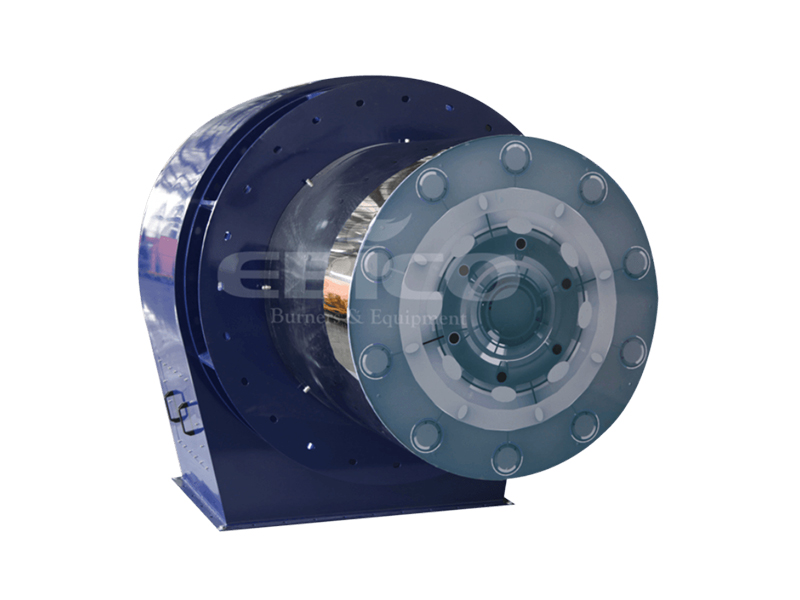
Different facilities require drastically different operating curves. Standard turndown ratios typically range from 3:1 to 5:1. These configurations fit perfectly in environments featuring steady base loads. Baseload power plants and large continuous manufacturing facilities rarely see demand drop. The equipment runs near maximum capacity constantly. They benefit from lower capital expenditures. Their control systems remain relatively simple.
However, standard systems struggle under variable conditions. They handle seasonal shifts poorly. Spring and autumn days require minimal heating. Standard setups short-cycle relentlessly during these shoulder months. Highly variable batch processing also creates problems. Breweries need massive steam output for a boil. Then, demand drops to near zero. A standard system cannot adapt smoothly to these sudden drops.
High turndown systems typically offer ratios from 10:1 to 12:1 or more. They thrive in environments experiencing extreme load swings. Hospitals represent a perfect use case. They need large bursts of steam for sterilization equipment. Meanwhile, they require constant, low-level building heat. High ratios allow continuous operation at low loads. They provide incredibly precise temperature and pressure control. They maximize fuel efficiency by eliminating purge cycles.
You must approach maximum ratio claims skeptically. A 12:1 specification sounds impressive on paper. It looks great in marketing brochures. However, it only provides value if your facility experiences prolonged periods at 8% load. If your absolute minimum demand never drops below 25%, a 4:1 ratio suffices. Overpaying for unused capacity drains your capital budget unnecessarily.
Application Profiles and Demand Variances
System Ratio | Ideal Facility Profile | Primary Operational Advantage | Known Limitations |
|---|---|---|---|
Standard (3:1 to 5:1) | Continuous chemical processing, baseload power | Lower upfront capital investment, simple controls | Severe short-cycling during seasonal shoulder months |
Moderate (6:1 to 8:1) | Commercial real estate, standard manufacturing | Balances cost with reasonable seasonal flexibility | May struggle with sudden zero-load batch drops |
High (10:1 to 12:1+) | Hospitals, universities, food processing | Eliminates purge losses, exact pressure control | High initial cost, requires advanced maintenance skills |
Internal geometry heavily influences turndown capabilities. Fire tube models feature massive internal water volumes. This high thermal mass buffers load changes effectively. However, turning them down too far causes issues in non-condensing setups. If exhaust gas temperatures drop below the dew point, corrosive condensation forms. Acidic moisture destroys standard carbon steel stacks quickly. Operators must calculate safe minimum firing rates carefully.
Water tube models operate differently. They hold significantly less water. This low thermal mass means they respond to demand spikes rapidly. It also means they experience rapid pressure increases if loads suddenly drop. High turndown is absolutely critical here. Without it, the system trips high-pressure safety limits. A wide operational range keeps water tube setups stable.
Condensing models benefit uniquely from extreme turndown ratios. These units are designed to withstand acidic condensation. In fact, they rely on it. They operate at low firing rates to drop exhaust temperatures intentionally. This extracts latent heat from the water vapor. High turndown allows colder return water to enter the system safely. This process drives combustion efficiency into the upper 90th percentile.
Retrofitting older equipment presents specific engineering challenges. You might pair a modern Industrial Boiler Burner with an aging pressure vessel. This requires thorough architectural assessment. You must evaluate existing draft controls and breaching conditions. The old stack might not handle low exhaust temperatures safely. Draft dynamics change significantly at 10% fire compared to 100% fire. An improperly matched retrofit causes severe flame instability and structural corrosion.
Achieving environmental compliance becomes difficult at low loads. Firing rates dictate the velocity of fuel and air mixing. As you turn the system down, velocities drop significantly. Maintaining proper mixing becomes a complex engineering challenge. Poor mixing risks serious flame instability. The flame can pull back onto the combustion head, destroying the metal. Poor mixing also leads to incomplete combustion. This causes carbon monoxide (CO) emissions to spike aggressively.
Advanced combustion systems tackle this challenge head-on. A modern Low NOx Boiler Burner uses sophisticated techniques. Many rely on flue gas recirculation (FGR). FGR pipes a portion of exhaust gas back into the combustion zone. This lowers peak flame temperatures to prevent nitrogen oxides (NOx) formation. Advanced systems utilize specialized head designs and premix technologies. They maintain fuel-air velocities even at minimal output.
Permit regulations do not care about load variations. Local authorities require strict adherence to limits at all times. They demand sub-30 ppm or even sub-9 ppm NOx compliance. Standard equipment often achieves these numbers at maximum fire. However, they frequently fail compliance tests at 20% load. Maintaining tight emission profiles across the entire turndown range separates premium equipment from budget options.
You must demand thorough verification before purchasing. Ask vendors for comprehensive emissions testing data. Review their performance curves at the absolute lowest firing rates. Do not accept peak-load data as proof of overall compliance. The lowest point is where standard systems fail environmental audits. Verifying this data protects you from costly fines and forced retrofits later.
Selecting the correct system requires methodical analysis. Do not rely on guesswork or vendor hype. Use concrete data to dictate your purchasing criteria. A structured framework ensures you invest capital wisely.
Step 1: Audit Historical Load Profiles. Start by gathering hard data. Map your peak winter demand against your minimum summer load. Analyze standby requirements during overnight shifts. Use building management system logs to track hourly fluctuations. Identifying your lowest sustained operational load points you to the exact ratio needed.
Step 2: Assess Control System Readiness. High operational ranges demand sophisticated instrumentation. Older mechanical linkages cannot maintain precise air-to-fuel ratios at 10% fire. You need advanced parallel positioning or linkageless controls. Assess your maintenance team realistically. Ensure they are equipped and trained to support complex PLCs and precise servomotors.
Step 3: ROI Calculation. Model the financial reality carefully. Calculate the upfront cost delta of premium equipment. Weigh this against projected annual fuel savings. Quantify the energy saved by eliminating thousands of purge cycles. Factor in reduced maintenance costs from fewer motor starts and stops. Return on investment typically materializes within two to three years for well-matched systems.
Apply strict logic when shortlisting vendors. Reject manufacturers who blindly push maximum ratios. They should ask for your load profile immediately. Prioritize partners offering verifiable efficiency curves. Look for suppliers who guarantee local, experienced commissioning support. Proper tuning during installation matters just as much as the hardware itself.
Taking a pragmatic approach yields the best results. The optimal specification is the one matching your unique demand curve. The best turndown ratio allows your system to remain online continuously during your absolute lowest standard operating load. Chasing higher numbers without a matching load profile wastes valuable capital.
Take concrete actions before speaking to vendors. Compile a full year of seasonal load data. Gather your current and projected emission permit requirements. Assess the technical capabilities of your maintenance personnel. Having this information ready ensures a smooth procurement process. It protects your facility from both underperforming equipment and unnecessarily complex setups.
A: Yes, retrofitting is often possible. However, it requires linkageless controls and potential gas train upgrades. You must also verify the existing pressure vessel can safely handle low stack temperatures without suffering corrosive condensation damage.
A: No. High ratios prevent massive energy waste caused by short-cycling and continuous air purging. However, at the absolute lowest firing rates, excess air levels often increase slightly. The net efficiency gain comes strictly from cycle reduction, not from peak combustion efficiency.
A: An appropriately sized ratio significantly extends equipment life. It reduces thermal cycling, which causes metal fatigue inside the vessel. It also decreases mechanical wear on ignition transformers, relays, and gas valves by minimizing constant starts and stops.
