

Views: 0 Author: Site Editor Publish Time: 2026-07-07 Origin: Site
Upgrading or building an industrial boiler room often creates a frustrating multi-vendor headache. Coordinating separate installations for the pressure vessel, firing equipment, and control panels routinely triggers integration errors. These misalignments cause delayed commissioning and substantial budget overruns. Plant managers cannot afford extended downtime or the risk of failed emissions tests caused by mismatched components. A fragmented approach leaves facilities vulnerable to contractor disputes when the system fails to start.
Fortunately, the industry is shifting toward pre-engineered, factory-tested solutions to eliminate these bottlenecks. We will explore how consolidating critical thermal components into a single-source, plug-and-play package transforms project execution. You will discover how a well-designed skid system minimizes on-site installation time while ensuring rigorous emissions compliance from day one.
Single-Source Accountability: Procuring a completely integrated skid eliminates compatibility disputes between boiler and burner manufacturers.
Accelerated Deployment: Factory-wired and pre-tested configurations drastically reduce on-site engineering and bypass lengthy entity permitting processes.
Spatial Optimization: 3D-modeled skids maximize output in restrictive footprints, often fitting within standard 40-foot shipping containers or serving as external modular add-ons.
Scalable Compliance: Modern skids readily incorporate sub-30ppm Low NOx burners and dual-fuel capabilities without requiring custom engineering from scratch.
Traditional boiler room construction requires complex choreography. You must manage pipefitters, electricians, and controls engineers simultaneously in a confined space. This piece-by-piece field assembly introduces significant project risks. Weather conditions, scheduling conflicts, and missing parts routinely push completion dates back by weeks.
Factory-built systems offer a highly predictable alternative. Manufacturers build these integrated units in controlled environments. They perform comprehensive Factory Acceptance Testing (FAT) before the unit ever leaves the facility. Technicians fire the burner, verify safety interlocks, and tune combustion parameters under simulated loads. This rigorous pre-testing guarantees the system will perform as specified upon arrival. It shifts the integration burden from your facility manager back to the original equipment manufacturer.
Expanding a permanent, brick-and-mortar boiler room also triggers a cascade of bureaucratic delays. You face extensive civil engineering reviews, architectural design approvals, and complex local permitting. Self-contained skids bypass many of these hurdles. Because they act as equipment rather than permanent structures, they often bypass lengthy entity permitting processes. You can deploy them rapidly as temporary installations or semi-permanent fixtures.
Space-constrained facilities benefit immensely from this approach. Healthcare campuses and urban breweries rarely have room to expand their utility buildings. Skid packages address this physical limitation by delivering high-density thermal output in a minimal footprint. Engineers utilize 3D CAD software to pack maximum capacity into limited dimensions. Many designs achieve 100% full-load efficiency while occupying a fraction of the space required by conventional setups.
Best Practices for Business Case Evaluation:
Document your exact footprint constraints before contacting vendors.
Request FAT documentation protocols to understand exactly what the manufacturer tests.
Consult local regulatory bodies early to confirm how they classify modular thermal equipment.
A true packaged solution is much more than a pressure vessel bolted to a steel frame. It represents a cohesive thermal ecosystem. Every pipe, valve, and wire plays a specific role in maintaining safe, efficient steam or hydronic generation. We can divide these elements into the baseline framework and optional efficiency enhancements.
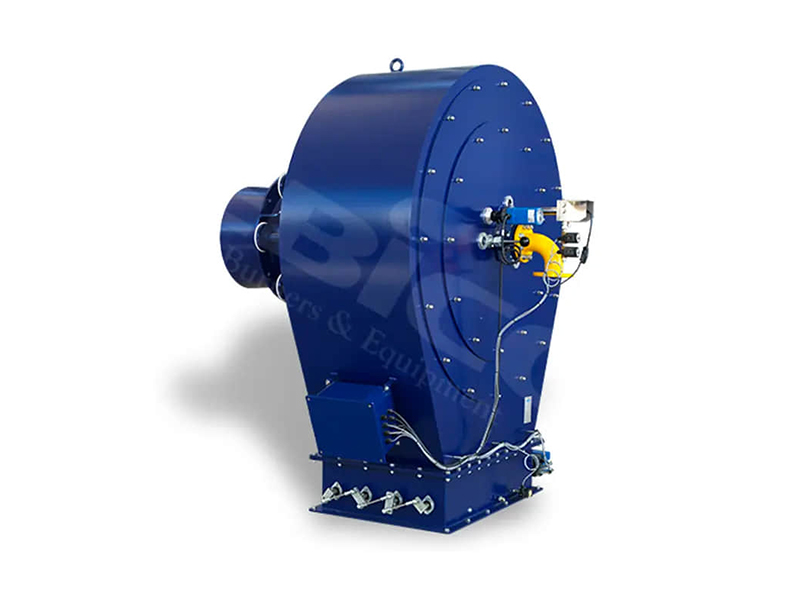
Every reliable unit requires a sturdy structural foundation. The heavy-duty carbon steel base supports the entire operational weight, including the dynamic loads generated during combustion. At the heart of this framework sits the primary pressure vessel and the integrated Boiler Burner. These two elements must match perfectly to achieve optimal heat transfer.
To support this core, the baseline package includes several vital subsystems:
Feed Water Systems: Primary and backup pumps ensure the vessel maintains proper water levels under fluctuating demands.
Blowdown Separators: These devices safely manage the discharge of high-pressure boiler water, cooling it before it enters the municipal drain.
Main Steam Stop Valves: Pre-piped isolation valves allow operators to safely disconnect the unit from the plant header.
You can customize the skid by selecting from a "menu" of auxiliary components. These additions improve performance and extend equipment longevity.
Deaerators & Water Softeners: Raw water destroys pressure vessels. Water softeners remove scaling minerals, while deaerators strip dissolved oxygen to prevent aggressive pitting corrosion.
Economizers: These heat exchangers sit in the exhaust stack. They capture waste heat and transfer it to incoming feed water, creating a closed-loop energy recovery process.
Condensate Tanks: Storing and recycling treated, heated condensate reduces raw utility consumption and lessens the load on the water treatment system.
Modern skids rely on sophisticated digital architecture. Manufacturers pre-wire gas flow meters, carbon monoxide monitors, and flame safety relays to a single master terminal. This programmable logic controller (PLC) manages everything from the air-fuel ratio to the automatic blowdown sequencing. Operators monitor the entire ecosystem through an intuitive human-machine interface (HMI) mounted directly on the panel.
Component Type | Primary Function | Integration Benefit |
|---|---|---|
Pressure Vessel & Burner | Core thermal generation | Factory matched for optimal combustion efficiency |
Deaerator Skid | Oxygen removal & pre-heating | Prevents vessel corrosion; arrives pre-piped |
Economizer | Exhaust heat recovery | Reduces fuel consumption automatically |
Master PLC Panel | System automation & safety | Eliminates complex field wiring tasks |
Selecting the right configuration depends entirely on your specific process demands. Facilities must choose between pre-engineered modular packages and heavily customized engineered solutions. Both offer distinct advantages depending on your required capacity, timeline, and fuel type.
Pre-engineered units serve as the industry standard for rapid deployment. Manufacturers design these hydronic and steam systems using standardized, off-the-shelf components. They keep technical drawings on file, allowing them to push these units through production quickly. You should consider this route for standard capacity requirements or emergency replacements following a catastrophic equipment failure.
These standard packages excel in cascading setups. You can connect up to eight boiler systems in parallel on a single header. The master controller sequences the units, firing them sequentially to match fluctuating seasonal or shift-based loads. This modular approach ensures you only burn fuel when demand necessitates it, keeping overall efficiency high.
Some industrial applications exceed the capabilities of standard catalogs. Extreme industrial demands dictate a custom-built approach. We see this necessity when facilities require capacities exceeding 250,000 lbs/hr, design pressures up to 750 psi, or high superheat temperatures.
Custom setups accommodate complex multi-fuel requirements. While standard units typically burn natural gas, custom variants seamlessly transition between natural gas, #2 fuel oil, and even renewable biomass. Designing these heavy-duty systems requires extensive 3D spatial simulation. Engineers must optimize the component layout to ensure weight distribution remains balanced during lifting and transit.
Common Mistakes in Selection:
Ordering a custom unit when a standard modular cascade could handle the variable load more effectively.
Underestimating the physical weight of a custom, high-pressure package, leading to foundation failures.
Failing to specify future alternative fuel needs during the initial design phase.
The market features numerous vendors claiming to offer "plug-and-play" solutions. However, not all packages deliver the promised convenience. You must evaluate potential providers against strict technical criteria to ensure a successful integration.
True pre-packaging relies on a single-point connection philosophy. Ensure the vendor design genuinely requires only one tie-in point for fuel, one for water, one for steam discharge, and one main electrical feed. Poorly designed units force contractors to run multiple utility branches across the frame, defeating the purpose of buying an integrated package. Single-point designs aggressively minimize on-site contractor hours.
Vendors love to boast about ultra-compact footprints. However, packing too much equipment onto a small base creates a maintenance nightmare. We call this "The Compact Trap." Evaluate the proposed 3D models carefully. Verify that increasing component density does not sacrifice serviceability. Technicians must have unobstructed access to the skid-mounted burner, isolation valves, and control panel interiors. If a worker cannot safely pull a burner head for inspection, the layout is flawed.
Environmental compliance is non-negotiable. Do not accept a system where the manufacturer hopes the burner will meet local codes after field tuning. Verify that the system integration ensures compliance with local air quality standards right out-of-the-box. Request a written guarantee for Low NOx performance. Modern packages should confidently guarantee emissions under 30ppm across all firing rates, not just at a specific test point.
Prioritize manufacturers who design, assemble, and support the entire ecosystem holistically. When one company builds the vessel, installs the firing equipment, and programs the controls, you gain true accountability. This single-source responsibility prevents the dreaded "finger-pointing" game between separate component manufacturers during warranty claims or troubleshooting events.
Despite the undeniable advantages, installing these massive assemblies requires careful logistical planning. The term "plug-and-play" implies instant functionality, but the reality demands thorough site preparation and precise execution.
Your facility must be ready before the truck arrives. A heavy-duty, perfectly level foundation pad is mandatory. A settling foundation will warp the steel frame, leading to cracked pipes and misaligned pump couplings. Furthermore, you must ensure your plant has properly sized utility drops ready at the installation site. If the unit requires an upgraded gas main or a larger electrical service, you must complete this infrastructure work in advance.
Shipping constraints dictate much of the physical design. Many standard packages fit neatly within 40-foot shipping container specifications, making freight straightforward. However, oversized custom units present severe logistical hurdles. Moving a 100,000 lb unit requires specialized flatbed trailers, specific highway routing, and state escort permits.
Rigging poses another challenge. You must secure a crane capable of lifting the wet weight of the package. The vendor must provide engineered lifting lugs welded directly to the frame. Facilities often overlook overhead clearances, struggling to navigate the suspended unit under existing pipe racks or power lines.
Finally, consider the digital handshake. The new programmable logic controller must communicate with your plant's existing infrastructure. Assess the controls architecture required to integrate the new system with your Distributed Control System (DCS). If you are connecting a new unit to a legacy boiler cascade sequence, your controls engineer must carefully map the communication protocols (e.g., Modbus or BACnet) to ensure smooth load sharing.
Rollout Best Practices:
Conduct a digital 3D sweep of the rigging path from the unloading zone to the final pad.
Confirm the foundation concrete has fully cured and passed compression tests before placement.
Establish the network communication protocol requirements during the initial vendor bidding phase.
Transitioning to a skid-mounted burner system represents a strategic procurement choice rather than a mere spatial convenience. By consolidating disparate thermal components into a cohesive, factory-tested package, you effectively transfer the profound risks of field integration from your facility manager back to the expert manufacturer. This approach accelerates project timelines, guarantees rigorous emissions compliance, and eliminates contractor disputes.
To capitalize on these engineered solutions, take the following next steps:
Audit your current boiler room footprint to identify hard spatial limitations.
Clearly define your absolute limits regarding required capacity, operating pressure, and local emissions caps.
Stop quoting individual components; instead, request comprehensive 3D layout proposals from single-source integration providers.
Ensure your chosen vendor guarantees single-point utility connections to maximize field installation efficiency.
A: Trailer-mounted units are highly mobile enclosures explicitly designed for temporary or emergency rental use. They feature axles and wheels. Conversely, skid-mounted units sit on a heavy-duty, flat steel base. Manufacturers intend for them to serve as permanent or semi-permanent fixed installations where space is at a premium and mobility is no longer required once set in place.
A: Yes. Factory-integrated systems undergo precise tuning prior to shipment. Because the manufacturer tests the exact vessel and burner combination together, they can easily achieve sub-30ppm Low NOx guarantees. For ultra-strict regions, engineers can even incorporate compact Selective Catalytic Reduction (SCR) systems directly onto the frame for even tighter compliance.
A: Absolutely. While standard modular units handle typical commercial loads, custom engineered skids excel in heavy industrial applications. Manufacturers can build these integrated packages to handle robust 1000 HP configurations. Depending on the specific vendor's fabrication capabilities, they can confidently deliver design pressures reaching 750 psi and high superheat temperatures.
