

Views: 0 Author: Site Editor Publish Time: 2026-10-02 Origin: Site
Process heating demands rarely remain static throughout a typical production cycle. Load fluctuations are a standard operational reality in heavy manufacturing and commercial power generation facilities. When process demands shift unexpectedly, outdated or poorly controlled equipment struggles to adjust quickly enough. This delayed response leads directly to thermal shock, severe boiler cycling, massive fuel waste, and completely inconsistent product quality across batches. Modern facilities cannot afford these physical stresses or operational inefficiencies. Maintaining highly stable heat output requires highly precise modulation, optimal turndown ratios, and advanced electronic combustion controls. This comprehensive guide breaks down exactly how modern systems manage rapid load changes safely and effectively. We also explore the critical technical components you must thoroughly evaluate when planning to upgrade your facility's combustion equipment. Read on to master load tracking mechanics.
Modulation is Critical: Continuous modulation, rather than on/off or high/low firing, is essential for minimizing thermal stress and maximizing efficiency during load shifts.
Turndown Ratios Dictate Flexibility: A higher turndown ratio allows an Industrial Burner to idle efficiently without shutting down, saving purge-cycle energy losses.
Electronic Controls Outperform Mechanical: Linkageless controls and O2 trim systems eliminate mechanical hysteresis, ensuring exact fuel-to-air ratios across the entire firing curve.
System Integration is the Bottleneck: Upgrading requires evaluating not just the burner, but the existing Burner Management System (BMS) and boiler refractory health.
Managing load changes improperly creates cascading physical damage and operational inefficiencies. Facilities relying on outdated controls consistently face three major operational hurdles.
Rapid cycling induces severe thermal stress on critical infrastructure. Frequent on and off states force boiler tubes to expand and contract constantly. This continuous mechanical movement damages expensive refractory materials over time. Equipment depreciates much faster when subjected to these relentless temperature swings. We often see premature tube cracking and joint failures in facilities running older step-controlled units. You must minimize these thermal cycles to preserve structural integrity and prevent unexpected downtime.
Every time a unit shuts down and restarts, safety codes require a full chamber volumetric purge. Pre-purge and post-purge cycles blow valuable, already-heated air directly out the exhaust stack. If your system cannot modulate low enough to match reduced demand, it trips off automatically. You lose massive amounts of thermal energy simply clearing unburned gases from the furnace. These continuous purge cycles destroy your overall fuel efficiency and inflate monthly utility bills unnecessarily.
Unstable fuel-to-air ratios during transient load shifts cause significant environmental compliance problems. Mechanical valves often struggle to catch up during sudden demand spikes. You often see dangerous spikes in NOx and CO emissions during these exact transient moments. Facilities utilizing Continuous Emission Monitoring Systems (CEMS) will immediately record these transient spikes. These spikes risk severe environmental compliance violations and subsequent fines. Smooth transitional control remains absolutely mandatory for modern environmental compliance.
Understanding the mechanical and electronic systems behind load tracking helps you make better engineering decisions. Modern equipment relies on sophisticated logic to maintain stability.
Traditional high, low, or off controls limit your operational flexibility entirely. They force the system into rigid, predetermined firing states regardless of actual process demand. In sharp contrast, PID-driven continuous modulation smoothly tracks exact process requirements. A modern Industrial Burner uses sophisticated PID loops to adjust valves instantly. They follow exact load curves continuously. This electronic precision eliminates the harsh temperature drops heavily associated with outdated step controls.
Turndown capabilities dictate your baseline operational flexibility. A 10:1 ratio means the system can operate steadily at just 10% of maximum rated capacity. High turndown prevents the unit from cycling off entirely during off-peak shifts or low-demand periods. You maintain a perfectly stable baseline temperature without wasting any energy on unnecessary purge cycles. A wider ratio directly translates to smoother operation during highly volatile production days.
Safety and efficiency require precise synchronization between fuel and air. Cross-limiting control logic ensures airflow always leads fuel flow whenever demand increases. Conversely, the air supply actively lags behind the fuel supply during a demand decrease. This specific programming logic maintains a safe, fuel-lean combustion environment at all times. We rely on this failsafe logic to prevent dangerous, fuel-rich mixtures from accumulating inside the furnace during rapid fluctuations.
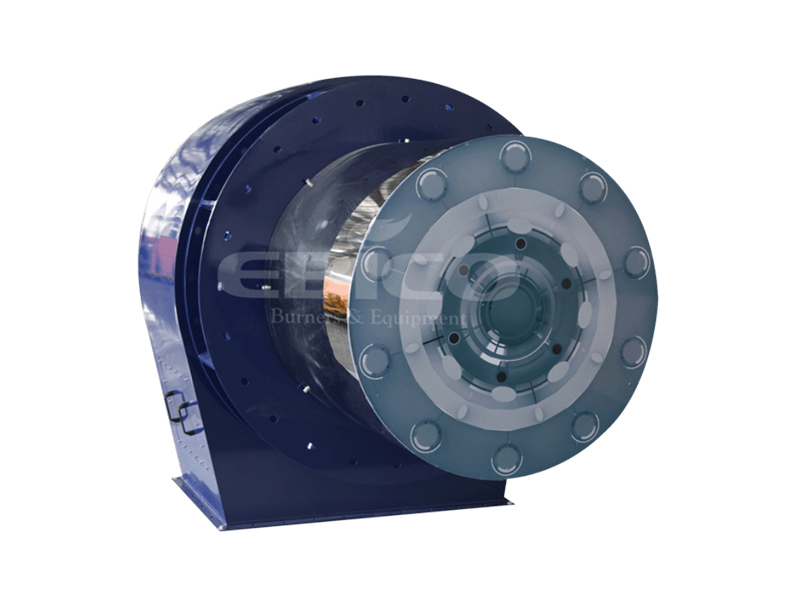
Upgrading your infrastructure requires a clear features-to-outcomes evaluation framework. When evaluating a High Capacity Industrial Burner, you must look closely beyond basic BTU outputs. Focus heavily on the electronic hardware driving the actual modulation.
Mechanical cams and heavy linkages degrade significantly over time. They introduce physical hysteresis and positioning drift, ruining your carefully tuned fuel-to-air ratio. Linkageless controls replace these outdated mechanisms entirely. They utilize independent, direct-drive servo motors for each specific valve. Servos provide repeatable, micro-millimeter precision for every single movement. This advanced setup eliminates mechanical slop and guarantees absolute consistency across the firing curve.
Ambient plant conditions constantly change throughout the day. An active O2 trim system continuously analyzes exhaust gases directly in the stack using Zirconia oxide probes. It dynamically fine-tunes the air damper position to maintain optimal combustion efficiency continually. This real-time adjustment happens regardless of ambient temperature drops, humidity shifts, or sudden load changes. You maintain peak efficiency without requiring constant manual intervention from operators.
Traditional dampers simply choke airflow while the main blower motor runs continuously at full speed. Variable Frequency Drives (VFDs) take a much smarter approach. They regulate the actual combustion air blower motor speed directly at lower loads. Slowing the physical motor down drastically reduces electrical power consumption overall. You achieve much smoother low-fire control while saving substantial amounts of facility electricity and reducing plant floor noise.
Choosing an off-the-shelf solution or a highly engineered unit depends on your specific facility constraints. You must align the equipment capabilities directly to your daily production realities.
These highly standardized units work best for predictable, steady load profiles. We typically recommend them for standard firetube or watertube boilers operating in very typical plant environments. They easily meet standard low-NOx compliance requirements in most common jurisdictions. However, they possess distinct performance limitations. They often struggle significantly when paired with unusual chamber geometries or highly complex mixed-fuel applications.
Extreme environments demand deeply engineered, specialized solutions. A properly designed Custom Industrial Burner handles unique furnace configurations and extreme load volatility effortlessly. They excel at burning unpredictable waste gases, processing alternative fuels like hydrogen blends, or meeting strict ultra-low NOx mandates below 9 ppm. Evaluating these advanced systems requires upfront computational fluid dynamics (CFD) modeling. CFD guarantees proper flame shaping and ensures heat transfer stability under violently shifting process loads.
Burner Selection Comparison Summary
Evaluation Criteria | Standard Off-the-Shelf Models | Custom Engineered Solutions |
|---|---|---|
Load Profile Predictability | Requires high load predictability | Easily handles extreme volatility |
Fuel Flexibility | Single standard fuel (Natural Gas/Oil) | Mixed fuels, biogas, refinery off-gases |
Emissions Capability | Standard Low-NOx compliance | Ultra-Low NOx capabilities (<9 ppm) |
Engineering Requirements | Minimal configuration required | Extensive CFD modeling required |
Purchasing exceptional equipment represents only half the actual challenge. Proper system integration determines your ultimate operational success. You must navigate several critical implementation phases carefully.
You must execute specific evaluation steps to ensure control compatibility before installation:
Assess whether existing programmable logic controllers (PLCs) can process complex parallel positioning data accurately.
Verify legacy relay logic can safely interface modern continuous PID modulation signals.
Determine if a full, comprehensive control panel upgrade is strictly required to unlock the new hardware's capabilities.
Older electromechanical relays simply cannot process advanced PID loops fast enough to prevent system lag.
High-turndown retrofits alter your standard flame geometry significantly. You must thoroughly evaluate if your existing boiler refractory can physically withstand highly concentrated heat. A shortened, highly intense flame at low-fire states can degrade older brickwork rapidly. Technicians must inspect chamber walls for existing micro-cracks or weak mortar joints before commissioning any new combustion hardware.
Multi-point tuning during initial commissioning remains absolutely essential for safe operation. Technicians must precisely map the fuel-to-air ratio across dozens of specific load points. This comprehensive tuning process ensures stable, clean combustion across the entire load spectrum. Skipping this crucial step often causes severe acoustic resonance, rumbling vibrations, or dangerous flame instability during transient demand shifts.
Managing process heat stability relies fundamentally on upgrading from mechanical linkages to independent electronic servo controls.
Maximize your turndown capabilities to prevent wasteful volumetric purge cycles during off-peak production hours.
Base your final procurement decisions on precise load volatility audits and strict local emissions targets.
Audit your existing boiler cycling frequency this week to identify immediate areas for operational improvement.
Consult a qualified combustion engineer to properly model chamber aerodynamics before finalizing any major equipment retrofits.
A: A 10:1 ratio is considered excellent for most standard manufacturing applications. This ratio allows the unit to run steadily at just 10% of total capacity. However, some highly engineered systems achieve up to 12:1 or even higher. This relies heavily on specific fuel types and aerodynamic designs. High turndown prevents the system from shutting off completely during temporary demand drops.
A: Cold air is significantly denser than warm air. It brings much more oxygen per cubic foot into the combustion chamber. Without an active O2 trim system to compensate dynamically, temperature shifts violently skew the fuel-to-air ratio. This imbalance directly causes unstable heat output, sharp efficiency drops, or excess emissions when process loads suddenly shift.
A: Yes, you can successfully retrofit many existing mechanical systems. Technicians install parallel positioning servos and updated modern controllers directly onto older units. This specific control retrofit drastically improves modulation precision and completely eliminates physical hysteresis. It often provides a much faster operational improvement than executing a full mechanical system replacement.
