

Views: 0 Author: Site Editor Publish Time: 2026-09-21 Origin: Site
Furnace backpressure remains a critical variable dictating combustion stability, fuel efficiency, and overall system safety. Facility managers often overlook this invisible aerodynamic force. They usually ignore it until minor inefficiencies escalate into major operational failures. Unmanaged backpressure directly causes premature equipment wear. It drastically increases daily fuel expenditure. It also creates potential regulatory non-compliance due to spiked stack emissions. You simply cannot ignore the flow dynamics inside your combustion chamber. Operators need actionable strategies to regain control over their process heating infrastructure. This article provides a comprehensive technical evaluation framework. It helps you diagnose complex backpressure issues accurately. You must choose whether stack modifications, meticulous system tuning, or equipment upgrades offer the most viable solution. We will help you navigate these choices. You will learn how to measure draft anomalies properly. You will identify dangerous physical symptoms early. Finally, you will implement corrective engineering measures safely.
Excessive furnace backpressure restricts combustion airflow, leading to fuel-rich mixtures, soot buildup, and severe efficiency drops.
Modern compliance standards require precise draft control; backpressure directly compromises the emission control capabilities of a low NOx boiler burner.
Diagnosing the root cause requires evaluating both the exhaust stack design and the burner’s blower capacity to ensure they are aerodynamically matched.
Upgrading an industrial boiler burner is often necessary when existing equipment cannot overcome baseline backpressure without risking motor overload or flame instability.
Understanding backpressure begins by defining the basic aerodynamic struggle happening inside your equipment. We define backpressure as the physical resistance your blower must constantly overcome. It forces combustion gases through the furnace. It pushes them into the heat exchanger tubes. Finally, it drives them out the exhaust stack. Think of it as an invisible bottleneck restricting flow. The fan generates kinetic energy to move air forward. However, the downstream system creates friction and pushes back.
We observe different dynamics depending on your specific draft design. In positive draft systems, powerful fans force air directly into the chamber. They must maintain high continuous pressure to push exhaust gases completely out. Conversely, induced-draft systems utilize large fans in the exhaust stack. They pull gases through the system using negative pressure. Backpressure impacts both configurations heavily. Nevertheless, forced-draft systems often suffer more immediate combustion starvation when flow resistance suddenly spikes.
Several common sources generate this problematic aerodynamic resistance. You must regularly inspect your infrastructure for these hidden bottlenecks:
Restrictive stack configurations: Poorly designed breeching creates severe friction. Excessive elbows, narrow exhaust caps, or improper transitions choke airflow rapidly.
Soot accumulation and fouling: Ash builds up inside heat exchanger tubes over time. This narrows the available gas path and drastically increases internal friction.
Undersized exhaust venting: Expanding facility loads often outgrow the original exhaust piping. The legacy stack simply cannot handle the increased flue gas volume safely.
Ignoring these aerodynamic restrictions leads to cascading equipment failures. We must treat airflow dynamics just like fuel supply pressure.
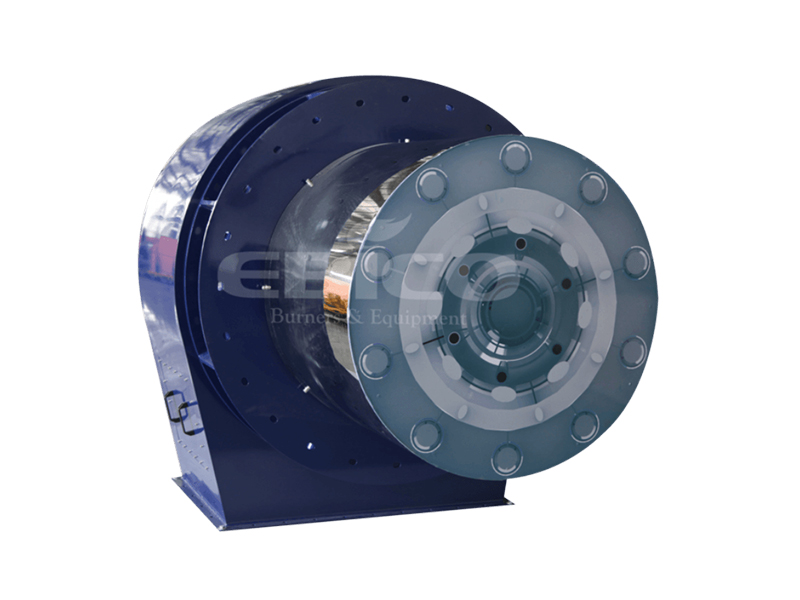
High furnace pressure fundamentally disrupts the carefully calibrated operations of any Industrial Boiler Burner. The most immediate casualty is your baseline combustion efficiency. As aerodynamic resistance rises, the main blower struggles to deliver adequate oxygen. This severely reduces the critical air-to-fuel ratio. The system then runs unnecessarily rich. This causes widespread incomplete combustion. Unburned fuel goes straight up the stack. This wastes valuable energy resources. It inflates your daily operational costs significantly.
Beyond wasted fuel, pressure pushback causes severe mechanical and structural damage. You will likely notice flame instability first. The flame impinges directly on furnace walls instead of maintaining a tight shape. This creates violent rumbling vibrations across the vessel. These intense thermal stresses destroy internal refractory materials quickly. They also damage fragile internal components. Over time, you face frequent safety lockouts. Your equipment lifecycle shortens drastically.
Emissions compliance risks pose an equally dangerous operational threat. Accurate air-to-fuel mapping fails completely under high backpressure conditions. A mismatched aerodynamic system prevents proper oxygen mixing at the burner head. Consequently, incomplete combustion generates massive spikes in carbon monoxide (CO). It also releases high volumes of unburned hydrocarbons. Facilities running under these choked conditions routinely fail local regulatory emissions testing. Hefty fines and forced shutdowns often follow closely behind these failures.
Guessing will not solve invisible aerodynamic restrictions. You need a structured diagnostic approach to evaluate system resistance accurately. This requires deploying proper measurement tools. You must follow strict testing protocols. We rely on hard data rather than assumptions.
Establish baseline measurement protocols: Use a digital manometer alongside a calibrated combustion analyzer. You must measure draft pressure in inches of water column (in. w.c.). Take these readings across the combustion chamber and the main stack. Always compare these actual readings against original OEM specifications.
Identify visual symptoms of over-pressurization: Look closely for obvious signs of internal flow restriction. You will often see black soot forming around boiler doors. Soot also appears near access panels. Dark smoke exiting the exhaust stack indicates severe oxygen starvation.
Monitor operational cues continuously: Track your blower motor performance daily. High backpressure forces the motor to work much harder. This inevitably leads to overheating and excessively high amperage draw. You will also experience frequent nuisance trips of the high-pressure safety switch.
Isolate the precise root cause: Determine if the flow restriction is sudden or systemic. A collapsed stack liner creates an immediate, sudden blockage. A dropped damper has the exact same effect. Alternatively, a systemic design flaw usually presents as a chronic, worsening issue. Chronic issues typically require a larger capital upgrade.
Engineers must map the pressure drop across every single section. They pinpoint exactly where the exhaust flow chokes. We frequently find early diagnosis makes repairs much cheaper.
Once you diagnose the exact flow restriction, you must choose the right solution pathway. Sometimes, modifying the existing exhaust infrastructure solves the backpressure issue permanently. You should thoroughly evaluate several potential stack and breeching modifications. Retrofitting mechanical draft inducers helps pull sluggish gases through restrictive passages. Installing barometric dampers stabilizes erratic draft fluctuations effectively. Expanding the main breeching diameter fundamentally relieves trapped system pressure.
However, physical infrastructure changes are not always possible. They are not always cost-effective either. You must consider a major retrofit when your existing equipment fails. If the current blower cannot safely overcome the baseline pressure, intervention is necessary. You likely need a modern Boiler Burner. Upgrading requires specific success criteria. You should select units featuring higher static pressure blower designs. You must also prioritize models equipped with variable frequency drives (VFDs). These drives provide precise, dynamic air control across constantly shifting draft conditions.
Beware of dangerous shortcuts during the implementation phase. Some aggressive operators try simply turning up the fan speed on an older unit. We strongly advise against this risky practice. Forcing an old motor to spin faster risks catastrophic electrical burnout. It immediately invalidates OEM safety warranties. It also creates serious industrial fire hazards. Always rely on fully engineered upgrades rather than improvised mechanical tweaks.
Emissions compliance complicates backpressure management significantly. We face a highly unique challenge when integrating a Low NOx Boiler Burner in high-pressure environments. These advanced emissions units remain incredibly sensitive to minor draft fluctuations. They rely on highly specific, delicate air-and-fuel mixing techniques. They also depend heavily on flue gas recirculation (FGR) mechanisms. FGR cools the primary flame effectively. If furnace pressure pushes back, FGR flow stalls instantly. Consequently, NOx emissions skyrocket past legal limits.
You must apply rigorous evaluation criteria for any equipment upgrade. Look specifically for machinery featuring high-capacity impellers. Engineers design these impellers strictly for high backpressure environments. The new system must include integrated parallel positioning controls. This technology maintains tight, independent control over both air and fuel servos. It adapts seamlessly under varying draft conditions.
Follow a strict shortlisting logic before initiating procurement. Do not purchase equipment based on basic sizing alone. Request a comprehensive aerodynamic draft analysis from a qualified engineering firm. This vital step guarantees the new unit actually matches your facility’s operating realities.
Upgrade Evaluation Criteria Summary
Feature | Function | Benefit under High Backpressure |
|---|---|---|
High-Capacity Impellers | Generates higher static pressure continuously. | Overcomes stack resistance to maintain correct airflow reliably. |
Variable Frequency Drives (VFD) | Adjusts fan motor speed dynamically. | Prevents motor burnout while adapting to draft shifts safely. |
Parallel Positioning System | Separates fuel and air servo control mechanisms. | Keeps air-to-fuel ratios exact to prevent emissions spikes. |
Treating furnace backpressure is never an optional facility maintenance task. It remains a mandatory requirement for safe, efficient, and fully compliant operations. Ignoring persistent draft issues forces your expensive system to fight itself daily. Proactively addressing these unseen aerodynamic challenges protects your bottom line. It prevents you from throwing precious capital at massive fuel waste. It also eliminates the need for endless temporary maintenance band-aids. We strongly recommend taking immediate, data-driven action. You must protect your critical heating infrastructure now. Schedule a professional combustion analysis and a comprehensive draft audit this week. These expert evaluations map out a clear, evidence-based repair strategy. They ensure your replacement or tuning strategy aligns perfectly with your specific facility demands.
A: While slight fan adjustments are possible via Variable Frequency Drives (VFDs), you must exercise extreme caution. Forcing a standard motor beyond its rated amperage to fight severe backpressure causes rapid overheating. This often leads to premature motor failure. Furthermore, excessive fan speed can disrupt the combustion zone entirely, resulting in dangerous flame blow-off.
A: Original equipment manufacturers design their products to operate within specific aerodynamic tolerances. Operating outside the manufacturer's specified maximum furnace pressure limits generally voids your warranty. You must ensure proper stack design and correct breeching dimensions prior to installation. This protects your warranty and guarantees safe daily operation.
A: Rumbling, often referred to as harmonic vibration, acts as a critical warning sign. It indicates severe combustion instability. Insufficient airflow fights against exhaust resistance, causing the flame to bounce and impinge on the furnace walls. This poses an immediate safety hazard and risks mechanical damage to refractory materials.
A: No, it will not. A new emissions-compliant unit actually requires correct draft conditions to function properly. You must correct the facility's aerodynamics first. Alternatively, you must source a specifically designed high-static-pressure model engineered to handle existing resistance. Upgrading without fixing the root draft issue guarantees continued failure.
