

Views: 0 Author: Site Editor Publish Time: 2026-11-19 Origin: Site
Industrial facilities face increasing vulnerability to fuel supply chain disruptions. Localized shortages and volatile pricing threaten daily output. Relying on a single fuel source ties your plant uptime directly to external market stability. You lose control when primary lines fail. Upgrading to a Multi Fuel Burner provides a vital operational buffer. It allows facilities to switch fuels seamlessly. You can maintain continuous production during primary fuel outages.
This guide outlines the business case and evaluation frameworks for this transition. We explore the implementation realities of switching to fuel-flexible combustion systems. You will learn how to evaluate hardware requirements and control logic. We also cover compliance testing and vendor selection. By the end of this article, you will understand exactly how to protect your plant from unexpected downtime.
Operational Resilience: Multi fuel systems act as mechanical insurance, directly reducing unplanned downtime caused by fuel scarcity.
Dynamic Cost Control: Fuel flexibility allows procurement teams to pivot between gas and liquid fuels based on real-time market pricing.
Implementation Reality: A successful changeover requires more than a hardware swap; it demands upgraded fuel trains, advanced PLC integration, and rigorous compliance testing.
ROI Measurement: The true return on investment is calculated primarily through avoided production losses rather than baseline thermal efficiency gains.
Modern industrial plants cannot afford extended pauses. When primary fuel lines run dry, manufacturing stops entirely. This dependency creates severe financial and operational risks.
You must evaluate the hourly cost of halted production. Compare this lost revenue against the capital expenditure of a burner retrofit. Do not view the retrofit as a standard efficiency upgrade. View it as mechanical insurance. If your plant loses thousands of dollars per hour during a shutdown, a multi-fuel system pays for itself quickly. The financial return is measured in avoided losses. A single multi-day outage often exceeds the initial installation cost.
Relying on one fuel type exposes your facility to unpredictable threats. Common vulnerabilities include:
Winter Gas Curtailments: Utility companies often restrict industrial gas usage during extreme cold. They prioritize residential heating.
Geopolitical Supply Shocks: International conflicts can disrupt fuel imports. This causes sudden price spikes and scarcity.
Localized Infrastructure Failures: Broken pipelines or regional grid failures can sever your fuel supply without warning.
Framing the changeover correctly is crucial for stakeholder approval. It is a risk-mitigation strategy for continuous manufacturing processes. Strategic redundancy ensures your plant dictates its own production schedule. It frees you from utility constraints. When gas prices spike, procurement teams can pivot to stored liquid fuels. This dynamic switching protects profit margins. It also guarantees you meet critical client delivery deadlines.
Common Mistake: Facility managers often calculate ROI based on baseline thermal efficiency gains. This approach fails. The true value lies entirely in sustained production capacity during external crises.
Transitioning between fuels requires precise mechanical and electronic coordination. The system must adapt to different chemical properties instantly.
Modern systems switch between primary and secondary fuels smoothly. A common scenario is transitioning from natural gas to light fuel oil. The process involves purging the primary fuel line. The system then introduces the secondary fuel. It adjusts combustion air volumes simultaneously. Proper timing prevents flame instability. It also prevents explosive mixtures in the combustion chamber. The burner management system oversees every step.
A true Gas and Oil Burner uses dual-firing mechanisms. It maintains consistent thermal output despite differing fuel viscosities. Natural gas burns cleanly and mixes easily with air. Liquid oils require atomization. The burner forces oil through a nozzle under high pressure. It often uses compressed air or steam to break the oil into a fine mist. This mist vaporizes and ignites. The dual mechanisms share the same combustion head. However, they use distinct delivery pathways. This prevents cross-contamination and ensures flame stability.
Facilities must choose between automated and manual switching methods. The choice depends on budget and process sensitivity.
These rely on advanced Programmable Logic Controllers (PLCs). PLC-driven changes minimize temperature drops. They require zero operator intervention. The system detects a drop in primary gas pressure. It automatically fires the backup oil pump. The PLC adjusts the air dampers to match the new fuel profile. The transition takes seconds. This keeps boiler pressure or kiln temperatures stable. Automated systems are ideal for highly sensitive chemical or pharmaceutical processes.
These are cost-effective alternatives. They require physical valve adjustments. Operators must execute a temporary pause in production. Maintenance teams isolate the gas train. They manually open oil supply lines. Then, they restart the burner sequence. This process can take thirty to sixty minutes. It suits industries where minor temperature fluctuations do not ruin the product batch. Materials like aggregate or certain textiles can tolerate these brief pauses.
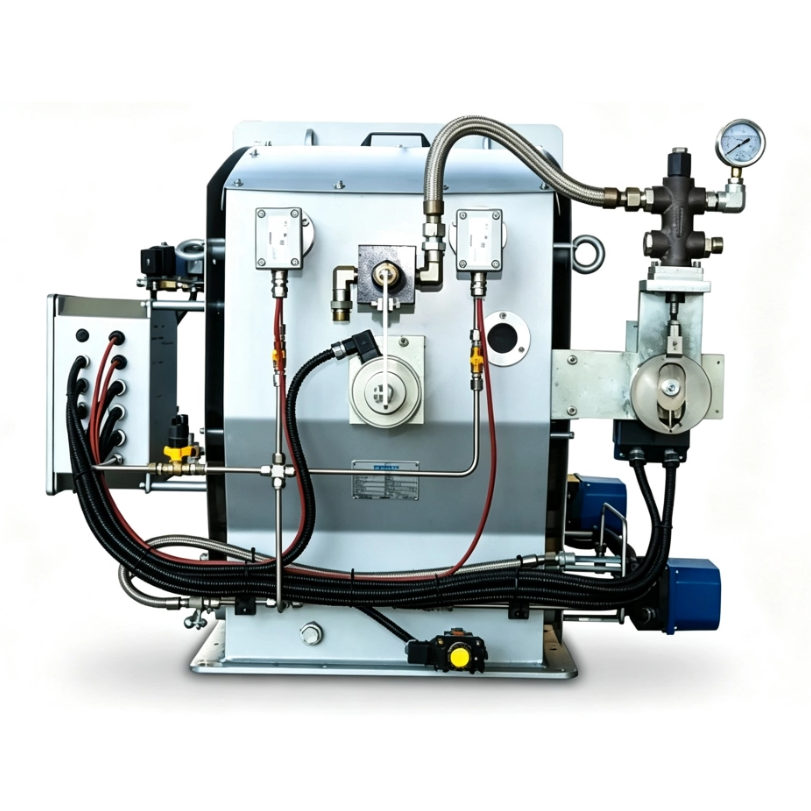
Selecting the right equipment requires rigorous technical evaluation. You must ensure the new system matches your existing furnace geometry.
You must assess how the burner performs on its secondary fuel compared to its primary fuel. Backup fuels often yield slightly lower efficiency. Heavy fuel oils carry different calorific values than natural gas. The combustion dynamics shift. Heat transfer rates change due to different flame shapes. A highly luminous oil flame radiates heat differently than a blue gas flame. Engineers must calculate these efficiency offsets. They ensure the backup fuel still meets minimum thermal requirements.
A high turndown ratio prevents the burner from cycling on and off. You must ensure the burner can maintain stable operation at lower capacities across all intended fuel types. A burner might achieve a 10:1 turndown on gas. It might only achieve 5:1 on heavy oil. Evaluate these limits carefully. Poor turndown on backup fuels leads to thermal shock in the boiler. It also increases wear on ignition components.
Environmental compliance is non-negotiable. Evaluating emissions on secondary fuels is a critical step.
Evaluating NOx, SOx, and Particulates: Liquid fuels typically generate higher nitrogen oxides and sulfur oxides. They also produce more soot.
Agency Limits: You must ensure the system meets local environmental agency limits. This applies even when running on backup heavy or light oils.
Some regions require continuous emission monitoring systems (CEMS). You may need to install flue gas recirculation (FGR) to suppress NOx levels during oil firing.
Verify if your existing Boiler Control Systems (BCS) can handle multi-fuel logic. A reliable Fuel Flexible Industrial Burner requires a capable Burner Management System (BMS). Older relays cannot process dual safety interlocks. Upgrading the hardware often means upgrading the digital brain. Ensure the new BMS communicates seamlessly with your plant-wide SCADA network.
Performance Metric | Natural Gas (Primary) | Light Fuel Oil (Backup) |
|---|---|---|
Thermal Efficiency | Highest (Baseline) | Slightly Lower (-2% to -4%) |
Flame Characteristics | Low luminosity, clean blue | High luminosity, bright yellow |
Turndown Ratio | Up to 10:1 | Typically 5:1 to 8:1 |
Atomization Required | No | Yes (Air or Steam) |
Executing a burner changeover involves significant site disruption. Proper planning minimizes this operational impact.
You must transparently address the planned downtime required. Installing the new burner takes time. Welding dual fuel trains and upgrading piping cannot happen while the plant runs. Most industrial retrofits require a planned shutdown of one to three weeks. Coordinate this window with annual maintenance schedules. This overlapping strategy reduces the total days of lost production. Pre-fabricating fuel skids off-site also accelerates the installation.
A burner is only one piece of the puzzle. You must identify necessary facility changes. These infrastructure upgrades often include:
Backup Fuel Storage Tanks: You need secure, bunded storage for thousands of gallons of liquid fuel.
Atomizing Air/Steam Lines: Oil burners require compressed air or steam to atomize the fluid. You must pipe these utilities to the burner deck.
Fuel Heating Systems: Heavy oils solidify at room temperature. You must install trace heating on pipes. You also need inline pre-heaters to maintain pumping viscosity.
Commissioning is a meticulous process. Technicians map the combustion curve. They tune the fuel-to-air ratio independently for each fuel type. This involves testing the burner at 25%, 50%, 75%, and 100% loads. They analyze flue gases at each stage. They adjust the servo motors to ensure optimal combustion. Do not rush this phase. Improper tuning leads to dangerous carbon monoxide build-up. It also causes rapid soot accumulation in boiler tubes.
Best Practice: Always test the transition sequence under full load during commissioning. Verify that the safety interlocks catch any flame failure instantly.
Hardware upgrades require human upgrades. Highlight the learning curve for maintenance teams. Transitioning from single to multi-fuel management is complex. Operators must learn how to clean oil nozzles. They must understand oil pressure regulation. They also need to recognize the signs of poor atomization. Invest heavily in OEM-led training sessions. Provide clear, laminated standard operating procedures (SOPs) at the control panel.
Choosing the right vendor guarantees a smoother retrofit. Look beyond the initial purchase price.
Evaluate suppliers based on proven installations. Look for success in similar industrial applications. A vendor who retrofits commercial heating boilers might not understand rotary kilns. Ask for case studies involving thermal oxidizers or large industrial water-tube boilers. Verify their adherence to international safety frameworks like NFPA 85 or EN 676. A strong track record proves their engineering competence.
Prioritize vendors with localized support networks. Multi-fuel systems have more moving parts. They have more valves, servos, and pumps. Wear and tear is inevitable. You need rapid response times for dual-fuel specific components. Waiting weeks for an imported oil pump defeats the purpose of fuel redundancy. Ensure the supplier stocks critical spares within a reasonable driving distance from your facility.
Recommend a comprehensive facility audit as the mandatory first step. Do this before procurement. A desk-based quote is never accurate. Engineers must visit your site. They focus on existing fuel pressure. They measure furnace draft limits. They assess the physical footprint on the burner deck. Sometimes, structural steel needs reinforcing to hold heavier dual-fuel equipment. The audit identifies these hidden costs early. It forms the foundation of a realistic project budget.
A multi fuel burner changeover is a strategic investment in uptime and risk management. It severs your dependency on a single volatile supply chain. It gives procurement teams the leverage to buy fuels dynamically. However, careful evaluation of control systems and local compliance is just as critical as the burner hardware itself. You must plan for necessary infrastructure upgrades, including storage and atomization utilities.
Proper training and rigorous commissioning ensure the system performs safely when emergencies strike. The real value is measured in the production days you save. We encourage facility managers to act proactively. Schedule a technical site assessment today. Determine your retrofit feasibility and establish a baseline ROI based on your specific downtime costs.
A: Capacity is generally maintained. However, thermal dynamics and efficiency may shift slightly. This depends on the backup fuel's calorific value and flame shape. Engineers design the burner to meet baseline thermal requirements on all fuels. Minor adjustments in firing rates usually compensate for any efficiency drops.
A: It varies by system type. Instantaneous automated switches driven by PLCs can transition in seconds without dropping pressure. Conversely, manual or mechanical changeovers require isolating lines and changing valves physically. These manual methods typically require a 30 to 60-minute pause in production.
A: Yes, in most cases. Secondary fuels like light or heavy oils often trigger new emissions reporting requirements. They typically produce higher NOx and SOx levels than natural gas. We strongly advise consulting with your local environmental authorities to update your operating permits before installation.
A: Most existing industrial boilers can accept a retrofit. You rarely need a completely new boiler. However, the furnace geometry and draft systems must be compatible with the new flame profile. A technical site audit will confirm if your current combustion chamber can safely accommodate a dual-fuel setup.
