

Views: 0 Author: Site Editor Publish Time: 2026-05-22 Origin: Site
For mission-critical commercial and industrial facilities, relying on a single fuel source for a boiler system introduces unacceptable operational and financial risk. Grid disruptions or sudden pipeline cuts can halt production instantly. Transitioning to a Dual Fuel Burner (typically natural gas paired with #2 fuel oil or propane) offers a robust hedge against pipeline interruptions and price volatility. However, retrofitting or specifying a multi-fuel system requires navigating complex emissions compliance, furnace backpressure calculations, and advanced control integration. This guide provides facility managers and boiler engineers with an evidence-based framework for evaluating, sizing, and implementing a multi-fuel system. You will learn how to approach these upgrades logically without compromising system reliability or efficiency. We explore dynamic combustion heads, specific engineering calculations, and critical safety baseline tests.
Risk Mitigation & ROI: Dual fuel systems ensure uninterrupted operation during gas shutoffs and allow facilities to leverage "interruptible" utility rate discounts for long-term cost arbitrage.
Sizing Goes Beyond BTU: Proper selection requires factoring in furnace backpressure, dynamic gas inlet pressures, and a standard 5% safety margin on blower capacity.
Modern Control Imperatives: Advanced boiler burners utilize linkageless, electronic air-fuel ratio controls with O2 trim, displacing traditional mechanical linkages for better turndown ratios.
Bio-Fuel Realities: Integrating bio-fuel blends (like B10 FAME) requires specialized bio-compatible filtration and hydraulic components to prevent acidic and hygroscopic damage.
Standard backup boilers running the same fuel provide basic equipment redundancy. They protect operations when a specific internal part breaks. They fail completely during a regional grid outage or pipeline shutoff. True supply chain redundancy demands diverse energy inputs. Dual fuel systems offer this precise security. You guarantee continuous steam or hot water production regardless of external infrastructure failures.
Energy arbitrage presents a compelling financial mechanic. Utility providers experience massive demand spikes during extreme weather. They charge premium rates during these peak events. Owning a multi-fuel configuration qualifies facilities for discounted "interruptible" gas rates. You sign an agreement to switch off natural gas when the utility requests it. In exchange, you receive significant gas pricing discounts year-round. You switch to cheaper stored liquid fuels during these forced interruptions. This strategy secures long-term operational savings.
You must set transparent expectations regarding application sizes. Dual fuel configurations represent the standard for large commercial applications. These setups typically exceed 1,000,000 BTU requirements. The technology remains cost-prohibitive for standard residential use. Combining liquid atomization and gas mixing requires heavy-duty dual-component manufacturing. This doubles the production cost of the chassis. It makes the return on investment unviable for single-family homes.
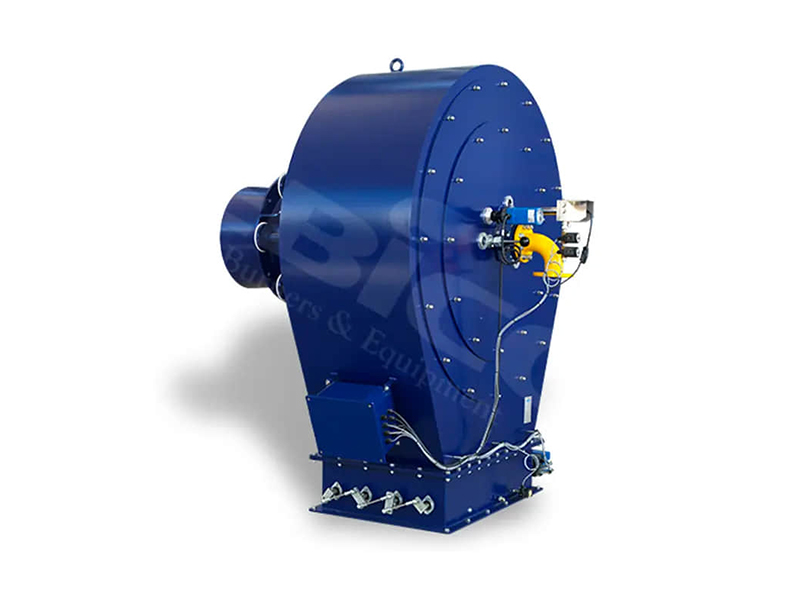
Modern dual fuel units resolve inherent spatial conflicts inside the firing chamber. Manufacturers must fit two distinct delivery systems into one opening. Standard designs place the oil atomizer in the exact physical center of the stability zone. A concentric gas ring or mixing nozzle envelops this central oil gun. This layout ensures both fuels share a unified flame shaping pathway. The unified geometry prevents uneven heat distribution across the furnace walls.
Legacy systems relied heavily on mechanical linkages and cams. A single motor mechanically drove both the air dampers and the fuel valves. These metal linkages warp, stretch, and suffer from hysteresis over time. Modern electronic air-fuel ratio controls eliminate these mechanical parts entirely. They utilize independent servo motors for air and fuel delivery. You achieve full modulation capabilities. These smart systems accept standard industrial communication signals, including 4-20mA or 0-10V. This independent control displaces traditional linkages and unlocks vastly superior turndown ratios.
Dynamic combustion heads represent another massive architectural leap. Premium units feature axially adjustable combustion heads. You can physically shift the internal blast tube components depending on the real-time firing rate. This movement optimizes air velocity instantly. It minimizes excess air across the entire load curve. Facilities experience profound efficiency gains during low-load operation.
Environmental regulations strictly govern stationary combustion sources. Modern units utilize Flue Gas Recirculation (FGR) to achieve sub-30 ppm NOx limits. FGR pipes a portion of the inert exhaust gas back into the combustion zone. This process suppresses peak flame temperatures. You must evaluate vendors carefully during a retrofit. Prioritize suppliers offering low-NOx combustion heads. These heads should fit your existing boiler footprint. You want to avoid expensive physical modifications to the existing furnace opening.
Many facilities now integrate biological fuel blends to meet internal green initiatives. B10 FAME (Fatty Acid Methyl Ester) represents a common transitional fuel. This fuel type introduces unique chemical risks. Bio-fuels act as strong solvents. They are highly hygroscopic, meaning they absorb atmospheric water quickly. They turn acidic as they degrade. You must specify bio-compatible flexible hoses during installation. Install secondary 100-micron pre-burner filtration systems. Establish strict quarterly maintenance schedules to drain water traps. This prevents internal rust and severe fuel pump degradation.
Fuel Characteristic | Standard #2 Fuel Oil | Bio-Fuel Blend (B10 FAME) | Mitigation Strategy |
|---|---|---|---|
Hygroscopy | Low water absorption | Highly hygroscopic | Quarterly tank draining & water traps |
Acidity | Neutral pH stability | Turns acidic over time | Bio-compatible hydraulic hoses |
Particulate Load | Standard | High (solvent effect loosens tank rust) | Secondary 100-micron filtration |
Large industrial facilities must address acoustic management early in the planning phase. High-capacity forced-draft fans generate substantial noise. A massive industrial Boiler Burner creates low-frequency acoustic vibrations. You must evaluate integrated silencers or acoustic shrouds. These external dampeners ensure you meet increasingly strict local noise ordinances.
Facility engineers often assume raw thermal capacity determines the correct equipment size. This assumption is dangerous. Proper sizing goes far beyond the basic BTU rating. You must plot the maximum capacity against the specific furnace backpressure curves. Engineers ensure the targeted operating point falls securely within the safe performance envelope. Ignoring backpressure leads to dangerous flame pulsations and soot accumulation.
Gas inlet pressure dictates the entire gas train architecture. Pressures exceeding standard threshold limits (typically >14" W.C.) require specialized high-pressure regulator assemblies. Conversely, low inlet pressure scenarios demand careful mathematics. You calculate the effective dynamic pressure by subtracting the internal furnace backpressure from the incoming pipeline pressure. Failing to calculate this effective pressure results in severe under-firing.
Blower and draft sizing require standard engineering buffers. You should apply a standard 1.05 (5%) safety factor to all air flow and fan pressure calculations. This crucial margin accounts for atmospheric variables and duct resistance. It covers unseen friction losses inside complex breeching setups.
Identify your facility's exact elevation above sea level.
Determine the baseline elevation allowance (industry standard is typically 2,000 feet).
Subtract the baseline from your facility's elevation.
Divide the remaining elevation by 1,000.
Multiply that number by 4% to find your total derate percentage.
Increase your specified equipment capacity by this percentage to compensate for thinner air.
The sequence of commissioning dictates the long-term stability of the hardware. Industry standards dictate the "oil-first" calibration rule. Dual fuel equipment must have its liquid fuel parameters calibrated first. Technicians establish the flame geometry and lock the mechanical limits for the oil pump. Liquid fuel has rigid atomization constraints. You follow this by setting the gaseous fuel parameters. This exact sequence ensures stable baseline draft conditions for the rest of the operational lifespan.
Physical design features lower routine maintenance overhead significantly. Buyers should specify models featuring swing-away or hinged fan housings. These clever pivot points allow technicians to open the combustion chamber easily. They can inspect UV scanners, ignition electrodes, and atomizers directly. They perform these checks without disconnecting heavy main fuel lines or high-voltage power conduits. This accessibility prevents deferred maintenance.
UV Scanner Current: Ensure UV photoelectric cells maintain a minimum baseline reading (commonly >70 µA). This strong signal prevents nuisance lockouts during the initial pre-purge cycles.
Ignition Spark Testing: Verify the direct spark ignition delivers consistent high-voltage arcs before introducing pilot gas.
Pilot Turndown: Conduct a pilot turndown test to guarantee the main flame scanner cannot read a weak pilot that is too small to reliably ignite the main fuel valve.
Specifying a dual fuel system requires balancing initial capital expenditure against the ultimate operational insurance of fuel redundancy. Facilities gain immediate protection against catastrophic pipeline shutoffs. You unlock powerful financial leverage through utility contract arbitrage. Successful implementation relies on precise engineering math rather than raw BTU guessing.
Your immediate next step involves auditing your current utility contracts. Check for dual-fuel discount eligibility in your region. Next, physically measure your existing furnace backpressure. Finally, prioritize vendors offering electronic linkageless controls and backward-compatible physical dimensions. These actions guarantee a seamless integration process.
A: Switching gas types, like moving from natural gas to propane via a restrictor kit, remains fast and inexpensive. However, retrofitting a single-fuel gas unit to accommodate heavy or light oil presents extreme challenges. You usually must replace the entire chassis. Liquid fuel requires a central oil atomizer and a completely separate high-pressure fuel pump assembly. The existing physical space inside a gas-only chassis rarely accommodates these bulky liquid-handling components safely.
A: Modern systems feature automated, one-touch toggle switches on the main control panel. Operators can initiate a switch instantly. However, standard industrial safety protocols prohibit instantaneous live-fire transitions. The hardware must completely shut down first. It then switches its internal logic relays. Finally, it initiates a completely new pre-purge cycle to clear residual combustible gases before igniting the secondary fuel. The entire mechanical process typically takes a few minutes.
A: The primary barrier remains strictly economic. Manufacturing independent liquid and gas firing chambers within a single compact chassis essentially doubles the unit cost. Residential applications process extremely low BTU loads. The mathematical return on investment fails to justify the upfront capital expenditure. Homeowners find standard electric backup elements far more cost-effective for emergency heating than paying for industrial-grade dual-fuel mechanical complexity.
