

Views: 0 Author: Site Editor Publish Time: 2026-07-24 Origin: Site
An aging heating system represents far more than a simple maintenance nuisance. It quietly compounds into a severe financial liability. Hidden fuel waste and mounting compliance risks constantly drain your operational budgets. Industrial burners technically boast a 20 to 30-year lifespan on paper. However, standard operating conditions destroy their economic viability much faster. Frequent cycling, sudden load fluctuations, and harsh industrial environments degrade mechanical components rapidly.
We designed this guide to provide facility managers and financial officers with an evidence-based decision framework. You will learn exactly how to evaluate your current equipment. We will help you decide whether to repair components, execute a complete boiler burner retrofit, or replace the entire system. This roadmap empowers your team to eliminate hidden inefficiencies, secure supply chains, and guarantee long-term environmental compliance.
Assess Before Investing: Never retrofit without first verifying the boiler vessel’s fire-side and water-side integrity.
The Technology Leap: Upgrading from mechanical linkages to linkageless controls (parallel positioning) can reliably yield ROI in under 1.5 years through fuel savings alone.
Supply Chain Risks: "Orphaned" equipment with obsolete replacement parts poses a higher risk of catastrophic unplanned downtime than gradual efficiency loss.
Strategic Right-Sizing: A retrofit is the optimal time to correct historical oversizing and implement high-turndown ratios to eliminate short-cycling.
Waiting for a catastrophic physical breakdown often proves excessively costly. Facility leaders must learn to identify operational and financial symptoms early. These subtle warning signs indicate your equipment is already bleeding profit margin.
Modern combustion tuning relies heavily on precise oxygen measurements. Review your latest combustion analysis report. If the test shows excess oxygen consistently sitting above 3%, you face a serious problem. Mechanical wear across legacy linkage arms causes significant air-fuel ratio drift. Operators typically compensate by introducing excess air to prevent dangerous soot buildup. Unfortunately, heating this excess air wastes massive amounts of fuel, sending your energy dollars straight up the stack.
A functioning unit still represents a massive liability if the original manufacturer went out of business. The industry calls these units "orphaned equipment." Relying on secondary markets or internet auction sites for critical parts introduces severe vulnerability. Finding a proprietary relay or a specific blower wheel might take weeks. During this search, your facility suffers unplanned, costly downtime.
Listen to your boiler system during periods of low facility demand. If the unit frequently toggles on and off rather than modulating down smoothly, it suffers from short-cycling. This behavior indicates the equipment is oversized for your current operational needs. Short-cycling causes extreme thermal stress on the pressure vessel. It also wastes substantial fuel during the continuous pre-purge and post-purge sequences.
Environmental regulations continue to tighten globally. You might notice your facility slowly approaching local nitrogen oxide (NOx) limits. Sometimes, inspectors force plants to derate their boiler capacity just to pass annual emissions tests. Struggling to meet compliance targets signals that your combustion technology has become entirely obsolete.
Common Mistake: Relying solely on annual tune-ups to fix efficiency drops. A tune-up can only optimize a mechanical linkage temporarily. It cannot fix the underlying metal wear causing the daily operational drift.
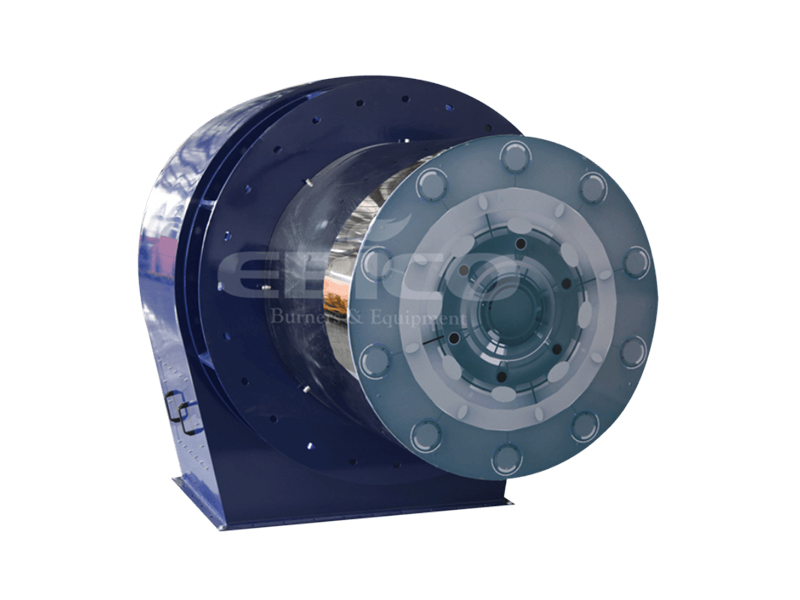
Facility managers often struggle to choose between a partial upgrade and a total system overhaul. An unbiased technical evaluation prevents overspending while ensuring long-term reliability.
Upgrading the burner unit alone offers a highly efficient path forward under specific conditions. First, you must confirm the underlying pressure vessel and boiler tubes remain in excellent structural condition. Second, your primary goal should involve upgrading control systems. Adding a modern Burner Management System (BMS), programmable logic controllers (PLCs), or Variable Frequency Drives (VFDs) requires minimal structural modification. Finally, a retrofit perfectly suits scenarios where capital expenditure is highly constrained. You can typically complete a retrofit with less than a week of facility downtime.
Certain situations demand a complete tear-out and replacement. If non-destructive testing reveals the boiler vessel nears the end of its safe operational life, do not retrofit. Investing in new controls for a failing vessel wastes capital. Additionally, facility load demands often change drastically over decades. If you require a fundamentally different thermal input, simply downsizing the firing head will not work. Finally, consider furnace geometry. Older furnace chambers often cannot physically accommodate the wider, longer flame shape of a modern ultra-low NOx burner. Forcing a mismatch causes flame impingement, acoustic resonance, and rapid equipment destruction.
Use the matrix below to evaluate the fundamental differences between upgrading the combustion unit and replacing the entire thermal system.
Evaluation Criteria | Burner Retrofit | Total Boiler Replacement |
|---|---|---|
Initial Cost (CapEx) | Low to Moderate (Typically 20-30% of new system cost). | Extremely High (Includes rigging, piping, and vessel costs). |
Installation Downtime | Minimal. Usually completed within 3 to 7 days. | Extensive. Often requires weeks of structural and pipe work. |
Fuel Flexibility | High. Easy to add dual-fuel capabilities or switch fuels. | High. Purpose-built for any modern fuel requirement. |
Expected ROI Timeline | Rapid. Fuel savings often pay for the project in 9 to 18 months. | Long-term. Can take 5 to 10 years to realize full financial payback. |
Understanding the engineering reality behind efficiency loss helps justify immediate capital investment. Old mechanical systems possess inherent design flaws that guarantee performance degradation over time.
Traditional combustion units utilize single-point mechanical linkages. A single motor drives a complex series of metal rods, cams, and pins to adjust both fuel valves and air dampers simultaneously. Metal naturally wears down through continuous friction. This wear introduces hysteresis, commonly known as mechanical lag. When the motor turns, the worn linkages fail to move the air and fuel valves to their exact intended positions. Operators must purposefully increase excess air settings to prevent dangerous fuel-rich conditions. This excess air instantly kills your fuel efficiency.
Modern equipment solves this problem entirely through linkageless controls. Engineers call this technology parallel positioning. This system replaces clunky metal rods with independent servomotors. Each servomotor controls a specific fuel valve or air damper directly. A digital controller synchronizes these motors electronically. This creates precise, repeatable point-to-point fuel and air ratio control. Digital synchronization completely eliminates mechanical drift, maintaining perfect combustion efficiency year after year.
Updating your controls unlocks powerful automation capabilities. Modern touch-screen interfaces allow multiple boilers to communicate seamlessly. Advanced lead-lag systems automatically sequence your units based on real-time steam or hot water load. They rotate baseload duties to equalize wear across all units. Furthermore, telemetry integration enables remote fault alerts. Your maintenance team can receive instant SMS or email notifications the moment an anomaly occurs, preventing minor issues from becoming major shutdowns.
Best Practice: Always specify high-resolution servomotors (minimum 0.1-degree accuracy) when upgrading to parallel positioning to maximize turndown ratios and fuel savings.
Securing project approval requires speaking the language of C-Level executives. Plant directors and CFOs rarely approve projects based purely on technical specifications. You must shift the focus from initial expenditure to free cash flow generation and risk mitigation.
Frame the anticipated fuel savings as a direct, recurring boost to operating margins. Think of the upgrade as a high-yield financial instrument. For example, consider a high-capacity steam boiler consuming hundreds of thousands of dollars in natural gas annually. A seemingly small 2% efficiency gain translates into tens of thousands in direct savings every single year. Because fuel costs represent the largest expense over a system's lifetime, these projects often deliver full payback in just 9 to 18 months. Upgrading to a modern Boiler Burner unit provides one of the fastest returns on investment available in industrial facility management.
Executives often prefer delaying projects to conserve cash. You must quantify the financial danger of this delay.
Risk-Adjusted Downtime: Calculate the exact financial penalty of a 5-day shutdown. If an obsolete relay fails mid-winter, and parts take a week to source, the lost production revenue dwarfs the cost of a proactive upgrade.
Compliance Penalties: Environmental agencies issue severe fines for drifting emissions. Exceeding your permitted NOx limits invites regulatory scrutiny, legal fees, and potential operational restrictions.
Strict budget constraints do not have to mean taking zero action. Smart engineering offers creative compromises. Consider implementing a hybrid architecture. You can pair a traditional legacy boiler with advanced digital controls. Alternatively, you might integrate a smaller, highly efficient condensing unit to handle your daily baseloads. You then keep the older, non-condensing unit offline, using it only for extreme winter peaks. This hybrid strategy optimizes initial expenditure while capturing the vast majority of potential operational efficiency.
Executing a successful upgrade requires meticulous project management. Treating the process as a simple parts swap guarantees failure. Follow this standardized roadmap to ensure safe, predictable, and highly profitable implementation.
Step 1: Vessel Verification. Never assume your current boiler is healthy. Conduct thorough internal water-side and fire-side inspections. Utilize non-destructive testing (NDT), such as ultrasonic thickness measurements, to confirm the pressure vessel can support another 15 years of operation.
Step 2: Utility & Infrastructure Audit. Modern technology demands robust utilities. Verify that your existing gas train pressure meets the requirements of the new equipment. Assess your electrical panel capacity. Upgraded blowers and new Variable Frequency Drives (VFDs) often require distinct electrical profiles.
Step 3: Emissions Profiling & Air Permits. Engage with local environmental regulators early. Confirm local air permit requirements before finalizing your equipment selection. You must determine if achieving mandated NOx levels requires the addition of Flue Gas Recirculation (FGR) piping.
Step 4: Physical Matching. Engineering mismatch destroys equipment. Ensure the new unit's heat release profile and flame geometry perfectly match your existing furnace volume. An incorrect flame shape causes flame impingement, localized overheating, and destructive acoustic resonance.
Step 5: Installation & Turnaround. Outline strict timeline expectations. With proper pre-planning, the actual physical swap, piping modifications, and electrical tie-ins are often achievable in a few days, not weeks. Coordinate the shutdown to minimize production impact.
Step 6: Commissioning & Training. Installation is only half the battle. Emphasize the critical importance of formal CSD-1 safety testing. Conduct comprehensive operator training. Your team must thoroughly understand how to navigate the new digital interfaces and interpret remote telemetry alerts.
Replacing an obsolete combustion system is not merely a maintenance task designed to keep the heat running. It represents a highly strategic maneuver. Upgrading allows facility leaders to reclaim wasted fuel spend, systematically eliminate severe supply chain risks, and confidently future-proof the plant against tightening emissions regulations. By abandoning outdated mechanical linkages for modern parallel positioning, facilities unlock massive gains in efficiency and reliability.
Take proactive control of your operational budgets today. Schedule a comprehensive facility audit and a detailed combustion analysis. Consult with a qualified thermal engineering expert to evaluate your existing boiler’s structural viability. A proactive evaluation today prevents catastrophic downtime tomorrow and sets your facility on the path to sustained profitability.
A: A facility can typically expect to save between 5% and 15% on fuel consumption. The exact savings depend heavily on the age of your original mechanical linkages, current baseline excess oxygen levels, and how frequently your system experiences load fluctuations.
A: With proper engineering analysis and pre-planning, the physical installation and commissioning processes are remarkably fast. Technicians can often complete the entire swap in under one week, dramatically minimizing operational downtime compared to a full vessel replacement.
A: Usually, yes. As long as the existing furnace geometry provides adequate volume, installing the right technology solves compliance issues. Implementing Flue Gas Recirculation (FGR) or utilizing advanced pre-mix combustion heads allows older vessels to meet stringent modern NOx limits easily.
A: A linkageless system replaces traditional physical metal arms and cams with independent, digitally synchronized servomotors. These motors precisely control fuel valves and air dampers. This technology eliminates mechanical wear and lag, maintaining a near-perfect combustion ratio over the equipment's entire lifespan.
