

Operating a commercial or industrial facility demands serious attention to your central heating equipment. You must treat your Boiler Burner as much more than a simple industrial blowtorch. It functions as the absolute core driver behind your facility's daily fuel expenditure. It determines system thermal stability. It also controls your strict environmental emissions compliance.
Decision-makers often inherit heavily outdated atmospheric systems. They might also deal with restrictive step-fired controls. Upgrading these legacy setups requires navigating complex trade-offs. You must balance initial capital expenditure (CapEx) against long-term operational expenditure (OpEx). Ignoring these details leads to massive hidden energy losses. It also causes aggressive wear on expensive pressure vessels.
This guide moves past basic textbook definitions. We provide a robust commercial evaluation framework. We detail exactly how to assess critical air-to-fuel ratios. You will learn how to evaluate modern turndown capabilities properly. You can then select the exact specifications required to minimize hidden heat losses and guarantee continuous regulatory compliance.
Capacity Dictates Technology: Facilities exceeding 500,000 BTU/hr typically require power burners over atmospheric models to achieve required stoichiometric combustion.
Hidden Costs in Cycling: Frequent burner start-stop cycles introduce "scavenging air" that strips latent heat from the boiler. Modulating controls eliminate this purge cycle waste.
The Turndown Multiplier: Specifying a high turndown ratio (e.g., 10:1) with precise low-excess-air control can reduce overall operating fuel costs by 10% to 15%.
Emissions are a Selection Filter: Modern low-NOx and ultra-low-NOx burners are non-negotiable in stringent jurisdictions, capable of suppressing NOx emissions below 10 ppm.
Reliable operation hinges entirely on balancing a specific combustion triangle. You must precisely mix fuel, oxygen, and ignition. Disruptions in this delicate physical balance lead directly to expensive fuel waste. They also cause immediate safety lockouts. You must understand how your equipment handles these physical elements.
For liquid fuels, combustion efficiency is dictated by physical droplet size. Burner engineers target an optimal atomization zone between 20 to 40 microns. Droplets larger than 40 microns cause incomplete combustion. They leave unburned carbon residues behind. Smaller droplets under 20 microns traverse the flame front too rapidly. They fail to release their full thermal energy. You must ensure your equipment maintains this precise spray geometry under all load conditions.
Combustion blowers move a fixed volume of air. They do not move a fixed mass of air. Seasonal shifts in outdoor air temperature alter internal oxygen density significantly. Even minor environmental fluctuations of 15 to 20 degrees Fahrenheit create operational problems. Cold winter air packs more oxygen per cubic foot. This creates lean, air-rich conditions. Summer air is considerably less dense. This results in fuel-rich, sooting conditions. Facilities must perform seasonal combustion tuning. This maintenance prevents severe fuel waste and unsafe soot accumulation.
We use a standard mathematical baseline for natural gas applications. Perfect combustion of one standard cubic foot (scf) of natural gas requires roughly 9.5 scf of air. Any deviation impacts fuel utilization heavily. We measure this thermal output through the Higher Heating Value (HHV). Imprecise air volumes destroy combustion efficiency. They push valuable heat straight up the exhaust stack.
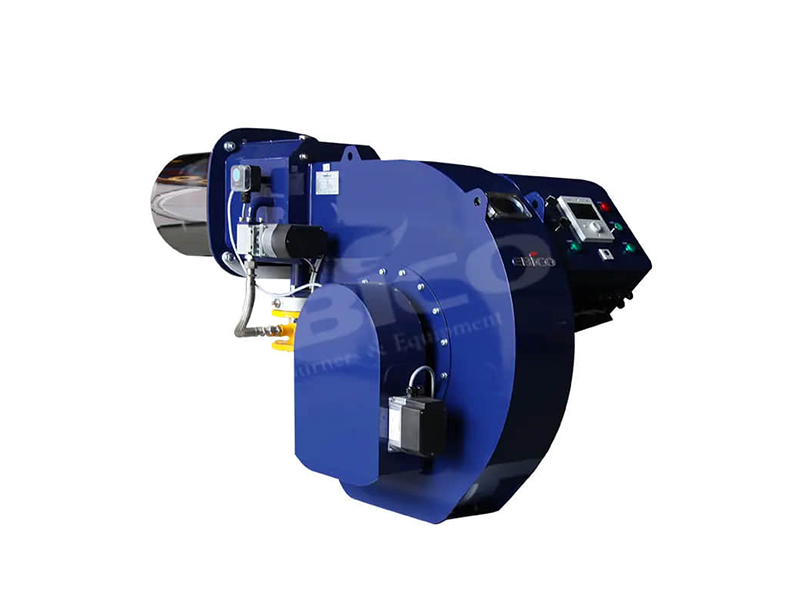
Understanding equipment categories helps you establish a solid operational baseline. Facilities typically choose between legacy atmospheric designs and modern mechanical power systems. Your specific heating load determines the right technology path.
Older facilities often rely on atmospheric models. These systems depend entirely on natural draft from the boiler room. They passively draw surrounding oxygen into the combustion zone.
They remain highly susceptible to ambient environmental changes.
Changes in barometric pressure alter their efficiency.
Engineers generally restrict them to very small applications.
They primarily serve loads safely under 500,000 BTU/hr.
Modern industrial sites mandate robust power burners. These units utilize heavy-duty mechanical blowers. They feature adjustable mechanical dampers to force oxygen directly into the combustion chamber.
They enable extremely precise control over primary air staging.
They manage secondary and tertiary air flows accurately.
They achieve near-perfect stoichiometric combustion easily.
They act as the absolute standard in high-capacity industrial settings.
Feature | Atmospheric Models | Power Models |
|---|---|---|
Air Supply Method | Natural room draft | Mechanical blower fans |
Capacity Limits | Under 500,000 BTU/hr | Unlimited industrial scales |
Combustion Control | Very low precision | Highly accurate air staging |
Environmental Sensitivity | Highly susceptible | Mechanically stabilized |
A Boiler Burner operates only as well as its underlying control system. Older or budget-tier equipment rely heavily on basic On/Off or High/Low controls. These step-fired systems introduce severe hidden costs into your daily operations. You must evaluate these mechanical behaviors carefully.
Safety protocols dictate strict behaviors during equipment restarts. Every time step-fired equipment cycles off and restarts, controls require a mandatory cold air purge. Engineers call this scavenging air. Blowers push fresh air through the entire furnace to clear any potentially explosive unburned gases. However, this process actively drains stored heat out through the stack. You pay to heat your boiler water, and the purge cycle aggressively cools it down again. This creates massive energy waste over an annual cycle.
These legacy control types present lower initial purchase costs. However, they result in aggressive thermal shock. They repeatedly blast intense heat against relatively cool boiler tubes and delicate refractory materials. The rapid expansion and contraction damages metal surfaces over time. We only recommend these controls for highly stable, predictable, or extremely small loads.
Advanced facilities invest in fully modulating control systems. They eliminate mechanical shock and fuel waste.
They operate continuously on an infinite spectrum.
They seamlessly match the exact steam or hot water load required.
They completely eliminate the expensive energy waste of the purge cycle.
They actively minimize destructive thermal expansion and contraction.
They extend the functional lifespan of pressure vessels and mechanical valves.
Procurement conversations must prioritize turndown capabilities. Turndown dictates how flexibly your equipment handles low-load conditions. Poor turndown forces equipment into damaging start-stop cycles. You must balance turndown goals against physical air-handling limits.
Turndown describes the mathematical ratio of maximum to minimum firing rates. Consider a system outputting 1,000,000 BTU/hr at maximum fire. It can safely throttle down to 100,000 BTU/hr minimum. This relationship equals a 10:1 turndown ratio. High turndown prevents the unit from shutting off during very low demand periods. It keeps system pressure remarkably stable.
Safety codes require equipment to introduce excess air into the chamber. This buffer accommodates unexpected atmospheric pressure changes safely. However, every extraneous nitrogen and oxygen molecule absorbs valuable heat. These useless molecules carry thermal energy directly out the exhaust stack. You want minimal excess air, but you must maintain safe combustion.
As equipment turns down to lower outputs, physical airflow slows. Maintaining necessary turbulence becomes exceptionally difficult. Poor turbulence risks lethal carbon monoxide (CO) generation. Premium systems prove their worth here. We evaluate them on their unique ability to maintain high turbulence and low excess air across their entire turndown range. Cheap equipment only achieves safe excess air levels at peak load.
Lowering exhaust temperatures increases your immediate thermal efficiency. However, you must avoid over-cooling flue gases. Cooling exhaust gases below their physical dew point causes dangerous condensation. Moisture reacts chemically with exhaust byproducts. It forms highly corrosive sulfuric and nitric acids. These aggressive acids cause severe stack and tube corrosion rapidly.
Turndown Ratio | Cycle Frequency | Purge Heat Loss | System Pressure Stability |
|---|---|---|---|
Low (2:1 or 3:1) | Very High (Frequent Stops) | Severe | Poor (Highly Fluctuating) |
Medium (4:1 to 6:1) | Moderate | Noticeable | Acceptable |
High (10:1 or greater) | Continuous Operation | Virtually Eliminated | Excellent (Pinpoint Accuracy) |
You need a structured methodology to evaluate complex combustion technology. We developed a comprehensive 7-point evaluation framework. Use these criteria when procuring a new Boiler Burner for your facility. They prevent costly mechanical mismatches and ensure regulatory safety.
Fuel Flexibility & Redundancy: Assess if daily operations require dual-fuel capabilities. Many facilities use natural gas alongside a #2 fuel oil backup. This redundancy serves as a critical compliance standard for modern hospitals and continuous-process plants.
BTU Capacity & Rating Matches: Ensure the firing rate aligns precisely with the available heat exchanger capacity. Mismatched oversized equipment causes aggressive short-cycling. Undersized equipment fails to meet peak winter demand.
Flame Geometry Compatibility: The physical flame shape must match the interior furnace dimensions. A mismatched flame causes direct flame impingement. The fire strikes the boiler tubes physically. This causes rapid localized boiling, severe tube blistering, and eventual catastrophic rupture.
Mounting Architecture: Determine your specific facility layout constraints. You must choose carefully between wind-box, wall-mounted, or specialized duct burner configurations based on physical room space.
Emissions Footprint: Verify all local environmental thresholds before purchasing. Factor in strict requirements for Low-NOx designs. These advanced models lower peak flame temperatures intentionally to keep harmful NOx outputs well under 10 ppm.
Safety Interlock Integration: The new equipment must integrate seamlessly with existing digital control systems. It must react immediately to Low-Low water level alarms. It needs physical mechanisms to sever combustion instantly and prevent catastrophic dry-fire meltdowns.
Ease of Maintenance & Tuning Access: Evaluate the physical layout of the machine. Technicians need easy access to the linkage, adjustable dampers, and delicate ignition assemblies. Complex, cramped designs discourage routine preventative maintenance.
Choosing proper combustion equipment requires strict lifecycle cost management. The absolute cheapest step-fired unit will rapidly consume its CapEx savings. It destroys your budget through daily purge cycle heat losses, frequent maintenance downtime, and terrible fuel-to-steam conversion ratios. You must prioritize modulating controls and high turndown capabilities.
Facility managers should conduct an immediate visual audit of current systems. Look closely for physical signs of incomplete combustion. Watch for heavy soot accumulation or lazy yellow tipping on gas flames. Track your daily cycle frequencies to identify wasteful short-cycling.
We strongly recommend engaging a certified combustion engineer soon. Ask them for a comprehensive seasonal tuning assessment. Request a detailed retrofit ROI analysis to transition your facility toward high-turndown, fully modulating power equipment. Modernizing your thermal plant guarantees safer, more profitable long-term operations.
A: Yellow flames instead of sharp blue ones in gas systems indicate severe trouble. You might also notice excessive soot accumulation around the combustion chamber. Distinct unburned fuel odors around the equipment room serve as another major warning. These physical signs indicate incomplete combustion and dangerous carbon monoxide (CO) generation.
A: Industry best practice dictates a comprehensive combustion tuning at least twice a year. You should schedule these tunings during major seasonal transitions. This routine maintenance accounts for significant variations in intake air temperature and barometric density. It keeps fuel-to-air ratios perfectly optimized.
A: Atmospheric models rely entirely on natural room draft to pull oxygen inward. They lack precise control. Power models use heavy-duty mechanical blowers to force exact, measured ratios of air directly into the combustion chamber. They allow for significantly higher efficiency, safer emissions, and much larger BTU outputs.
A: A high turndown ratio allows the equipment to stay online steadily during very low load conditions without shutting off completely. This capability maintains incredibly consistent system pressure. Crucially, it prevents the massive heat loss associated with mandatory cold-air purge cycles required during frequent restarts.
